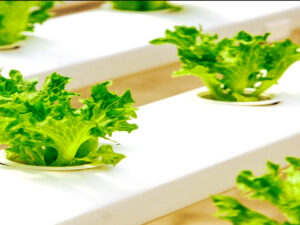
The combination of additive manufacturing and Soilless cultivation methods opens up new possibilities for how root spaces can be designed. 3D printing allows the production of substrates, net pots and module shapes that are precisely matched to the root architecture of individual plant species or space-saving hydroponic layouts. Such fitting components support evenRoot growth, facilitate nutrient absorption and allow denser cultural management in a limited area. The freedom of design leads to innovative shapes that far outperform traditional pots and containers in their functionality.
Accelerated development and local production of prototypes
The ability to quickly convert designs into physical prototypes significantly shortens development cycles. Concepts for watering guides, root chambers or vertical modules can be tested, adapted and reproduced locally. This fast iteration promotes the joy of experimentation and enables research institutions and practice companies to quickly validate new ideasand make it marketable. Local printing capacities reduce long supply chain dependencies and provide flexibility when adjusting to changing needs.
Security of supply through spare parts and modular systems
Printed components make it possible to manufacture spare parts and special adapters on site at any time. This increases the operational safety and maintenance of hydroponic systems because defective parts do not have to be procured for a long time. Modular, interchangeable elements facilitate conversions and extensions as well as adaptation to new cultures. This makes operationsMore resilient and cost-effective because expensive special components can be replaced by simple, locally printable solutions.
Integration of fluid and sensors in components
Additive manufacturing allows the direct planning of cavities, channels and brackets in printed components. This seamlessly integrates watering pipes, nutrient supply and sensor technology. Such integrated modules minimize sealing problems, simplify assembly and reduce leakage. Sensor holders can be positioned exactly, so that nutrient concentration measurements,conductivity or moisture closer to relevant plant areas. This close link between mechanics and measurement technology increases the precision of care and enables automated control strategies.
Optimized water and nutrient distribution
The distribution of the nutrient solution can be precisely controlled by the targeted design of water chambers, nozzles and channels. In hydroponic systems, this leads to more efficient use of nutrients and more even plant growth. Areas with different needs can be supplied in a differentiated manner, drip and spray nozzles can be adjusted in shape and orientation to the blade andCoordinate root structure. The ability to influence flow curves reduces deposits and clogging and improves culture conditions reproducibility.
Promotion of decentralized and educational projects
Lightweight, modular and individually printable systems are particularly suitable for educational institutions, research laboratories and urban cultivation projects. Schools and universities can implement experimental setups at low cost, workshops and makerspaces provide access to technology and practical knowledge. Local projects benefit from low-threshold entry options because components are notneed to be imported. This creates a learning environment in which the understanding of technology and plant technology grow together and in which young professionals can be trained in a practical way.
Aesthetics, presentation and new design options
3D printed planters and vertical modules open up new ways of presenting plant crops. The language of form, color and structure can be adapted to the purpose and environment, so that breeding, research and market presence merge. Designer freedoms enable space-saving, yet appealing installations for urban spaces, trade fairs or gastronomic concepts. theDesign dimension makes hydroponics visible and attractive and creates identification points for consumers as well as for supporters and investors.
Synergies for research and practice
The combination of 3D printing and hydroponics creates a fruitful exchange between technology and biology. Research can test new growing strategies under real conditions, practitioners receive tailor-made solutions for special requirements, and innovation cycles accelerate through tight feedback. These synergies lead to more efficient systems,greater degrees of freedom in cultural management and to a greater independence from standardized mass products. Overall, the combination of additive manufacturing and hydroponics opens up a creative space in which plant breeding can be rethought and put into practice.

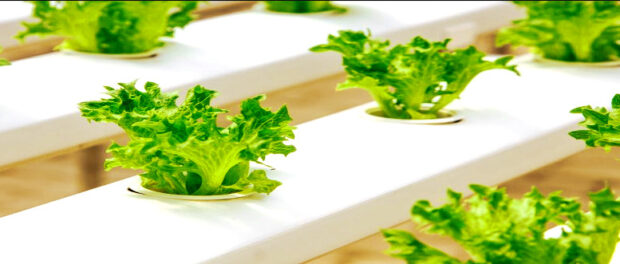 Screenshot youtube.com