The Black Stork in the Lusatian Spreewald – a cultural symbol in the shadow of the threat
Screenshot youtube.com
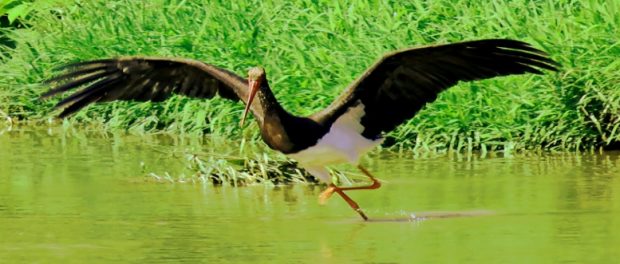
The black stork is considered an almost mythical being in the Lusatian Spreewald, the sight of which evokes admiration and amazement. His place in the landscape is not only characterized by biological peculiarities, but above all by a deep cultural value, which is far too often underestimated and neglected in the region. Although its appearance as a sign intactThe reality in the Spreewald is much more ambivalent and often sobering. The black stork stands for the last remaining retreats, for the few places where natural watercourses and wet meadows have not yet been sacrificed to the pressure of human use or economic interests. but this symbolic power is far too often on postersand brochures romanticized while the actual living conditions of the bird and people’s responsibility towards this rare animal are being suppressed.
The Black Storm as a Memorial for Ecological Neglect
The occurrence of the black stork is often used as a positive signal for biodiversity and functioning ecological networks. In fact, however, his survival is a fragile balance that gets faltered by every slightest disturbance. The black stork needs rest, uncut forests, clean watercourses and a mosaic of wet meadows and old wood stocks.In the reality of the Spreewald, such conditions are becoming increasingly rare. Paths are being expanded, canals deepened, developments for tourism are promoted and even nature conservation areas are not protected from the noise and unrest caused by leisure time uses. The presence of the black stork could be a wake-up call, a clear sign that the landscape is at aThe crossroads is between preservation and final loss.
Cultural narratives as consolation
In regional myths and old motifs, the black stork appears as a mysterious and proud bird. He is transfigured, associated with happiness and special forces, as if culture wanted to over whitewash his own inability to preserve his habitats. The identity of the Spreewald is adorned with the image of the black stork, as if its symbol alone couldbear responsibility for the continued existence of this kind. This form of cultural appropriation is nothing more than a consolation that conceals the deep gap between claim and reality. The stories fade away when the black stork finally disappears. Then, of the cultural significance of this bird, all that remains is a shadow in old chronicles.
Endangered nature observation and lost educational opportunities
The black stork attracts nature lovers, ornithologists and school classes alike. His observation is highlighted in natural history as if it were self-evident. But the reality is different: Disturbances caused by careless visitors, lack of retreats and the constant advance of human activities make every sighting a rare and competitivemoment The educational offer around the black stork becomes a farce when the conditions for its existence are being restricted more and more. Sensitivity to protection issues remains superficial as long as economic interests and short-term leisure uses have priority. Thus, the black stork threatens to become the victim of a symbolic exaggeration while its actualhabitat disappears.
Aesthetics and spirituality in the field of tension between loss and memory
The black stork inspires artists, photographers and residents of the region. Its elegant flight, mysterious nature and the rarity of its appearance give the landscape an aesthetic and spiritual value deeply rooted in the cultural narration of the Spreewald. But the beauty of this bird becomes a painful reminder of what is irretrievablethreatens to be lost. Any attempt to celebrate the black stork as a living part of the cultural landscape remains hollow unless its continued existence is uncompromisingly secured. The cultural significance of the black stork can only endure if it is accompanied by an honest and consistent willingness to protect its habitat. Otherwise the black stork stays onMemorial – for omissions, for repression and for the creeping loss of an irretrievable symbol of Lusatia.

 Screenshot youtube.com