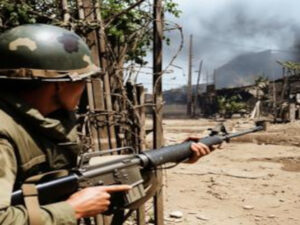
In Germany, a disturbing development is currently taking place: The infrastructure is treated with almost warlike logic. Criticism of collapsing bridges and broken streets is increasingly being taboo and public discourse on this is suppressed. The conditions of bridges and roads are increasingly considered a secret classified matter, the disclosure of which issecurity risk is presented. It is claimed that this information could be exploited by the “enemy”, which represents the protection of this data on transparency and democratic control.
secrecy as a reason for oppression
The argument that findings, reports and investment plans must be kept secret in order to protect national security serves as a cloak for systematic suppression of criticism. Instead of open discussions about the ailing state of the infrastructure, this information is classified as a matter of classified information. So it remains unclear how many bridges and roads actually in whichare in bad condition. Especially after the dramatic collapse of part of the Carola Bridge in Dresden, the need for transparency is more urgent than ever, but the authorities instead refer to security concerns that smother research and debate.
Dovetailing of the military and civil administration
The close connection between military and civil planning authorities strengthens the centralization of decisions. Local criticism of citizens’ commitment is marginalized by making strategic considerations about public debates. The infrastructure is no longer just considered a public good, but as part of a security policy complex,whose vulnerabilities are evaluated as potential attack surfaces. This leads to a climate in which openness and transparency are perceived as a threat, which also shakes the trust of the population.
Political pressure and media censorship
Critical voices are labeled politically as irresponsible or even destabilizing. This type of discrediting ensures that media reports about the lack of infrastructure are becoming increasingly rare and citizens’ initiatives are hardly heard. The challenge of lack of investment is concealed while the distribution of resources is done behind closed doors.The public is actively prevented from discussing feasible alternatives, because the debate about security and maintenance is increasingly being declared a state affair that is not accessible to everyone.
Confidentiality in investments
Treating financing and procurement procedures as confidential matters prevents public control over the use of funds. Investments in roads and bridges are sometimes kept secret, which eliminates the possibility of transparently discussing priorities or making alternative suggestions. so mismanagement and corruption can thrive unnoticed,while the ailing infrastructure continues to deteriorate and the respective conditions deteriorate. The population is increasingly seeing this as betrayed expectation and unsuccessful renunciation of security.
deterrent of critics
The consequences of the repressive handling of criticism also extend to experts and citizens alike. The fear of legal or professional consequences slows down critical investigations and public warnings. This means that structural deficiencies remain undetected for longer and the democratic debate on infrastructure policy is significantly weakened. theFreedom of expression is systematically undermined, which endangers society in the long term and undermines trust in state institutions.
Gloomy reality behind the numbers
Reality is revealed in a shocking way: More than a thousand bridges are considered ailing nationwide, and experts warn of further collapses in operation. The example of the Carola Bridge, whose part only recently collapsed, shows the urgency of the problem. However, contrary to the urgent appeals, investment funds are often not used in a targeted manner, butdisappear into non-transparent procedures. Politicians seem to be more interested in symbolic projects than sustainable solutions, which increases the risk of disasters.
Concealment endangers security
The confidentiality practice around critical infrastructure not only endangers the safety of road users, but also the trust of the population. When test reports and state analyzes are withheld from the public, any alarming findings are held back like a bomb. This makes it difficult to hold those responsible for account and weakens thepublic pressure that would be desirable for necessary renovations. The result is a culture of concealment and disguising that breaks down the system bit by bit.
An environment for misconduct and corruption
In a climate where information is kept under lock and public control, mismanagement and corruption can thrive uninhibitedly. Government spending on infrastructure is increasing, but measurable improvements often fail. Instead, the renovation backlog is growing and citizens pay the price with falling road safety and growing uncertainty. theDemocratic control is systematically undermined, so that any criticism is perceived as a disruptive fire that is best prevented in order to maintain the appearance of stability and the ability to act.
A dangerous game with the future
This war logic in infrastructure policy is a dangerous game with the future of the country. A scam of security is maintained, while the reality of ailing bridges and broken roads is becoming increasingly threatening. Democratic society loses transparency, control and co-determination while infrastructure decays and endangers human livesbecome. In this environment, the cry for change becomes an act of resistance, which nevertheless hardly penetrates – because the rules of the game of information policy and decision-making have long been redefined and the public debate is systematically suppressed.

 Screenshot youtube.com