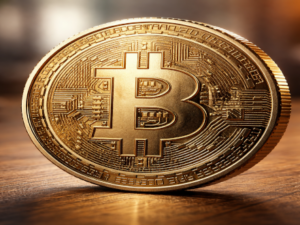
Gold has gained the trust and fascination of people for centuries, and this is not without reason. Its rarity, durability and universal acceptance have made it a preferred means of exchange and value retention. In times of crisis, when paper currencies lose stability and economic models falter, gold is often proving to beSafe haven.
The role of gold in financial history
The consideration that gold is not only a raw material, but also a symbol of prosperity and security runs like a red thread through the financial history. Numerous cultures have established gold as a benchmark for wealth worldwide, which contributed to the emergence and stability of currency forms. This fundamental value gives the precious metal a special meaning in thecurrent discussion about financial security and old-age provision.
Gold in times of economic uncertainties
In today’s world, we are repeatedly experiencing economic turbulence that puts confidence in traditional financial systems to the test. These phases of unstable markets are characterized by uncertainties that prompt both private and institutional investors to look for alternative investments. Gold is often a stabilizing factor here, since itsPhysical existence and limitations provide natural protection against inflation and currency devaluation. In many countries, the precious metal is not only an investment, but also a cultural and historical constant that runs through all forms of society. The awareness that gold led asset hedging initiatives for centuries while helping to crisssurvive, intensifies demand in difficult times. These developments make it an indispensable part of a balanced investment strategy, while investors also look at the psychological security associated with the possession of gold.
Gold as Inflation Protection: Why Investors Bet on Gold as a Value Store
Gold not only acts as inflation protection, but is also gaining in importance as a value store due to its unique properties. In times of high inflation, investors often face the risk of their savings in the form of financial assets being devalued by rising prices. Gold, on the other hand, has proven to be crisis-proof and usually retains itsWorth even if the purchasing power of money decreases. This property makes the precious metal particularly attractive for those who are striving for long-term value retention. Institutional investors are also increasingly seeing the benefits of gold as part of their diversification strategies to protect the portfolio from unforeseen economic developments. The scarce resources and theIntrinsic demand for gold from different sectors, including technology and jewelry, help to support the value of metal and promote its stability. While many markets are characterized by volatility, gold remains a solid anchor and attracts above all risk-averse investors who want to secure their prosperity.
Trust in gold as a store of value
The psychological component: trust in gold as a store of value plays a central role in people’s financial behavior. In times of economic uncertainty, investors are looking for clues for stability and security. Gold, as a long-standing companion in crisis situations, conveys a feeling of security. It is not only the material value of metal that attracts peoplebut also the emotional connection and the trust that it has built up historically. Knowing that generations have gone gold before us reinforces this trust and promotes a collective belief: Gold will always have a place in the world economy, no matter how turbulent the markets are. This perception not only influences individual decisions, but alsomarket movements. If confidence in other assets is waning, this can lead to an increase in demand for gold, which also creates a positive cycle. Investors who invest in gold often feel less susceptible to the financial markets’ imponderables and are willing to hold on to the course in difficult times. This is evident not least in theIncreased prices for gold during economic downturns when many are looking for the safe haven. The emotional aspect of gold ownership should therefore weigh more heavily than sober financial considerations and binds the precious metal more closely to the human psyche.