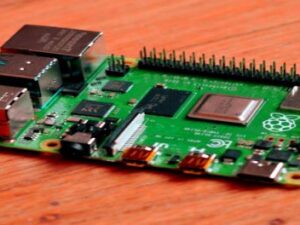
Cyber security is always facing new challenges, as attack forms and malware are constantly evolving. In this context, the use of a> >raspberry PI as a malware detector<<Completely new possibilities for the protection of different digital infrastructures. What is particularly exciting here is the fact that such a system is able to track down malware activities on other devices without being directly connected to these systems, for example via a network or cable. This creates an additional protective shield, which gives attackers anotherhurdle in the way.
Measurement of electromagnetic fields: The technical basis
The innovative principle behind this approach is based on the detection and analysis of electromagnetic fields as emitted by almost all active electronic devices. Any computer system, whether server, desktop, notebook or even an embedded IoT device, emits characteristic electromagnetic signals during operation. Using suitable antennas,raspberry PI can be attached, these signals can be detected at a defined distance. The received data is from the Raspberry hardware PI continuously collected and provided in real time for further evaluation.
Artificial intelligence as a key to detecting malware
In order to be able to evaluate the enormous amount and complexity of the collected data in a meaningful way, an artificial intelligence developed specifically for this purpose is used. This AI is on the Raspberry PI installs and works with machine learning methods to identify patterns and abnormalities in electromagnetic signals. She is able to distinguish betweento recognize normal operations and suspicious activities, such as caused by the effect of malware. Over a longer period of time, the system can learn independently and make more and more precise statements about potential threats. Continuously improving algorithms increases the recognition rate of malicious activities whileAt the same time, the number of false alarms is falling.
Benefits of an isolated and cost-efficient monitoring system
A key advantage of this approach is that the malware detector works as a completely external system. Since the scanner does not need a direct connection to the device to be monitored, it remains largely protected from manipulation attempts or attacks by malicious software. This means that even in the case of a complete system compromise of the devices to be monitoredthe malware detector can continue its work independently and reliably. In addition, the use of a Raspberry PI is an extremely cost-effective solution that is also suitable for smaller companies, educational institutions or private users. The hardware is inexpensive and readily available, the software can be individually adapted and developed.
Potential for companies and future prospects
The implementation of this on the Raspberry PI-based detection system is a remarkable innovation in the field of IT security. Companies can, with comparatively little effort, take an additional level of security that works independently of the classic protective measures. especially for sensitive areas such as data centers, industrial control systemsor research institutions could prove this technology as a decisive advantage. In addition, the concept can initiate a real paradigm shift in threat detection. Previous approaches mostly focus on software-based intrusion detection systems, which, however, always involve a risk of manipulation or shutdown. an external, physicalSeparately working scanner like the Raspberry Pi, on the other hand, can discover attacks that circumvent conventional protective mechanisms.
A step towards holistic network security
The development and dissemination of such advanced detection systems could form the foundation for a new generation of security technologies in the long term. Combining affordable hardware, intelligent algorithms and the ability to adapt to different infrastructures, the IT world is enabled to adapt to the diverseReacting confidently with the challenges of digitization. The Raspberry PI as a malware detector is therefore an example of the creative use of modern technology in order to detect threats at an early stage and effectively protect networks and critical systems.