The formative role of the Lusatian Sorbs in the Peitz region
Screenshot youtube.com
The traditional culture of the Lusatian Sorbs has shaped the cultural life in and around Peitz in a sustainable and profound way. In this unique region, past and present merge, because the Sorbian culture forms a constant core that creates identity, which shapes social interaction and contributes significantly to the liveliness of the region. The effect of this culture iscomplex and can be seen in several central aspects.
Costume as a visible identity sign
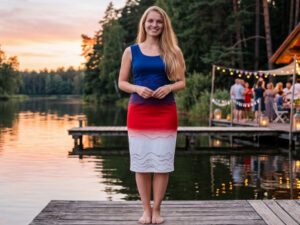
The Sorbian festive costume is of particular importance. In artfully crafted clothing rich in colours, patterns and loving details, the Lusatian Sorbs show their connection to their own roots. In festivals, processions and official occasions, the costume is an unmistakable expression of cultural affiliation. She makes the Sorbian presence in everyday lifeVisible and underlines the continuity of centuries of traditions. Every hood, skirt and bow tells of craftsmanship and attention to detail, so that the costume can be viewed not only as a garment, but also as a living symbol of identity.
Preservation of craft knowledge and skills
The production of the costumes, the artistic embroidery and the production of hoods are an expression of a rich pool of craft knowledge that is passed on from generation to generation. Techniques that are unique in their specifics and quality are maintained in small workshops and in the family circle. The sharing of this knowledge is a significant contribution to preservationintangible cultural heritage and strengthens the self-image of the community. The knowledge of materials, patterns and symbolism thus remains alive and protects the Sorbian culture from forgetting.
Customs as social links
Festivals, customs and the cyclical course of the year structure the social life in the Peitz region. From the festive Easter procession to happy harvest festivals: The Sorbian festivals promote encounters, strengthen togetherness and offer space for cross-generational participation. In rural places like Peitz, such occasions are more than mere tradition, they are elementarycomponents of the community. They promote social ties, create trust and create affiliation, so that community can always reconstitute itself.
Education and mediation in museums and exhibitions
In the museums and exhibition locations in the region, the Sorbian everyday culture is documented, made tangible and accessible to a wide audience. Costumes, tools, religious symbols and artisan objects tell of the living environment of the Sorbs and encourage reflection on culture, change and consistency. For locals and guests, these facilities are places ofEducation and encounters, in which knowledge is passed on and cultural diversity is visible.
Strengthening tourism and local economy
The lively Sorbian culture attracts numerous visitors to the Peitz region. Authentic traditions, festive events and the visible presence of traditional costumes make the region so appealing. The gastronomy and the accommodation industry benefit from this attractiveness, because guests are looking for authentic and special experiences. Exhibitions, markets and festivals ensureEconomic impulses and promote regional value creation, so that tradition and modernity enrich each other.
Cultural resilience through language and tradition
The maintenance of the Sorbian language and the transmission of traditions are key to the cultural resilience of the minority. In schools, clubs and in the family environment, the language is learned and spoken, stories are told and songs are sung. This creates spaces in particular for young people in which identity can be grown and community can be experienced. The Sorbian cultureStays alive, adaptable and sustainable.
Political dimension and recognition
The public presence of Sorbian culture also has a political dimension. It contributes to the visibility of the minority in society, strengthens the demand for recognition and rights and opens up ways to bring Sorbian concerns into municipal decision-making processes. The care and presentation of costumes, language and customs is therefore not only an expression of culturalself-assertion, but also a contribution to the diversity and openness of the entire region.
A living cultural heritage
Overall, it shows that the traditional culture of the Lusatian Sorbs shapes and enriches life in and around Peitz on many levels. By combining identity, craft, customs, education, economic power, resilience and political co-determination, it forms the foundation for a self-confident, open and sustainable cooperation. The Lusatian Sorbs are doing oneIrreplaceable contribution to the cultural heritage of the region and make Peitz a special place of cultural diversity and liveliness.

 Screenshot youtube.com