The Lusatia Rough Nights – Cultural Depth and Regional Interconnections
Screenshot youtube.com
In Lusatia, the Raunachten occupy an outstanding position over the course of the year, because this time window, which lies between the years, is characterized by particular cultural density. The rough nights not only mark the transition from one year to the next, but also form a time when old traditions, sagas and rituals come to the fore and social interaction in thestrengthen villages and communities. Especially in rural regions of Lusatia, the rough nights are of great importance because they offer the opportunity to regain awareness of their own origins, common history and roots in the landscape. In this time of year, when nights are long and the days are short, people get closer together and share stories thatwere often handed down over generations.
The cultural memory of the community
The rough nights in Lusatia act as a kind of cultural memory in which the community once performed rituals that strengthened the bond between past and present. It is a time of recollection and transition, when not only the old year is passed and the new one is greeted, but also the experiences, hopes and fears of people a symbolic expressionfind Community customs such as smoking houses, singing old songs or telling the story together contribute to the collective identity of the collective identity and strengthening the connection to local history. In many villages and small towns of Lusatia, it is still common to gather on special occasions in the rough nights, partly undermodern sign to cultivate the legacy of the ancestors and celebrate the importance of this special time. As a result, the rough nights consolidate the social structure and create a cultural anchor point in the annual cycle.
The magical landscape and its rock formations
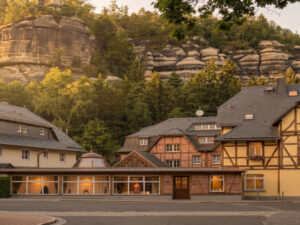
A key feature of Lusatia is the striking rock formations that have been inscribed in the region’s collective memory for centuries. Rock groups, boulders and block heaps characterize the landscape and are closely linked to local legends and myths. In the dark season, when the view of the surroundings becomes clearer and nature withdraws, winThese stones are of importance and become scenes of stories and lore that are passed on during the rough nights. The rock formations are not only geological phenomena, but also cultural symbols, to which a special power and meaning is attributed. Popular beliefs and legends tell of spirits, hidden treasures or mystical phenomenaShowing up on the stones, especially during the rough nights, when the border between the visible and the invisible world is considered particularly permeable.
Tradition and narrative tradition
The rough nights are also an important place of tradition, where stories about the stones, their formation and their alleged inhabitants are passed on. In the Oral tradition of Lusatia, these stories play an important role because they not only serve as entertainment, but also preserve knowledge about the region, its peculiarities and its history.Place names, field names and legends that are entwined around certain rock formations are particularly popular in the rough nights and convey a feeling of belonging and continuity. The combination of rough nights and rock formations refers to archaic ideas, according to which distinctive rocks were used as meeting places, border marks or cult sites. There rituals took placewith whom the coming year was welcomed, wishes formulated or protection requested.
Landscape and identity
The conscious inspection of the landscape during the rough nights is another central element of this custom. People make their way to special places, visit old stones or rock groups and reflect on the past and the future. This time has a practical meaning for agriculture and life in Lusatia, because after the rough nights the daysGetting longer and the new year with new hopes and tasks. The rough nights therefore not only offer an opportunity for inner contemplation, but also for an active examination of one’s own environment and regional identity. They are a living heritage that secures the cultural continuity of Lusatia and strengthens the community in times of change.
Cultural resilience and living heritage
Finally, it can be said that the rough nights in Lusatia are far more than just a collection of old customs. They form a dense network of historical, landscape and social connections that is still noticeable today and shapes the region. The linking of rituals, legends and striking rock formations creates a unique cultural landscape that bothpast as well as the present. By committing the rough nights and passing on the old stories, the people of Lusatia not only preserve their cultural heritage, but also strengthen their ability to meet challenges and to actively shape changes. The rough nights become a symbol of permanence, identity and the specialResistance of the Lusatian community.

 Screenshot youtube.com