Hydropower as a motor of rural economics: the heritage of the water mills in the Lausitzer Bergland
Screenshot youtube.com
In the Lausitzer Bergland, water mills formed the backbone of local economic life over many centuries. The numerous streams that stretch through the hilly landscape offered a constant and reliable source of energy that was cleverly used by the population. With this natural power, not only grain could be ground, but also wood sawed or oilseedsqueeze – Activities that were indispensable for daily life. The mills thus became central places of supply and production where crafts, agriculture and local markets met. Their existence enabled people to be largely self-sufficient while generating surpluses that promoted exchange with other regions.
Technical adjustment of natural conditions
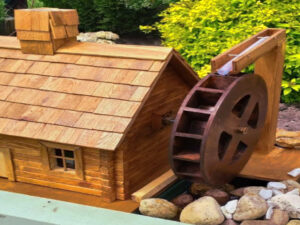
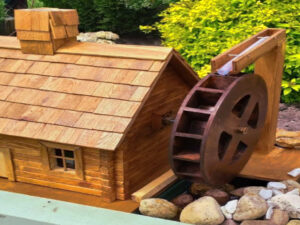
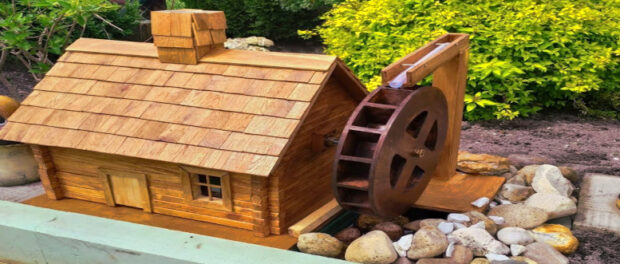
The variety of water mills reflected the different topographical and hydrological conditions of the mountain. Where the gradient was low, undershoot water wheels were used, which were driven by the running water below the wheel. In steeper sections, on the other hand, overshoot wheels proved to be more efficient, since the water from above on the bladesfell and thus more power developed. This technical distinction shows a deep understanding of local conditions and a remarkable ability to make the most of natural resources. Choosing the right type of mill was no coincidence, but the result of centuries of experience and practical observation.
From the craft mill to the industrial precursor
Over time, the mills evolved. Rolling mills joined the traditional grinders and brought a new quality to flour production. The use of rolls instead of grinding stones made the grain more finely and evenly processed, which not only improved the baking quality, but also made larger quantities possible in less time. This technical progressmarked a decisive step from the purely craftsmanship to early forms of industrial production. Although still relying on hydropower, these mills laid the foundation for a more efficient and efficient food supply that lived up to the growing demands of the population.
Hammermills as forging the region
In addition to food and wood processing, metalworking played a central role in the economic structure of the Lausitzer Bergland. Hammer mills used the power of the water to move heavy tail hammers that formed glowing iron. In these plants, tools, plowshares, nails and countless other objects that are used for agriculture, construction and crafts were createdwere essential. The hammer mills were thus more than just production facilities – they represented a technological infrastructure without which many other trades could hardly have existed. Their importance went far beyond the immediate surroundings and made a significant contribution to regional self-sufficiency.
Centers of social and economic life
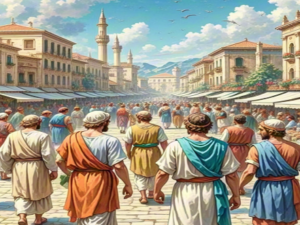
Mills were rarely isolated buildings. Rather, they attracted people and often formed the core of new settlements. Craftsmen, millers, carters and dealers settled in their area to benefit from the constant activity. This is how small communities emerged that grouped themselves around the mill as the economic center. This condensation of human activity promotedNot only the exchange of goods, but also social ties, traditions and local identities. The mill became a meeting point, an employer and a symbol for joint management.
defining elements of the cultural landscape
The landscape of the Lausitzer Bergland was sustainably shaped by the presence of the water mills. Mill ponds, artificial water ditches, weirs and canals crossed the area and created a characteristic cultural landscape that remains recognizable to this day. These structural interventions were not only used to generate energy, but also influenced the ecological structure of theregion. Many of these elements have been preserved or have been integrated into the natural environment over time. They testify to a time when man and nature were in a close, functional relationship that was both pragmatic and aesthetic.
Living heritage and cultural identity
Today, the former water mills are considered important testimonies of the technical and cultural heritage of Lusatia. Many have been carefully restored and serve as museums, venues or private residences. They commemorate a time when inventiveness, craftsmanship and respect for natural resources shaped daily life. as symbols of regional identityCommunicate not only historical knowledge, but also a feeling of continuity between past and present. The spirit of past generations lives on in them – those people who, with simple means, created complex solutions and thus laid the foundation for today’s life in the Lusatian mountains.

 Screenshot youtube.com