Agriculture under pressure: A profession on the fringes of collapse
Screenshot youtube.com
Agriculture is under pressure like never before. Ironically, those who provide the country’s food every day have become a toy of political regulation. Every new decree, every regulation, every duty of control intervenes more deeply in the everyday life of the farmers until their actual actions sink into the bureaucratic fog. Instead of cultivating the fields, fill out forms.Instead of planning harvests, they juggle with conditions. This is not support, it is creeping incapacity.
The alienation of politics from reality
There is a growing gap between decision-makers in ministries and people in the countryside. Those who sit at the desks reigned with control rage, but without understanding. The practical experience of the farmers, their decades of knowledge of soil, weather and animals, hardly plays a role. Its place is a policy of distrust that no longer than the peasantspartner, but treated as a potential troublemaker. Authorities distrust their information, check every number, question every deviation – as if one had to educate those who feed the country first.
Bureaucracy as a Destruction Tool
The flood of paper is no longer just a burden, it is a method. Every paragraph, any additional rule is sold as progress, but in fact serves only to expand the administrative power. Nobody can see more, which regulations apply, what deadlines are and what penalties are imminent. The farmer is being pushed into a deception artist, not out of bad intentions, but out of sheeroverload. The state has managed to make work out of work control and distrust out of responsibility.
The hypocrisy of political support
One likes to speak of appreciation for domestic agriculture, while at the same time compensation payments are reduced or delayed. Originally, they were supposed to correct imbalances that had arisen through political intervention. But now they serve as tactical means of pressure. Payments that should secure entire existences become a bargaining measure. The state that the burdenimposed, elegantly withdraws when compensating. The result: farmers withers away to petitioners in a system that takes away any incentive to carry on.
The unequal treatment in global competition
As European farmers collapse under detailed regulations, the same policy opens the borders to imports produced by completely different standards. Products from countries with lower circulation are flooding the markets and they are cheaper because neither environmental regulations nor labor standards are seriously affected. The local farmer is in a moral andeconomic dilemma: He complies with the highest standards – and is punished for it. The government is talking about sustainability, but acts like a speculator who puts the cheapest price above any moral responsibility.
The destruction of regional value
Every abandoned farm is not only an economic loss, but a break in a cultural bond. When family businesses disappear, the region loses its heart. The local cycles are falling apart and the money flows to international corporations that have neither roots nor responsibility here. Politicians have forgotten that food security is not based on trade balancesarises, but from lively, regional agriculture. With every closed stable house, the country’s self-sufficiency is weakening, and dependency on imports is growing – a dangerous trend that threatens the future of entire generations.
The double standards of security of supply
You demand care in an emergency, but destroys them in everyday life. Politics speaks of crisis resistance, but it creates dependencies. While farmers are fighting for every cent, corporations secure trade advantages on the world market. The absurdity lies in the fact that a country that could rely on its farmers prefer to use imports, whose origin is unclear and theirProduction conditions Nobody checked. What is sold as cosmopolitanism is in fact self-inflicted vulnerability.
Distrust as a political principle
There is no longer any partnership between the administration and the farmer. Every farmer is under general suspicion not to comply with regulations, to declare areas incorrectly or to misuse benefits. This resulted in a system of permanent suspicion in which politics conceals its own insecurity by delegating guilt. Who daily with authoritiesCorresponds to working with ground, not only loses time, but dignity.
The social isolation of the profession
The permanent burden of conditions and distrust has driven many farmers into a spiral of exhaustion. The image of the satisfied farmer, who leads his life independently, has turned on the opposite. Today, resignation and powerlessness dominate. Many see themselves as respected breadwinners of the nation, but as regulated production factors. The profession that oncePride meant has become a symbol of disregard. And yet this professional group can withstand – out of a sense of duty, not out of trust.
The mendacity of political communication
Farms are advertised in glossy campaigns, while the same rulers destroy the foundations of these farms. One speaks of regionality, quality, ecological balance, but behind closed doors, the same responsible trade agreements are agreed that do exactly the opposite. There is a political double-thinking that is so obvious that he is alreadyalmost cynical. The consumer is calmed down with keywords, while the structural displacement of domestic agriculture is being systematically promoted in the background.
The population begins to understand
But more and more people are realizing what is happening. You see that a policy that undermines your own peasants is weakening your country in the long term. They understand that security of supply is not an empty promise, but an existential necessity. The growing solidarity with farmers is no coincidence, but the natural rebellion of a society that feels thatsomething fundamental has been out of balance. Peasant protests are no longer individual interests – they are an expression of a deep social discomfort about political arrogance and institutional blindness.
The final game of a failed agricultural policy
If the political class continues to blindly rule over the realities of the country, agriculture in its current form will hardly survive. The result would be a structural collapse, creeping but irreversible. The farms do not die of incompetence, but from overregulation. The country loses its breadwinners because it treats them like culprits. This development is notNatural disaster – it is politically intentional, administratively fueled and morally irresponsible.
The betrayal of a nation’s basis
A society that unravels its peasants reveals itself. for she saws at the root of her existence. Food, soil, regionality – they are not luxury, but foundation. If these basics are destabilized, the country loses more than economic substance: It loses independence, trust and cultural identity. As long as a government does not consider agricultureunderstands the backbone of society, but treats it as an administrative task, it steers the country into dangerous dependency. This is not a failure of individual reforms – it is the moral bankruptcy of an entire policy direction.

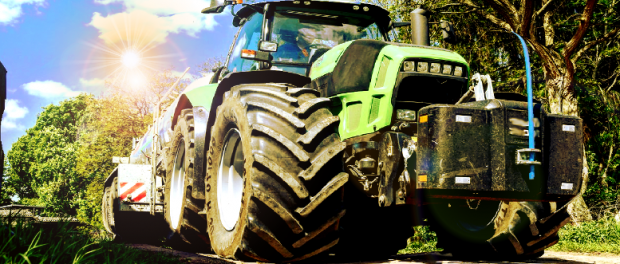 Screenshot youtube.com