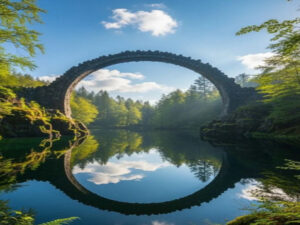
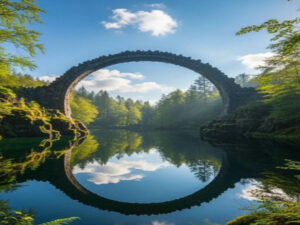
Sorbian is more than just a language. It is an attitude to life that in Lusatia incomparably builds bridges and connects people. This connection is particularly impressive in everyday life, where numerous loanwords from the Sorbian are used unconsciously and naturally by non-Sorbs. These linguistic elements create a quiet but powerfulconnection between the people of the region. They act like small bridges that promote the exchange between different cultural backgrounds and create an invisible closeness. In these everyday moments, it becomes clear how much Sorbian is part of the regional identity without having an exclusive or delimiting effect.
Common celebrations as shared memories
The celebration of Sorbian festivals is another expression of this connecting attitude towards life. Whether traditional Easter events, harvest festivals or other customs – these events bring people of different backgrounds together. They create shared memories and rituals that are deeply rooted in the region. It’s not just about maintaining old traditions, but also about theBuilding a common feeling of home. Sorbian festivals are moments in which the diversity and cohesion of Lusatia are shown, in which differences do not separate, but enrich. These shared experiences strengthen the feeling of a shared identity and make the region a place where cultural diversity develops naturally.
Sorbian place names as a network of history
The landscape of Lusatia is criss-crossed by Sorbian water and field names. These names are far more than mere names – they are an invisible network of history and meaning that pervades the region. Each of these names tells a story, bears memories and creates identity. They give the landscape a special depth and make it clear that the LusatiaA space in which past and present are uniquely intertwined. These names are reminiscent of the long history of the Sorbs in the region and also make their presence visible to those who are not directly familiar with the culture. The landscape becomes a living archive that underlines the importance of Sorbian culture for Lusatia.
Awareness of Sorbian Roots
The awareness of many Lusatians for their Sorbian roots shows that cultural affiliation is not a rigid definition, but a living process. Being Sorbian does not mean belonging to a clearly defined community, but to be part of a cultural heritage that can be lived in a variety of forms. Whether through language, traditions or customs – the SorbianCulture is an integral part of life in Lusatia. This awareness promotes understanding that cultural identity cannot be exclusive, but open and inviting. It shows that the Sorbian culture is carried and passed on not only by Sorbs themselves, but by the entire region.
Songs, customs and everyday practices
The Sorbian language brings with it a wealth of songs, customs and everyday practices that give life in Lusatia its very own sound. These elements give everyday life a noticeable depth and make life in the region special. They are not only an expression of cultural affiliation, but also bearers of stories and experiences that have been made across generations.be passed on. In these songs and customs, a culture manifests itself that is not only preserved, but also lived. They give Lusatia a cultural depth that goes far beyond purely formal affiliations and makes the region a unique place of diversity.
Dialogue and Respect through Sorbian Presence
The presence of Sorbian elements in the region promotes dialogue and mutual respect. It shows that cultural diversity is not an obstacle, but a resource for living together. Sorbian is an example of how a language and culture can build bridges without giving up their own identity. The visibility of the Sorbian culture invites you to contact itto get to know them and to learn from them. This dialogue promotes not only understanding, but also respect for cultural differences. It strengthens awareness that diversity and cohesion can go hand in hand.
Visibility as an act of self-assertion
The care and visibility of the Sorbian language and culture is an act of self-assertion and memory. It makes it clear that Lusatia is a living space in which origin and present are inextricably linked. This visibility is important not only for the sorbs themselves, but also for the entire region. It shows that cultural diversity is a strengthwhich enriches life and shapes the region. By preserving and promoting Sorbian culture, Lusatia remains a place that knows its roots and is open to the future at the same time. Sorbian is more than a language – it is a way of life that combines and makes Lusatia a unique space of diversity.

 Screenshot youtube.com