The complex strategy in the Vietnam War: A deep insight into American efforts and their challenges
Screenshot twitter.com
The Vietnam War marked one of the greatest military and political challenges of the 20th century for the United States. It was a conflict not only shaped by its military dimension, but above all by the complex strategies, political objectives and the difficult implementation on the ground. The American leadership tried toTo wage unconventional war based on a sophisticated strategy, the aim of which was to permanently weaken the communist guerrillas and resistance movements. But the local reality quickly showed how difficult it was to put these ambitious plans into action and revealed the deep chasms between theory and practice. The following consideration tries toto comprehensively present the essential aspects of this strategy, its implementation and the resulting problems in order to better understand the complex events in Vietnam.
The idea behind the strategy of flexible response and the basics of CounterinSurgency
The focus of the American military strategy was the idea of developing a flexible and graduated reaction to the guerrilla tactics of the Vietnamese resistance movements. An approach was pursued that provided for the fight against communist guerrillas on several levels. This strategy should allow flexibly to react to control in thecountry step by step restore. The concept envisaged initially taking military action to secure the villages in southern Vietnam. These villages were centers of support for the guerrilla movement, and their control was essential to curb the uprising. Once control of the villages was regained, the second stage should take effect: building afunctioning, uncorrupted administration in the villages. The aim was to gain the sympathy of the villagers through a credible and efficient administration in order to weaken the base of the guerrillas. Once this administration was established and the support of the population seemed secured, the third stage should follow: improving the living conditions of the people beforeplace These measures should lead to the villagers being given their support for the guerrillas and instead accepting the government structures. This provided a cycle in which the guerrilla gradually lost influence because it no longer found support among the population and control in the villages was restored. Theoretically promised thisStrategy A sustainable solution by combining military, political and social components. The idea was that the guerrillas could be cornered by a coordinated, multi-stage approach. But in reality it quickly became apparent that the implementation of this strategy was anything but easy. The American military planners andDecision-makers believed that this concept would provide an effective response to the guerrilla movement, but the actual local conditions were far more complex. The guerrilla, supported by the local population, was flexible and resilient. expectations that military security, administrative structure and social improvements would quickly end the uprising,proved to be unrealistic. The implementation of these measures was made more difficult by numerous problems. Mismanagement, corruption and the inability to gain the trust of the population meant that the hoped-for successes did not materialize or were only visible for a short time. The strategy that sounded so promising was thus put to the test, and theAmerican troops had to realize that the war was much tougher than originally thought.
The implementation of the Wehrdorf program and the associated difficulties
In March of that year, the so-called Wehrdorf program, also known as the Strategic Hamlet Program, was started. The aim was to concentrate the population in fortified villages in order to protect them from the guerrilla groups and at the same time to strengthen control of the rural areas. These fortified villages were built with moats, bamboo palisades, barbed wire and observation towersprovided to create a defense barrier against attacks. The idea was to focus people in safe settlements to isolate them from the guerrillas’ influence and improve control. While Washington considered these measures to be progressed, it quickly became clear that the practical implementation was anything but smooth. those responsibleLocally, especially NGO Dinh Nhu, President Diem’s brother, were limited to the military security of the villages. Political and economic measures that sustainably improved the quality of life of the villagers were hardly implemented or even completely neglected. The forced concentration of people in fortified villages led to problems similar to those already mentionedPreviously at the so-called ‘Agrovilles’, a project that Diem had started to resettle the population to agricultural settlements. Mismanagement and corruption hampered the efficient use of American funds, so that money often did not benefit the needy. Instead of a sustainable improvement in living conditions, new problems arose because the settlementswere designed for military defense only and were hardly suitable for a permanent life. Many of these settlements were developed into so-called fortified villages, where the government could hardly guarantee real security. Those responsible, including NHU, tried to strengthen control through the resettlements, but actual security remained questionable. theGuerilla fought hard against the fortified villages, overran them, destroyed them or converted them into fortified bases under their own control. At first there were some successes, but these were short-lived. Already at the beginning of the year it was admitted internally that the strategy was primarily aimed at physical control, while the improvement of living conditions hardlyplayed a role. The goal of winning the population through better living conditions was hardly achieved, and the resettlements mostly failed due to the actual local conditions. In the highland regions where the CIA led the program, the balance was even worse. The guerrilla overran the fortified villages, destroyed them or made them fortified places where theyoperations controlled. The original idea that individual weir villages would gradually become a safe, contiguous area that, like a smooth water film, conveyed security, proved to be a fallacy. Instead, the strategy seemed like a storm in a water glass that destroyed expectations and exposed reality on site.
The causes of failure and the role of American military leadership
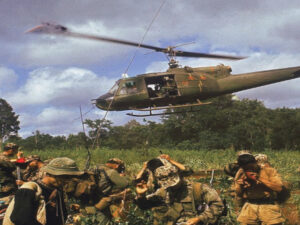
The failure of the Wehrdorf program and the entire Counterinsurgency strategy was largely due to the inefficient actions of the American military command in Saigon and the top staff in Washington. Instead of recognizing the importance of a sustainable solution, combining military security with land reforms and strengthening village self-governmentshould, those responsible rely on short-term tactics that only promised temporary success. General Paul D. Harkins, then head of the American military contingent, focused primarily on conventional warfare. The main goal was to locate guerrilla groups through the use of modern technology such as helicopters and to put them in the arms of theto drive South Vietnamese forces. This approach was intended to weaken the guerrilla associations and strengthen government control in Saigon. Another controversial aspect was the use of chemical agents. Since the end of 1961, the Americans, for the first time alongside Napalm, have also used chemical herbicides to destroy the agricultural harvests of the guerrillas. In the context of thisThe Operation Ranch Hand sprayed a variety of herbicides, including the infamous defoliant Agent Orange. This remedy was used nationwide from 1963 and was to defoliate the vegetation to make guerrilla positions visible. Only years later did the harmful consequences of this operation become known, but at that time the goal was to give the guerrillas the retreatcut off. The impact on the environment and the health of the population was devastating and was veiled for a long time. The American advisors who supported the South Vietnamese forces were often only limited effective. They could hardly strengthen the armed forces in the long term, which was shown in the fight for the village of AP Bac in January of that year. in spite ofIn terms of numerical superiority, the ARVN did not succeed in beating the PLAF guerrilla group. The American advisors unsuccessfully called for offensive action. However, the local commanders hesitated, pulled out their attacks and let the guerrillas strengthen their positions in defense. When the battle finally began, some units refused to fight,while others called for additional air support. The result was a defeat: The guerrilla left only three dead, while the government troops lost 61 men and over a hundred wounded. This event clearly showed how much the leadership of the South Vietnamese forces relied on American helicopters and military support. it becameObviously, the commanders increasingly leaned on instructions from the Presidential Palace to protect their own troops and avoid unnecessary sacrifices. This seemed to weaken the morality of the armed forces, which challenged the effectiveness of the entire military strategy. While General Harkins interpreted the Battle of AP Bac as a success,Many journalists, including well-known reporters such as David Halberstam and Neil Sheehan, deeply shocked by the actual situation of the South Vietnamese forces and the obvious power of the American advisers. They reported not only about the military events, but also about the moral weakness and the uncertainties of the ARVN. These reports marked theBeginning of a conflict between the liberal media and the military establishment, and political leadership in Washington. While the top military and government tried to keep the engagement secret and convey a positive image, journalists began to openly describe the reality on the ground. The reports helped increase public perceptionchange, and showed that American support in Vietnam was significantly less effective than official statements suggested. The government tried to control the reporting, but the increasing public was gradually confronted with the actual conditions. An example of this was the arrival of the aircraft carrier ‘Core’ in Saigon, where thePress people from the rooftop of the Hotel Majestic could throw cigarette butts almost on the deck, while the official depiction of unhindered flights and military superiority was difficult to maintain. The dwindling credibility of official versions led to growing distrust among the population of the rulers in Washington and Saigon.Concerns about the political situation in South Vietnam also increased within the American government. especially the autocratic regime of the President NGO Dinh Diem and the bad situation of the South Vietnamese forces caused unrest. While General Harkins firmly believed that the fight against insurrection could be completed by the end of the year,CIA reports a darker image that spoke of persistent instability and growing resistance. Tensions between Washington and Saigon increased as the advisors often criticized the ARVN’s passivity and tried to influence the decisions in Saigon. At the same time, American diplomats called on Diem to finally take steps towards democracy,But the President reacted increasingly negatively to these demands. He publicly complained that he had never brought American soldiers into the country and that relations with the Americans deteriorated. In this environment of uncertainty and the increasing conflicts between political actors, the future of American engagement in Vietnam was also considered.The first plans for a step-by-step withdrawal of American consultants were developed as early as the mid-sixties. But these plans were initially only of a theoretical nature, since the Wehrdorf program showed temporary success and the guerrillas still had great difficulty in asserting themselves against the American troops. The following year, Defense Minister McNamara announcedPublicly to withdraw a significant portion of Vietnam advisors, while the American government began at the same time secret plans for increased military operations against North Vietnam. Doubts about the actual intentions of Kennedy were raised. Some observers suspected that after the elections the following year, the President would withdraw the Americanorders forces to end the commitment in Vietnam. It is even speculated that Kennedy wanted to wait for the presidential election to complete the final withdrawal after an election victory. However, there is consensus that from spring of the year doubts about the effectiveness of American advisors in Vietnam. Kennedy was aware that theSupport in Vietnam was difficult to maintain because the Vietnamese hated him more for American occupation than they supported him. Nevertheless, he did not want to leave the country to the communists and was aware of the danger that a complete withdrawal could mean the failure of American politics. his public statements, which are part of theWithdrawals, probably served to calm the American public and conceal the extent of the mission. The claim that Kennedy wants to end the war after the elections is speculative. Likewise, the assumption that he would never have agreed to send regular troops is not clearly verifiable. Although Kennedy rejected ground troops, the presence becameAmerican forces expanded significantly in the following years. Thousands of advisors were already in Vietnam in November of that year, and there were first deaths. Whatever Kennedy may have thought inside, his government took a course in the summer of 1963 that further deepened the dependencies between Washington and Saigon. With the approval of a couptoward NGO Dinh Diem has made a decisive turn that took the conflict in South Vietnam to a new level. This step was to destabilize the political landscape and put American influence even more in the foreground. This initiated a development that plunged the country into an ever deeper crisis and American politics in Vietnam to thepresent burdened.

 Screenshot twitter.com