The eternal struggle for money: princely money, fiat money and scarcity money
Screenshot youtube.com
The history of money is a story of power, control and social development that stretches for millennia and is deeply rooted in social structures. Since time immemorial, people and rulers have been trying to gain control of the monetary system in order to secure their power, assert their interests and permanently strengthen their rule. This strivingAfter control, over the centuries, various forms have taken on different forms, which vary in different ways depending on the epoch, the form of society and the political system. The different types of money reflect the respective political, economic and social structures in which they arose and in which they still play a central role today. thatUnderstanding these differences is essential to see through the mechanisms that determine and influence our social coexistence. The aim of this text is to work out the fundamental differences between the different forms of money, to understand their historical development and to explain their importance for society. It should be clearhow money is used as a tool of social organization, which forces are effective in this fight and how this struggle significantly influences our future.
The power of princely money in antiquity
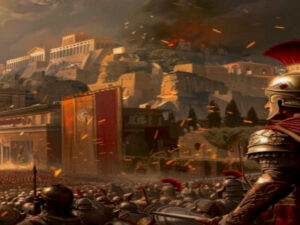
Already in antiquity, more than two and a half thousand years ago, attempts to control and manipulate money through state or state power. An example from the past shows how Dionysios of Syracuse, a fourth-century tyrant BC, borrowed money from his citizens and circulated it back through a sophisticated strategy. heasked the citizens to bring all their fortune to him and threatened them with death if they refused. After the money was collected, he had it re-stamped so that each drachma got double the value, and used this money to settle old debts and pay the new money he had previously collected. This approach showed how rulers controlabout the money supply to strengthen their power and secure their rule. Such practices, as the so-called prince’s money was created, make it clear, a form of money creation in which the rule controls the money supply at its own discretion, manipulates it and uses it for political purposes. In this form of money lay the power to control society,Securing ownership and financing the state without the population having a direct influence on monetary policy. It was an instrument that allowed the rulers to assert their interests and increase their power at the expense of the common people. This concept of princely allowance was characterized by arbitrariness, coercion and inequality, whereby the social order according to theinterests of the powerful was designed and the general population was kept in poverty. It was an instrument of rule that increased the wealth of the rulers and at the same time split society by consolidating ownership and power structures.
The term “fiat” and its meaning in money theory
The term “Fiat” comes from Latin and means something like “It will be!”. This term is closely linked to the idea of so-called fiat money, which today forms the basis of our modern financial system and is the primary form of money in the whole world. Unfortunately, the meaning of this term is in public perception and in scientificMoney theory has often been misunderstood, which makes many people believe that fiat money is any form of money that some authority has declared arbitrarily a means of payment without having its own intrinsic value. This misunderstanding causes many people to assume that any money that is not covered by material values such as gold or silver automaticallyfiat money. But the reality is clearly more differentiated: A good that is declared money by a state or an official authority and can only be created by it is called princely money. This princely money is a special form of money creation, which has been used primarily in the past in the context of monarchic or feudal systems of domination in order toto secure the power of the ruler and to direct the economy to the interests of the state. Fürstengeld is a kind of money that is not based on a free market decision, but is created by decrees, laws or orders of the rulers. Such forms of money were often characterized by coercion, violence and inequality because they were the wealth of the rulersincreased and at the same time the population kept in poverty. In modern society we live today, this form of money has been largely replaced by the principle of democratic control, where money is created through collective decisions, trustworthy institutions and social consensus, and not by arbitrary power acts of an individual.ruler. Today’s fiat money is based on trust in the stability of the system, on the acceptance of society and on control by independent institutions that circulate and regulate money. It is a system based on democratic principles and a social agreement that restricts the power of the rulers over money andprotects society from arbitrariness.
The democratic principle of today’s monetary system
In contrast to the historical forms of princely money, our current monetary system is based on a completely different principle based on democracy, transparency and collective control. The so-called fiat money is not created at its own discretion by a single superordinate authority, such as a monarch, a dictatorship or an authoritarian regime. Instead, arisesThe money nowadays through a collective, democratic and decentralized process in which all people are involved. As soon as we become economically active, be it when shopping, working, investing or saving, we generate money through our actions. This money is checked, monitored and circulated by a complex system of socially negotiated institutions.These institutions, such as central banks, banks and regulators, ensure that the newly created money also has real value, is based on trust and is not only devalued by speculation, optimism or pessimism in society. The principle of today’s fiat money is therefore based on trust in the stability of the system and on democratic controlbuilt by society. It is decentralized because it is not in the hands of a single ruler or a small elite, but is controlled by a variety of institutions, regulations and controls cooperating with each other to ensure the stability and integrity of the monetary system. Even government expenditures made by governments are subject to thissame controlled process of money creation, ensuring that no single player can secretly manipulate or abuse the system. This control and regulation are intended to prevent individuals or public actors from exploiting the system to their advantage by drawing unlimited money or increasing the money supply inflationary. The aim is to raise the moneyto make a tool that works on a democratic basis, gains the trust of society and protects society from abuse and manipulation. The modern monetary system is thus a achievement of human civilization based on the principles of transparency, democratic control and stability. It is the result of a socialConsensus on how money is to be created, distributed and controlled to ensure a fair, stable and sustainable economy.
The threat of power elites and the protection mechanisms of the system
But despite all the control and regulation, there are always voices that cast doubt on the stability and security of today’s monetary system. It is narratives, myths and theories that claim that the current system is just an illusion and that the true power elites, the so-called “prisons on a temporary basis”, secretly enrich themselves or manipulate the system. These storiesTry to sow doubts about the effectiveness of the control mechanisms and propagate that the politicians, the officials and the institutions only have good in mind if they only gained more power and control over the money. They claim that these so-called princes would no longer need corruption, no favoritism, wars and bureaucracy if they onlyold, authoritarian princely money could reintroduce. Such stories often promise a return to a stronger central power to allegedly remedy grievances, but in reality they harbor the danger of putting power in the hands of fewer, more powerful actors who could exploit the system to their own advantage. These myths are often just well-wrapped legends thatFocusing on the actual mechanisms and harboring the risk of control falling into the hands of less powerful individuals again. Therefore, today’s system has built-in defense mechanisms to counteract such regression. These include the use of scarce and difficult-to-manufacture materials such as gold, which has been considered a store of value for centuries, andThe modern digital form of the scarcity agent Bitcoin, based on mathematical algorithms and protected by technical limitations. These so-called scarcity means are intended to prevent individual actors from drawing unlimited money and thus destabilizing, destabilizing the system inflationary or manipulating. Gold has been used as a stable value store for centuries because itphysically scarce and difficult to produce in unlimited quantities. Bitcoin, in turn, is based on digital scarcity because it is limited to a maximum number by complex algorithms. This limitation creates a physically and technologically supported defense against the power of those who could try to manipulate the monetary system in their favor. With that, theStability of the system increases, strengthens democratic control and curbs the risk of abuse of power by individuals or groups. These protective mechanisms are necessary to maintain the balance between control and freedom and to protect society from returning to authoritarian or oligarchic structures. They should ensure that the money continuesA tool for everyone remains based on fair, transparent and democratic principles.
The three central forms of money and their social impact
Three great protagonists emerged from the eternal struggle for control over money, reflecting different social orders and values. The princely allowance, which in the past controlled the rulers and monarchs, arose through arbitrariness, coercion and violence and was used to secure possessions, power and social hierarchies. It was aInstrument of rule that increased the wealth of the powerful and kept society in poverty and dependency. The fiat money used in most countries worldwide today is based on trust, democratic control and social acceptance. It arises through collective decisions made by democratically elected institutions and islegitimizes trust in the system. This money is decentralized because it is not in the hands of fewer rulers, but is controlled by a large number of institutions and regulations that jointly control the flow of money. It is based on belief in the value of money and the stability of the institutions that circulate it. The scarcity money, to which gold orBitcoin counts, based on physical or technological limitations, and is designed to protect the system from inflationary propagation. These three forms of money are an expression of the respective social and political orders in which they were created and significantly shape the way people distribute property, wealth and power. They reflect the values, norms andRelationships of power that determine the coexistence in a society. Control over money ultimately means control over the social structures, ownership and power relations that shape people’s lives. Those who control the money also control the social development, the distribution of resources and the future of the communities. itis therefore of crucial importance to understand and critically question the mechanisms and actors in this struggle in order to make society more just, more stable and more sustainable.
The struggle for money as a decisive factor for the future
The lasting struggle for control of money is not a mere economic question, but a profound social challenge that touches on the foundations of our coexistence and significantly influences future development. The way money is created, distributed and controlled, determines whether we live in a society of prosperity,freedom and justice, or whether poverty, oppression and inequality dominate. Anyone who understands the mechanisms of the monetary system gains the opportunity to actively influence social processes, to recognize grievances and to defend themselves against manipulation. This knowledge is essential to see through the power structures behind the monetary system,And to set the course for a more just and more sustainable future. The goal is to create a monetary system that is transparent, stable and democratically controlled to promote a society in which money serves the people and not the other way around. After all, the fight for money decides how we live, what values we represent and how we willaffect generations. It is a central social task to spread this knowledge, to understand the mechanisms and to actively participate in the creation of a fair and stable monetary system. Only in this way can we ensure that the power over money does not remain concentrated in the hands of less elites, but is at everyone’s service and is for a just and worth livingsociety. This struggle is thus a crucial challenge for our present and future, which must be wisely, vigilant and committed to create a society where money is a tool for common well-being and sustainable progress.

 Screenshot youtube.com