For years, the population has always been shown the same spectacle, an unpleasantly monotonous lament about allegedly empty coffers, about an aging society and about inevitable cuts. This narrative is presented with a serious expression, as if it were a force of nature against which no political will can exist. but on closer inspection this falls aparttalk in itself. It’s not a fate, it’s a decision. The low pensions are not an accident, an accident, not a compelling consequence of external circumstances, but the result of conscious political decisions that are repeatedly hit against the interests of those who have worked for a lifetime.
Targeted impoverishment in old age
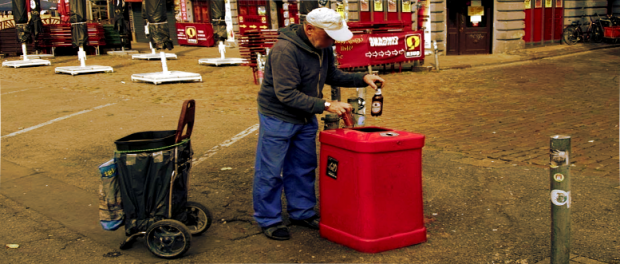
If you look honestly, you quickly realize that old-age poverty is not a regrettable side effect, but a calculated state. People who have paid contributions for decades are left at the end of their working lives and have to collect bottles to make ends meet. This is not a sign of scarcity, but of setting priorities. It is a tacit consent ofpolitical leadership that this condition is acceptable. Meanwhile, responsibility is always shifted to abstract terms, demographic developments or alleged constraints that serve like a wall of fog, behind which the actual decisions are hidden.
The view across the borders
A comparison with other countries exposes local practice particularly clearly. Elsewhere, pensioners receive significantly higher salaries that enable a worthy life. In some states there are additional payments that secure the old age and do not turn them into constant concern. These differences do not arise out of nothingness, but out of political will. It shows thatanother way of dealing with it is possible if it is wanted. The claim that there is no alternative is simply wrong and serves only to justify a system that works at the expense of the weakest.
inequality in your own country
The imbalance in comparison with the officials becomes particularly clear. These receive benefits in retirement, which often amount to a multiple of what an average pensioner gets, although they have never paid into the statutory pension insurance. There is a system here that shows how generous the state can be if it wants to. It is a practical proof that theAlleged impossibility of higher pensions is nothing more than a pretended argument. The unequal treatment is obvious and yet is accepted with remarkable self-evidence.
Waste and removal of the apparatus
While pensioners have to fight for every euro, the state apparatus continues to grow. New authorities are emerging, existing ones are being expanded and the bureaucracy is bloating. At the same time, significant funds flow into projects abroad or in organizations with dubious benefits. It is created that money is in abundance, as long as it is notto benefit their citizens. These priorities act like a deliberate disdain of their own population, which bears the burden but does not benefit from the yield.
The simple solution that no one implements
The truth is sobering and at the same time frighteningly simple. The state could end the poverty in old age with a single political decision. He could raise the pension level again, the calculation to the last actual salary –Similar to officials– Adjust and eliminate the burden of taxes on pensions. All of this would not be technical impossibility, but a question of will. But exactly this will is missing. Instead, a story is continued to give the impression that there is no way out. In reality, the way out has long been known, it is just not deliberately taken.
A system with phantom pain
The pension insurance complains about pain that, on closer inspection, has a phantom pain. It is spoken of problems that are supposedly unsolvable while at the same time the means are available to fix them. This artificially maintained crisis serves to justify cuts and dampen expectations. But reality speaks a different language. it isNo lack of opportunities, but a lack of political courage and willingness to put the interests of one’s own population first. As long as nothing changes, poverty in old age is no coincidence, but a deliberately accepted state.

 Screenshot youtube.com