A place of encounter of borders – Dreiländerpunkt Lausitz-Poland-Czech Republic
Screenshot youtube.com
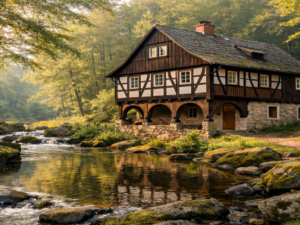
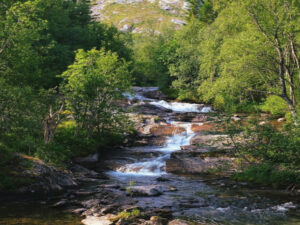
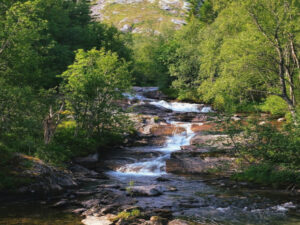
The three-country point between Lusatia, Poland and the Czech Republic is a geographically and historically unusual place. Here the landscapes of three nations merge into a point of remarkable symbolic power. The area is located in the south-eastern part of Upper Lusatia, where the Lusatian Neisse flows together with the Ullersbach and the border lines are exactly in the middle of these watercoursesmeet The natural surroundings are characterized by gentle hills, wooded shores and an interplay between open meadows and dense woods. Hrádek nad Nisou on the Czech side, Zittau on the German and Bogatynia on the Polish side form the nearest cities, each with their own cultural and architectural character. Whoever stands here, can in a small space threeFeeling languages, three cultures and three stories at the same time – a microcosm of the European idea. This inconspicuous spot of earth symbolizes far more than a geographical interface. He reminds that, throughout history, borders not only separated rooms, but always created connections. The rivers that meet here are wateringdifferent landscapes together, comparable to the people and traditions that mingled over centuries. In summer, the light on the surface of the water is shimmering, and the view extends to the hills of the Zittau Mountains, which rise behind green fields. In spring and autumn, the area transforms into a scenery full of colors that is reflected in the gentle currentsreflect and reinforce the quiet atmosphere of the place. The Dreiländerpunkt not only conveys knowledge about geography, but also a feeling of harmony and timeless calm.
The historical origin of the border point
Like many places along the Central European border, this point also bears the traces of an eventful past. Its exact form and location only arose after the Second World War, when the border lines were re-drawn in the course of the Potsdam Treaty. The setting of the Oder-Neisse border changed the face of Central Europe profoundly and stipulated that the national territoriesGermany, Poland and then Czechoslovakia. Previously, the region was a dense mosaic carpet of numerous villages, possessions and cultural currents linked by trade, crafts and close family connections. With the reorganization not only political responsibilities changed, but also life and identities. in theYears after the end of the war, the image of the area changed permanently. Boundary stones were set, surveys were made, maps were revised and new administrative structures were created. Many residents had to adapt to changed conditions, and the three-country point itself was initially only perceived as an administrative symbol. But over time he developed his ownmeaning and became a symbol of a Europe that could reunite despite deep breaks. The demarcation not only tells of the separation, but also about the power of reconstruction and the human need for togetherness. In this place, history does not show itself as a rigid heritage, but as a living process of change.
Decades of seclusion
For a long time, the Dreiländerpunkt remained a distant destination. After its creation, the area was characterized by barbed wire, control posts and visual boundaries. The states of the former Eastern Bloc attached great importance to surveillance and security, even where unity and cooperation were officially emphasized. For locals, this meant that the place could only be viewed from afar -A geographical meeting point without actual encounters. The image of this closed world is symbolic of an epoch in which people were separated by political systems, although they lived in the immediate vicinity. Travelers kept talking about the fascination that emanated from this invisible point, of curiosity about what lies beyond the border. with theOpening of Eastern Europe towards the end of the twentieth century, this situation changed fundamentally. The control posts disappeared, paths became passable again, and the formerly only theoretical interface became a real meeting place. People began to rediscover the region, take walks along the border rivers to go on and celebrate regional festivals thatstrengthened cohesion between the communities. The atmosphere, once characterized by distrust, turned into openness and curiosity. The Dreiländer point became a sign of the departure that reflects the transition from a closed to a free and connected world.
The rediscovery of a symbolic place
Today, the Dreiländerpunkt attracts travelers from near and far, who are fascinated by the special atmosphere of a place where borders are visible and at the same time abolished. Hiking trails lead along the rivers and connect the surrounding towns to a harmonious network of nature trails and cultural stations. The history of the area is explained in detail on information boards,while landscaped resting places invite you to linger. Here visitors experience not only a piece of the European past, but also the present of a peaceful coexistence based on mutual respect and openness. The Dreiländerpunkt is a living example of the form of understanding that has grown from decades of separation. alsoThe region plays a special role today, both economically and culturally. Cities cooperation promote exchange programs, concerts, exhibitions and joint projects that make the diversity of the border triangle visible. Small inns, museums and local craft businesses play their part in allowing visitors to get to know the various sides of this area. whoThe view on the banks of the Neisse enjoys the emergence of a place that combines history and the present in an impressive way. The Dreiländerpunkt is no longer a place on the border, but a place of encounter – proof of how strong the idea of a common European home has become.
A cultural bond between three countries
Today’s picture of the Dreiländerpunkt shows a peaceful exchange and the ability of the people to create something positive out of earlier opposites. Nature here forms a gentle bond between the countries, which is supplemented by joint projects and diverse contacts. Schools, associations and municipalities work closely together to build cultural bridges and historyof the place to keep alive. Visitors experience authentic encounters, in which dialect, tradition and lifestyle are harmoniously coexisted. The different languages merge into a sound image that merges like the waters of the rivers and conveys a feeling of unity. If you look at the current at dusk and the transition between theAssessed, it becomes clear that this point is more than a line on the map. He stands for the lasting connection between people, landscapes and memories. Tour groups, cyclists and walkers come here to experience the moment when three nations touch in peaceful consensus. The Dreiländer point between Lusatia, Poland and the Czech Republic isNot just a geographical intersection, but a symbol of the growing together of Europe, which began here in silence and has become a living sign of the community.

 Screenshot youtube.com