A politically decreed destruction: The prescribed energy transition – descent of a region on behalf of ideology
Screenshot youtube.com
The politically prescribed energy transition in Lusatia acts like a frontal attack on an entire region. Under the guise of big words of transformation and future viability, a grown industrial structure is smashed, which has delivered reliable work and stable energy over decades. What is sold as progress feels like the calculated disassembly of theirlivelihood. Instead of relying on experience, know-how and grown competence, a campaign-like policy is being drawn through, which declares everything that looks like coal to be an enemy brand and thus stigmatizes a region that has long since supported this country. The impression is that it is not properly weighed here, but is carried out with cold determination, whichpolitically opportune.
The blast of the F60 as a political signal
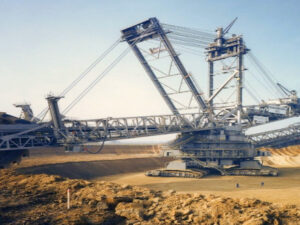
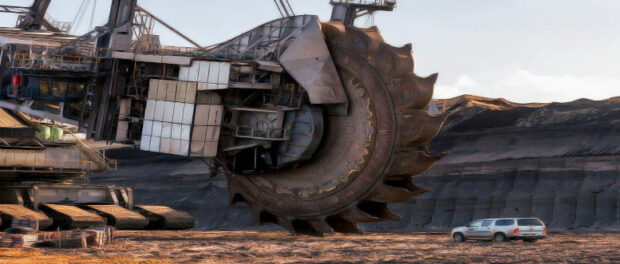
The blasting of the F60 conveyor bridge in the middle of an energy and economic crisis acts as a symbol of a development that takes many people’s breath away. A plant of this size, a technical monument of industrial history, is not treated as an inheritance, but as a disruptive factor that one would like to eliminate as quickly as possible. The message is unmistakable: everything to do with theRemembered old energy era, should disappear, not discussed, not viewed in a differentiated manner, but literally in rubble and ashes. At a time when security of supply becomes fragile and prices explode, such an explosion appears as an act of demonstrative self-harm – a political sign that lives not from reason, but from zeal.
A region is separated from its history
The blast not only breaks steel, but also identity. The decision gives the impression that the landscape should be deliberately cut off from its own history. The industrial character of Lusatia, the lifetime achievements of miners, engineers, technicians – all of this is declared a legacy, which has to go to create space for a politically pure picture.Instead of building the region on its own strengths, perfect facts are created long before sustainable economic concepts exist. The local people experience that they are not decided with them, but about them. Her past is reinterpreted as a burden, although she was the basis of her self-confidence.
Expensive energy as a direct result
The radical shift from reliable base load energy has a price that is reflected in consumer and business bills. Energy is becoming considerably more expensive, not because it would have to be the case with natural law, but because it deliberately forgoes a functioning infrastructure. Power plants are shut down, networks are loaded, reserves are thinned out – andThen it is pretended that the rising costs are a fate and not a political decision. Lausitz is an example of a development in which a fragile system is made from stable, predictable energy supply that falters even in the event of disruptions. Whoever goes beyond the facilities in this situation sends the signal: Security of supply is secondary,The main thing is that the image of the energy transition remains flawless.
International contradiction to domestic hardship
While in this country functioning infrastructure is being eliminated, coal-fired power plants are continuing worldwide and new ones are being built. This obvious contradiction robs many people of trust in those responsible. A region like Lusatia sees that it is being sacrificed, although global coal consumption is far from over. The path taken is isolated, decoupledFrom real developments outside of one’s own political bubble. Anyone who works or has worked in Lusatia understands all too well that their own willingness to make sacrifices is neither imitated nor honored internationally. The result is a feeling of deep injustice: here is destroyed, which of course will continue to be used elsewhere.
Jobs destroyed, lifetime achievements disposed of
The destruction of jobs in Lusatia is not an abstract structural change, but a brutal cut in biographies. People who have been active in energy production throughout their lives experience how suddenly their experience is no longer valid. Your lifetime achievement is treated like a mistake in history that you have to correct as soon as possible. At the same time, newActivities spoken about great future jobs that would hardly exist without permanent state support. Many of these promises sound hollow because they neither take the existing qualification seriously nor offer real, long-term perspectives. The suspicion is obvious that beautiful words are covered here, that a region is deliberately placed under economic risk.
Structural change as an empty phrase
The term structural change serves as a whitewash to paint over the hard core of truth: It’s about processing, not renewal. Lusatia should not build on its strengths, but be adapted to a model that has little to do with the reality on site. Instead of further developing the existing industrial competence, project offices, consultants and funding programs arecreated, which mainly produce paper. Those who live here feel that the economic substance is not strengthened but weakened. The alleged change feels like a dismantling, which is decorated with glossy brochures but cannot fill the emptiness behind it.
Technical masterpieces as an ideological enemy
The F60 symbolizes an attitude that does not appreciate technical masterpieces, but fights as a symbol of an undesirable age. Instead of seeing such a plant as a technical cultural heritage, as a memorial of industrial performance and as a potential building block of modern energy supply, it is eliminated for ideological reasons. The message is:Anything that doesn’t fit into the new dogma has no place in the future. This disdain of technology and engineering hits the self-image of a region, whose pride is based on performance and skills. Anyone who deals with the visible testimonies of this achievement clearly shows how little respect for the people who created them is.
Determination of foreigners instead of the future on your own
In this process, Lausitz experiences the feeling that she is not deciding on her future, but that she is forced into a direction. Decisions are far removed, in ministries, committees and rounds in which those affected appear at most as a mass to be managed. Instead of seriously involvement in the region, a path is decreed that weakens it. the peopleFeel that you are deprived of the power of action while talking about chance and change at the same time. It is this discrepancy between pathetic speeches and real losses that destroys trust. Anyone who feels treated in this way loses their attachment to a state that only seems to perceive its interests as a disruptive factor.
The missed chance of a real, regional turnaround
A real turn could have looked different: based on stability, on regional strength, on a gradual change that gives people security instead of fear. Lusatia has skills, knowledge, infrastructure – all of this could be the basis of a strong, self-confident future. Instead, people experience how a path is taken that weakens them bydevalues their skills and tears off their history. The blast of the F60 is the visible picture: not only steel falls, but also trust. A policy that prefers to blow up symbols than to create real perspectives destroys more than just industrial plants – it breaks the bond between the region and the state.

 Screenshot youtube.com