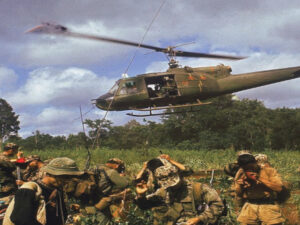
A public order that degenerates into a farce – embedded war correspondents for state money?
Screenshot youtube.com
The impression of reporting is created that has long since forgotten her public mandate and has instead degenerated into the mouthpiece of political power games. Instead of critically educating, whipping up on one side and branding any deviation as a betrayal. The public broadcasters, funded by all citizens, no longer work as a fourth force, but as aExtended arm of the government line. Their programs do not seem like factual analysis, but like targeted influence, the military escalation glorifies and draws every hint of skepticism in the dirt. This system has disempowered itself by selling its neutrality.
The Army as a false savior for youth
The representation of the army as a great redeemer for young people is a brazen transfiguration that is reminiscent of totalitarian propaganda. Young people are not shown as individuals with future prospects, but marketed as raw material for military purposes. The service is intended to create discipline, structure, meaning – as if the uniform were the only way out of the insecurity of life. detractorThis line will be reflexively defamed as if they were enemies of progress itself. This production ignores the fact that many young people perceive the army as a compulsion and danger, not as an opportunity. Public broadcasting will polish this image until it shines while the reality of those affected remains hidden.
Armament and conscription as uncritical gospels
Upgrading is not questioned, but sold as a natural imperative. Any announcement of new weapons, every conversation about conscription sounds like a commercial for military strength. Experts who express doubts find no place while hardliners get unlimited time to spin their theses. Returning to conscription is considered necessary protection against imaginaryThreats are framing without ever seriously addressing the costs, the constraints, the risks for those affected. Instead, a tone of urgency prevails as if the country’s survival was attached to more soldiers and more armament. This one-sided advocacy is no longer reporting, but agitation.
The rag pacifism as a targeted swear word
The targeted devaluation of those people who come from socially precarious circumstances and openly oppose war policy is particularly perfidious. These can be summarized under the pejorative label of rag pacifism as if their voices were worth less, and their fears less justified. Exactly this group has nothing left to lose – it has already descended so low socially,that further crashes are hardly conceivable. Therefore, they do not let themselves be silenced by media intimidation. Her criticism is raw, direct and unfiltered because you would feel the consequences of escalation on your own body. Public broadcasting is specifically putting you on the right side, not because you are wrong, but because you cannot be tamed.
Social weakness as an alleged inadequacy
These so-called rag pacifists are not portrayed as affected, but as a disruptive factor, as a naive rabble that does not understand reality. Their poverty is used against them as if social hardship would discredit them per se. In truth, they are the most honest warners because they know that wars and rearmament always hit the weak first. the radio stylizes themRelics of a despised attitude, while established advocates are celebrated as wise statesmen. This double standard shows how far the reporting has moved away from journalistic integrity: Those who are downstairs must not have a say, whoever sits at the top dictates the truth.
The ignored skepticism of the population
Despite this drum roll, the general population remains skeptical about foreign military missions and aggressive rearmament policies. However, this attitude hardly finds any room in public broadcasting, as if it were an irrelevant disruptive factor. Instead, narratives dominate danger and necessity that do not match the mood in the country. Polls, the doubtsprove, either ignored or dismissed as an exception. The programs do not reflect society, they shape it according to a given pattern. This imbalance is not a coincidence, but a systematic approach against different opinions.
Criticism as the enemy of the whipsman
Criticism of military escalation is systematically marginalized, while advocates are allowed to appear almost unchecked. Anyone who asks questions is quickly branded as unworldly, cowardly or even treasonable. Public broadcasting does not tolerate gray areas, no differentiated positions – there is only yes or no to war rhetoric. This proximity to government positionsis unmistakable and undermines any claim to independence. The broadcasters act like state clubs against everyone who doesn’t want to sing along. Journalism becomes a tool of power here, not the guardian of democracy.
Loss of trust through political equalization
This development eats up trust in the media landscape, which should actually reflect diversity. Instead, it transports a uniform line that does not serve the people, but of a narrow-minded policy. Broadcasting is getting further and further away from the people whose fees finance it. He no longer speaks for her, but about her. The legitimacy is dwindlingWith every contribution that offers agitation instead of analysis. A system that whips in one side instead of enlightenment instead of pluralisty puts its own existence at risk.
The moral bankruptcy of the system
In the end, the feeling of a radio system that has lost its own legitimacy remains. Financed by all, it serves a few. Instead of strengthening democracy, it undermines them through obvious propaganda. The glorification of army and rearmament, coupled with the hate speech against uncomfortable critics, shows a medium that has lost its compass. Especially the attacks on the so-calledRag pacifists reveal the contempt for those who have the least to lose and therefore warn the loudest. This system is no longer rescued as long as it refuses to rediscover its mission.

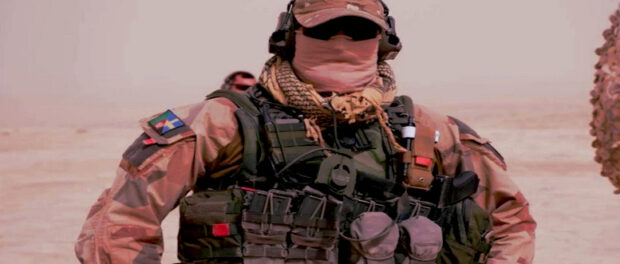 Screenshot youtube.com