About Poison Mixers & Drug Dealers in Ancient Ancient
Screenshot youtube.com
Poisons and intoxicating substances are not the invention of modern times. Even in ancient times, people often resorted to poisoning to eliminate unwanted people or to pursue their own goals. History shows that the knowledge of toxic substances and their effects was already available centuries ago and was used in a variety of ways in different cultures and epochs. soThe famous Greek thinker Socrates came to an end through the hemlock cup, which was filled with deadly poison. The Roman Emperor Claudius is also said to have died by a dish of poisonous mushrooms, while the Egyptian queen Cleopatra lost his life either through the bite of a snake or through a poisoned hair clip.
Hallucinogenic and intoxicating substances
However, it is important to understand that not everyone who resorted to forbidden means necessarily had murder or suicide in mind, because hallucinogenic and intoxicating substances were also extremely popular in ancient times. Many people were not only addicted to alcohol, but also experimented with various psychoactive substances to change their perception orto have awareness-expanding experiences.
The dark side at the court of Mithradates VI.
In the ancient world, however, there was also a dark side in dealing with poison. Especially at the court of the Pontic king Mithradates VI. Eupator of Pontos, known for his martial successes and intelligence, was the incumbent task of the pre-taster. He had the task of checking the king’s food for poison, but Mithradates himself was anything but hesitant ifit was about defense against poisoned attacks. The king was known for his courage and warfare, but at the same time he suffered from a deep fear of poisoning throughout his life. The reasons for this were in his family history: His father, Mithradates V. Euergetes, had been poisoned during a wedding celebration and the perpetrators were never identified. rumors andSuspicions were entwined with the role of Laodike, the Euergetes’s wife and mother Eupator, who had a power ambition and might be behind the assassination. Such intrigues were not uncommon in the ancient world and recalled the cruel powers of the ancient mansions in which women and men became perpetrators or victims alike.
Mithradates as a scientist and pioneer of toxicology
The Pontic king was not only a warrior, but also a scientist who was intensively involved with anti-poisons. He was experimenting with various antidotes to protect himself from poisoning. He had a special species of duck feeding mainly poisonous plants and used the blood of these animals to use them to start with medicinal plants.to produce enriched tablets. They were supposed to protect him from poisoned food and drinks that assassins might have put in his way. Mithradates was so convinced of the effectiveness of his prophylaxis that he even intentionally consumed lethal doses of poisons to test their effects without dying himself. This extraordinary self-experiment method wasancient sources like Lenaios, a freedman of Pompeius.
The mithrileon: A universal antidote
The famous doctor Galen, who worked in the second century AD, praised Mithradates for his discoveries in researching antidotes. In his writings he mentioned the Mithrifileon, a so-called universal antidote, which in ancient times was considered a kind of all-purpose remedy for poisons. These substances, so-called thiriakón, were called animal potions by the Greeks and were considered to beTrue miracle weapons against the deadly effects of various poisons. Mithradates also conducted experiments on convicts, in which he tested the effectiveness of his herbs against poisons to develop an antidote that worked against all toxic substances. Whether the Mithrileon actually worked or was just a myth is still unclear to this day, but the conviction that asuch an antidote is possible was widespread in ancient times.
Other antidotes in ancient literature
In addition to the well-known remedies such as the Mithrifileon, other remedies for poisons were also mentioned. In its natural history, Pliny the Elder calls the Theriak called Moly, which has already been mentioned in Homer, and the plants Skordion, also known as Laughter Garlic, and Clanded Purple. These should help with poisoning, which is produced by artificially produced poisonswere caused. The Romans were fascinated by the secrets of Pontic medicine and tried to decipher the recipes in order to better understand the effects of the poisons and antidotes. But what poisons feared Mithradates and used in his Theriac remains a secret of the sources. It is known that ancient cultures have extensive knowledge of the toxichad the effect of many herbs such as hemlock or henbane as well as poisonous mushrooms. Mineral toxins such as arsenic, sulfur and mercury compounds were also broken down in Pontos and used in a targeted manner. Dangerous animals such as snakes, especially vipers, were also involved, as the legend of Cleopatra shows, who took the lead through the bite of a viper. MithiradatesPossibly experimented with arsenic, which he recognized as particularly dangerous and at the same time also as an immunizing substance. For years, he managed to become resistant to many toxic substances by taking a controlled use of antidotes.
Mithadate’s failed suicide
When he was finally defeated by the Romans at almost seventy years old, he tried to end his life with poison. But his years of experience with antidotes had made him resistant, so suicide failed.
Poisoning in the Roman Empire
Many others in the ancient world were less well prepared for poisons. Rumors surrounded the sudden death of celebrities and rulers who allegedly died through poison. Livia, the wife of the Roman Emperor Augustus, is said to have eliminated numerous relatives of her husband with the help of toxic substances. Drusus, Nero, Domitian and other emperors are also poisoned in legendsassociated with attacks. There were cases in which the suspicions were condensed, for example at a banquet in which several guests died of a mysterious poison in the food. The caution of the emperors and their tasters was great, but there was never one hundred percent security. Even the familiar pre-tasters could be fatal if they were careless orwere driven by envy and greed.
The Death of Emperor Claudius
Probably the most famous victim of a poisoner in ancient times was Emperor Claudius. After his successful change of domination after his nephew’s nephew Caligula, he was able to stabilize the Roman Empire and conquer important provinces. Despite his merits, his life was characterized by physical ailments, which made him susceptible to intrigue. His marriage to Messina was notorious,But after her fall, he married Agrippina, who was an equally powery woman. She planned to put her son Nero on the throne and shunned no means to achieve her goals. When Claudius became seriously ill, the opportunity for poisoning was used. Agrippina commissioned a well-known poisoner, Locusta, to prepare a deadly agent. different sourcesreport that Claudius was killed either by eating a poisoned mushroom dish or by a second dose given to him after vomiting. The emperor’s death was initially kept secret to secure the successor. Historical reports by Flavius Josephus and Sueton suggest that poisoning was the cause of death, but the exact type of poison andThe circumstances remain unclear.
Poison as a weapon in mythology and literature
In literature and mythology, there are numerous examples of women who used poison as a murder weapon. Medea, the infamous sorceress from Greek mythology, killed her rival Glauce with a poisoned dress that exploded when touched. This image of poison as a tool of murder, which was attributed primarily to women, runs through the Greek andLatin literature. In Roman mythology and history, too, figures appear that eliminated their opponents with poisons and tinctures. Deïaneira, the daughter of King Oineus, smacked a shirt with the venomous blood of the Kentauren Nessos to seduce her husband, Heracles. The shirt ate into his body, which tormented him so much that he finally got himself at the stake.burned. These stories show how poison was used in ancient times as a symbol of revenge, betrayal and deadly power, with ignorance and despair often being the motives. The character of the witch Canidia, who wanted to kidnap a boy and brew a love potion from his intestines, is another example of the dark side of poison use. Sometimes poisons were tooUsed jokingly or in high spirits, as Horace suggests, when he suspected that Canidia could have poisoned his food because he could hardly bear garlic.
Other cases of poisonous mixing in Rome
There were also reports of poisoner mixers who were active in the secret at the Roman imperial court. Germanicus, who died under mysterious circumstances in 19 AD, was suspected of murder by poison after his death, especially because he was previously in dispute with the governor of Syria, Gnaeus Calpurnius Piso. Piso himself was suspected of black artsand to have operated poisonous mixing, but evidence remained sparse. His wife Plancina was also accused of dealing with dark arts, and eventually died of self-poisoning before she could be brought to court. In later Roman history, poisonous mixing was a well-known means of political intrigue. The infamous poisoner Locusta, thein the ancient world was notorious for its criminal activities, it was commissioned to create a means for Nero to eliminate the possible heir Britannicus. Nero trusted her skills so much that he even had students trained with her. The poison she prepared for Nero was intended for use at Britannicus, but it didn’t work fast enough, so the boy had severalsuffered vomiting. Eventually, a stronger poison was prepared that killed Britannicus in his sleep. Nero was so convinced of Locustas being able to even use them for making poison for his escape from Rome. After his fall, she was executed, but traces of her work and the dark connection between power and poison remained present in history.
Conclusion: The ambivalent role of poisons in ancient times
The ancient world was characterized by a deep knowledge of poisons, their effects and antidotes. The seductive play with deadly substances that combined power, life and death in a very small space shows the dark side of human culture. Poisons were not only tools of murder, but also means of science, power and self-defense. the knowledge of theToxins and the ability to control them were as important in ancient times as they are today. But the stories of poisoned kings, emperors and women who eliminated their opponents with poisons remain as dark legends and warning memories of the seductive and dangerous power of the toxins.

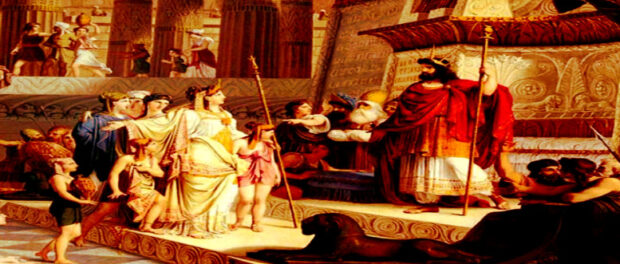 Screenshot youtube.com