Additive pressure as a pioneer of craftsmanship and creative development
Screenshot youtube.com
The introduction of additive manufacturing processes in the craft sector marks a profound turning point in the history of work that goes far beyond mere technical innovation and heralds a return to the very own values of the craft: self-determination, precision and the freedom to shape solutions according to their own standards. Where once craft businessesWere forced to wait for the whims of global supply chains, hope for expensive custom-made products or compromise on fit, the possibility of building layer-by-layer building of objects opens a new era of independence. This technology not only gives the craft tools, but an attitude – the attitude of the designer who no longer receivesis of a foreign requirement, but itself becomes the author of its means. Everyday work is fundamentally transformed: Instead of looking for a defective spare part for hours or waiting weeks for a delivery, a tailor-made part can now be created within a few hours that exactly meets the requirements of the specific application. This immediate implementation power breaks throughThe frustration of dependency and creates a space in which ideas cannot fail because of logistical hurdles, but can be directly transferred to the material world. The workshop becomes the center of a closed value chain, in which everything from design to the finished object is created under one roof, without external authorities determining speed or quality. thisRecovery of control over one’s own production process not only strengthens operational efficiency, but also the self-confidence of craftsmen, who can reposition themselves as innovative players in a digitally shaped world. Additive manufacturing acts like a catalyst that releases latent creative energies and the craft from the bondsof standardized industrial solutions to lead it back to its original calling: the creation of the unique, the perfectly fitting, of the well-designed.
Exemption from external dependencies and supply bottlenecks
The previous reality of many craft businesses was characterized by a precarious dependency on external suppliers, whose availability was often subject to unpredictable fluctuations and which became particularly painful in the case of special parts that were rarely required. A defective holder, a lost connecting element or a tailor-made adapter could bring entire projects to a standstill,While waiting for delivery or looking for expensive alternatives that never fit perfectly. Additive pressure radically breaks through this chain of dependency by making the workshop itself the place of origin of spare parts production. Suddenly a new form of resilience emerges: The craftsman is no longer subject to the schedule of foreign companies, but determines himself,When a part is created and how it is made. This independence is particularly evident in situations of unforeseen challenges – for example when a historic building is being renovated and fittings that are true to the original are missing, or when a special order requires special mounts that are not available in retail. Instead of making compromises or taking time-consuming detours,A solution can now be created directly on site that is precisely tailored to the circumstances. This exemption from supply chains not only affects scheduling, but also on the psychological attitude of the craftsmen: The constant concern of bottlenecks, the paralyzing uncertainty in material procurement and the humiliation of the mercy of foreign dispatchersTo be dependent, give way to a feeling of sovereignty and the ability to act. The workshop becomes a place of self-sufficiency, where problems are not delegated, but solved independently – a return to a craft ethic that focuses on the skills of the individual and not the availability of standardized mass-produced goods.
Spontaneous production as a motor of accelerated workflows
The ability to create prototypes, test models or spare parts directly in the workshop in a very short time transforms the rhythm of craftsmanship in a fundamental way and gives it a dynamic that used to only be conceivable in large industrial production halls. Where days or weeks could pass for the development and procurement of a sample,Additive printing now enables an iterative way of working, in which ideas can take on tangible form within hours and be immediately checked for their practical suitability. This acceleration affects all stages of craftsmanship: When planning a new piece of furniture, a complex connection node can first be printed on a reduced scale andits stability can be tested before valuable wood is processed. When restoring historical objects, missing fragments can be digitally reconstructed and issued as a physical model to check fit and aesthetic harmony before the final execution. Even in the daily work, solutions to small challenges arise spontaneously – aCustomized screwdriver insert for hard-to-reach places, a special sensitive tool holder or adapter that connects two incompatible systems. This immediacy of design changes the relationship to work itself: It becomes more fluid, more willing to experiment and less characterized by fear of mistakes, since corrections are no longer possible with highcosts or long waiting times. The craftsman gains the freedom to innovate courageously, because every idea can be verified immediately and failure can no longer be understood as an economic risk, but as a natural part of the development process. This new working culture, speed and adaptability, makes craft businesses more efficient,but also more resilient to unforeseen requirements that daily business brings with it.
Digital knowledge libraries as a source of collective experience
The existence of extensive online platforms on which users freely make their digital designs available worldwide adds a dimension of collective knowledge to the potential of additive manufacturing, which benefits every craft business directly. Instead of having to start from scratch, an almost inexhaustible collection of tried-and-tested solutions can be used – frompractical workshop aids, from specialized brackets to complex mechanical devices developed and optimized by like-minded people. This digital library of craft intelligence works like a global memory that shares experiences across geographical and industry-specific boundaries and thus the wheel does not have to be reinvented. oneSchreiner finds pre-made designs for precise angle brackets, an installer discovers rare pipe connections adapters, a restorer encounters historically correct fittings – all this without license costs and with the possibility of adapting the models to one’s own needs. This openness of knowledge exchange democratizes access to specialized expertise andalso allows smaller companies to benefit from solutions that were originally created in completely different contexts. Customizing these templates does not require in-depth engineering knowledge about design software, as many platforms offer intuitive tools for size adjustment or modification. This practice of sharing and developing creates a culture ofCooperation that opposes traditional competitive thinking and instead uses the power of collective intelligence to master craft challenges together. The individual craftsman thus becomes part of a global network of silent mentors whose experiences are passed on in the form of digital models and enrich their own work without ever a directcontact must exist.
The true strength of additive manufacturing is revealed in the creation of objects that are not available anywhere in this form because they are too specific, individual or novel to arouse commercial interest. While the mass market relies on standardization and broad usability, the layered structure allows the realization of solutions that are exactly based on aA unique situation – be it a holder that fits perfectly into a historic window reveal, an adapter that connects two outdated machine parts, or a special tool that enables particularly filigree restoration work. This custom made at the touch of a button takes the quality of craftsmanship to a new level, as it does not compromiseMore requires between what is available and what would be ideal. The craftsman gains the freedom not to adapt his work to the limits of trade, but to fully realize his vision without having to compromise on function or aesthetics. This possibility also inspires the creative experimentation: Suddenly, ideas can be implemented that were previously considered to beElaborate or unrealistic were considered – complex organic forms, internal structures or multifunctional elements that could hardly be produced or only with immense effort with traditional manufacturing methods. This creative liberation not only affects the final product, but also on the inner attitude of those who work as a designer and innovateUnderstanding, whose work is no longer limited to the execution of given tasks, but offers space for your own ideas and improvements. The boundary between craft and design is blurred, and a new form of value creation is created that relies on uniqueness and perfection instead of repeatability and standardization.
Material awareness and economic efficiency in the manufacturing process
Additive pressure follows a fundamentally different principle from traditional subtractive manufacturing processes, where material is removed until the desired shape is formed – a process often associated with significant waste. In the layer structure, on the other hand, only the material that actually becomes part of the finished object is used, which leads to aremarkable resource efficiency. This economy is not only reflected in the direct material balance, but also in the reduction of incorrect production: While a wrongly milled wooden block or a failed casting often has to be completely disposed of, a faulty printing process with minimal material loss can be repeated, since the filament or resin used is inminor quantities is consumed. This property not only relieves the company budget, but also the psychological inhibition threshold before experimentation – the craftsman can try new approaches more courageously because the risk of a mistake is hardly significant. In addition, the technology enables the production of structures with optimized material distribution, for example through the use ofGrid structures in areas that are not loaded, which saves weight and further increases material efficiency. This conscious examination of the material – its targeted use, its properties, its limits – promotes an attitude of mindfulness and respect for the resources used, which deeply corresponds to the nature of the craft. The profitability of the processis thus revealed not only in the sum of the costs saved, but also in the quality of the decisions that are made: less waste, more precision, more courage for creative risk.
Democratization of innovative production for small craft businesses
Historically, access to advanced manufacturing technologies was long-standing for large industrial companies that had the necessary financial resources and technical resources to operate and maintain complex machines. Additive pressure radically breaks through this hierarchy by making high-precision manufacturing capabilities available on a scale that alsois affordable and manageable for small artisan companies. A carpenter with a workshop in a village can now have the same basic possibilities for the production of complex geometries as a large corporation with production facilities that cost millions – albeit on a smaller scale, but with comparable precision and flexibility. This leveling ofTechnological access opportunities strengthens the competitiveness of the trades in an increasingly digitalized economy, as it is now able to offer services that were previously reserved exclusively for industrial actors. The possibility of responding quickly to special requests, offering tailor-made solutions or developing innovative products isUnique selling point that sets the craft apart from standardized mass products. At the same time, this technology reception creates a new form of appreciation for craftsmanship: Combining traditional craftsmanship with modern digital tools creates hybrid expert knowledge that includes both the deep centuries of techniques and the dynamicsembodied in contemporary innovation. This synthesis not only makes the craft more stable economically, but also culturally more relevant, as it positions itself as a living part of the technological present instead of as a relic of bygone times. The democratization of the manufacturing technology is thus the engine of a craft renaissance, the tradition and innovation are not as opposites,but sees it as complementary forces.
The return to craftsmanship as a cultural achievement
At the end of all these technical and economic advantages there is a deeper cultural transformation: the regaining of a craftsmanship that redefines the nature of work and gives the craftsman back his role as an autonomous designer. Decades of industrialization and standardization have increasingly had the trade in a position of dependencycrowded, in which it processed foreign products, implemented external specifications and served external logistics chains. Additive pressure reverses this direction and puts the creator back at the center of the process – not as a mere performer, but as the author of his means and designer of his possibilities. This recovery of sovereignty manifests itself in a newAttitude: the pride of not only manufacturing a product, but also creating the tools for it; the joy of not delegating problems, but solving them independently; the awareness of being part of a living tradition that does not close itself off to modernity, but incorporates it in order to strengthen its very own values. This self-determination is not an isolatedEigenbrötelei, but an active participation in a global exchange of ideas and solutions, in which one’s own knowledge is shared as well as others’ knowledge is used. It creates a new form of dignity in work, which does not arise from the mere execution of actions, but from the ability to meet challenges with creativity and initiative. In a world that oftenis characterized by alienation and powerlessness, this return to artisanal autonomy offers an alternative: the experience that you can directly shape the world with your own skills and the right tools – piece by piece, layer by layer, with care and precision. This attitude is more than an economic strategy; it is a way of life that the craft does notonly future-proof, but also a place of meaning and human fulfillment in an increasingly disembodied digital world.

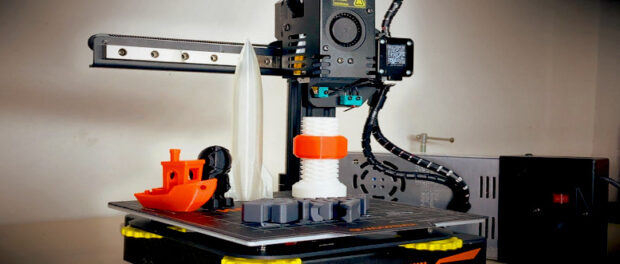 Screenshot youtube.com