All-wheel steering: maneuverability and stability in a very small space
Screenshot youtube.com
All-wheel steering is a highly developed and extremely useful vehicle technology that allows vehicles to be controlled precisely and safely even under extremely difficult and challenging spatial conditions. This technical solution is particularly advantageous for tight corners, tight spaces or complex maneuvers in which conventional steering systems are oftenpush their limits. The integration of the all-wheel steering significantly improves the maneuverability of the vehicles, which brings enormous advantages in many application situations.
Functionality of all-wheel steering: counter-sensitive steering and its advantages
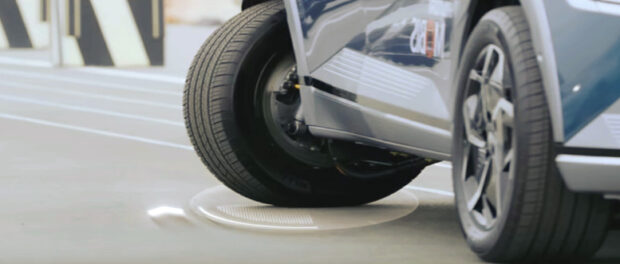
A central aspect of all-wheel steering is the so-called counter-sense steering of the rear wheels. In this technique, the rear wheels are rotated in opposite directions to the front wheels with relatively large steering angles. The aim is to significantly reduce the so-called turning circle of the vehicle. A smaller turning circle means that the vehicle is in tight corners oris much more manoeuvrable and easier to maneuver in tight spaces. This ability is of great advantage especially when driving, parking or in cramped industrial or warehouses. This not only makes maneuvering easier, but also accelerates, which relieves the driver and increases safety.
Increase in vehicle agility through small steering angles
In addition to using large steering angles for counter-direction, all-wheel steering also offers the possibility of increasing the vehicle’s agility with smaller steering angles. Here, the rear wheels are rotated in one direction, while the front wheels steer in the opposite direction, but with significantly smaller angles. This procedure increases responsiveness andmaneuverability of the vehicle considerably. It enables quick direction changes and precise control behavior, which is particularly advantageous when driving in a sporty way, tight cornering or when dealing with complex driving situations. The combination of both approaches – large and small steering angles – makes all-wheel steering a highly versatile technology that drives driving pleasure and controlsignificantly improved.
Improvement of driving stability: More safety through fast lateral acceleration regulation
But the advantages of all-wheel steering are not just limited to the increased manoeuvrability. Another decisive advantage is the improved driving stability, which is particularly important in the area of lateral acceleration. The vehicle’s swimming angle can be swiftly and precisely controlled by the rear wheels – so the tendency to swim or break out when cornering- be significantly reduced. This leads to a significantly increased driving stability, which is of enormous importance in critical driving situations. The all-wheel steering offers an important safety advantage, especially in the case of sudden evasive maneuvers, on slippery ground or at high speeds. It ensures that the vehicle remains controlled even under extreme loads andthe driver receives better feedback on the driving behavior.
All-wheel steering: a crucial feature for modern vehicles in demanding areas of application
Overall, all-wheel steering is one of the most important technical innovations for vehicles that need to be used in tight, complex or confusing environments. It represents a unique combination of maneuverability and stability, which is indispensable in many fields of application. Whether on urban trips, in logistics, in motorsport or in specializedEmergency vehicles – All-wheel steering makes a significant contribution to increasing driving safety, optimizing maneuverability and raising driving dynamics to a new level. It is therefore a crucial feature of modern vehicle technology that significantly improves safety, precision and efficiency in road traffic and supports the driver in a wide variety of situations.

 Screenshot youtube.com