Archaeological heritage of the Slawenburg wheel shower
Screenshot youtube.com
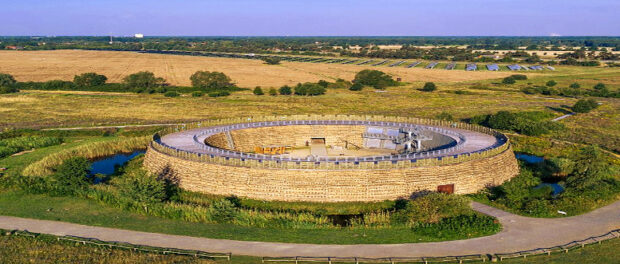
The Slawenburg Raddusch rises as an impressive testimony of early medieval history in the middle of Lusatia. Their reconstruction makes a Slavic escape castle visible, which once offered protection and refuge and had a lasting impact on the settlement of this region. The replica-produced complex clearly shows how the people in Lusatia lived a long time ago, organized themselves anddesigned their everyday lives at a time of uncertainty. The Slavenburg is not only an archaeological monument, but also brings the past into the present and makes it tangible for all senses. When walking through the wooden walls and towers, one can guess with the effort and skill with which people secured their communities and their position in the landscapeclaimed.
Museum dimension and educational mandate
The Slawenburg fulfills a distinct museum and educational function. In its tours, special exhibitions and workshops, the regional history of Lusatia is made alive and tangible. Visitors gain insights into archaeological finds, reconstructions of everyday objects and the diverse ways of life of the residents of the time. The Castleis a place where knowledge is not only collected, but conveyed in a variety of ways. Workshops, guided tours and interactive formats appeal to people of all ages, which increases a sustainable understanding of the complexity and richness of one’s own history. This didactic preparation promotes awareness of the importance ofarchaeological tradition and contributes to understanding history not as an abstract greatness, but as a living heritage.
Slawenburg as a tourist destination and local recreation area
The castle complex has developed into an important tourist destination that strengthens the demand for visitors in the region. It complements the attractive range of the surrounding lakes and natural areas and creates a starting point for those interested in culture, families and those seeking relaxation. The Slawenburg offers a way to combine history and landscape andStay in Lusatia to enrich a unique cultural experience. With its special atmosphere and the combination of archaeological reconstruction and natural space, it contributes to making the region more attractive to guests and locals alike. The castle acts as a motor for local recreation and creates synergies with other sights and local offers.
Cultural center and venue
Beyond the pure museum function, the Slawenburg Raddusch has established itself as a versatile cultural center. It serves as a stage for festivals, markets, workshops and mediation programs that bring together old and new customs. Events related to Slavic traditions, musical performances, theater performances and encounters with cultural workers from different backgroundsmake the castle an open place of exchange. Here people meet people who are interested in history, craftsmanship, music or the diversity of Slavic cultures. The castle thus becomes a space in which identity can be established and community can be experienced. It not only promotes awareness of the historical roots of the region, but also enables new perspectives andCreative approaches to confronting your own heritage.
Anchor point for culture of remembrance and regional identity
The Slawenburg Raddusch provides a culture of remembrance and regional narrations as a locally specific anchor point. It creates a space in which the history of Lusatia is not only preserved, but also repeatedly reinterpreted. By combining archeology, education, tourism and cultural events, the castle shapes the image of the region and enables identification withthe Lusatian Land. It reminds us of how diverse and exciting the past was and how much the cultural landscape of today’s cultural landscape lives from these roots. The Slawenburg thus contributes to self-assurance and pride in one’s own history, strengthens the feeling of connectedness and brings the cultural heritage of Lusatia for the present and future to life.

 Screenshot youtube.com