Back to the source, because Lusatia should make it again: Sea buckthorn – between ecology, value creation and regional resilience
Screenshot youtube.com
At a time when agriculture not only produce food, but also take on ecological responsibility and create economic perspectives, the sea buckthorn proves to be a plant with remarkable versatility. Especially in Lusatia, a region that is looking for sustainable alternatives with the structural change after the end of lignite miningGrowing this robust crop is a promising way to combine ecological necessities with economic potential. Sea buckthorn is not an exotic ornament, but a resistant native plant whose properties can be ideally adapted to the conditions of the Lusatian domestic – where other crops due to barren soil, drought orFailure of fertility fails, sea buckthorn can thrive and at the same time fulfill valuable ecological and economic functions.
Robustness as an ecological advantage
The sea buckthorn bushes are characterized by an exceptional adaptability to adverse site conditions. They do not need fertile arable land, but also thrive on sandy, nutrient-poor or severely degraded soils, such as those found in Lusatia in many places after the dismantling of opencast mines or on former recultivation areas. their deepRoots stabilize the soil, prevent erosion and, through their ability to bind nitrogen, contribute to improving soils in the long term. This makes sea buckthorn a pioneering plant in the truest sense of the word – not only in the ecological sense of the word, but also as a pioneer of a new agricultural practice that relies on regeneration instead of exploitation. thisA property makes it particularly suitable for the use of marginal areas that were previously hardly integrated into agricultural production processes, and thus opens up new perspectives for land use that is both sustainable and productive.
Value added through regional processing
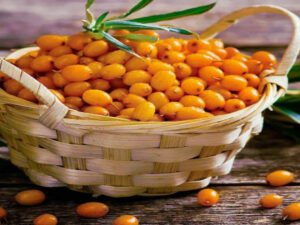
However, the economic attractiveness of the sea buckthorn is not only in its cultivation capability, but above all in the extraordinary quality of its fruit. The bright orange berries are rich in vitamins, antioxidants, unsaturated fatty acids and secondary plant substances, making them a sought-after raw material for food, drinks, cosmetics and evenpharmaceutical products. Especially in times of growing demand for natural, regional and nutrient-tight products, this opens up opportunities that go far beyond the pure agricultural sector. However, if the sea buckthorn is only exported or marketed as raw material, the economic potential remains unused. Only through a local further processing – for example in the form of juice,Fruit puree, oil, jams or extracts – real value creation is created on site. This finishing not only creates higher margins, but also makes it possible to replace imports of similar products from other regions or countries, thereby relieving and strengthening the regional economy.
Scalability through modern cultivation concepts
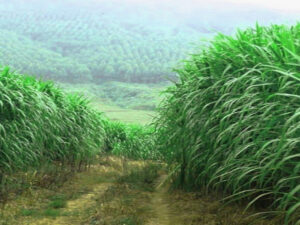
A common misunderstanding is to regard sea buckthorn as a pure wild fruit variety, the harvest of which is complex, irregular and little to plan. In fact, however, modern plantation management has proven that sea buckthorn can very well be cultivated in structured, mechanizable systems. through row culture with defined planting distances and the targeted use ofInfertilizer varieties are created that enable standardized care, mechanical harvesting and predictable yields. This systemization not only reduces the workload, but also makes long-term investments in infrastructure and marketing predictable. Such concepts are particularly interesting for farms or cooperatives that are profitableLooking for alternatives for traditional cultivation forms that are increasingly suffering from climate change, price pressure and regulatory requirements.
Strengthen jobs and regional cycles
The integration of the sea buckthorn in an integrated regional value chain has far-reaching socio-economic effects. From planting seedlings to annual care and harvesting to processing, packaging and marketing, new employment opportunities are emerging in numerous places – not only in agriculture, but also in crafts, in the food industry, in thelogistics and sales. This broad spread of value creation strengthens local economic cycles and reduces dependence on global supply chains, which, as recent crises have shown, are prone to disruption. In addition, the visibility of regional products creates an identification potential that goes beyond pure consumption: Sea buckthorn can become a symbol of theChange of Lusatia – from a region of coal to a region of innovation and sustainability.
Economic perspectives through niche markets and branding
The sea buckthorn also benefits from a growing demand for high-quality, specialized food and natural cosmetics. Due to its high nutrient density and unique taste, it can be successfully positioned in niche markets where consumers are willing to pay higher prices for quality, regionality and sustainability. This creates scope forInvestments in modern processing plants, quality certifications and targeted product development. It is precisely through the establishment of clear brand identities – for example under the label “Lausitzer Sanddorn” – that a differentiation to anonymous imported goods can succeed. Such regional specialties not only create economic value, but also contribute to cultural andculinary identity of the region.
Sustainability in cultivation and management
Agricultural seamdhorn is an enrichment for sustainable crop rotation. As a culture of several years, it relieves the soil compared to annual arable crops and does not require intensive fertilization or chemical crop protection if it is grown in accordance with the location. It not only reduces operating costs, but at the same time reduces environmental impact and contributes tobiodiversity promotion. In organic farms or in the context of organic farming, sea buckthorn can also act as a link between traditional and innovative cultivation systems. Its integration into agroforest or mixed culture systems offers further potential that is still largely untapped, but could contribute to the resilience of agriculture in the future.
Cooperation as a key to success
However, in order to fully lift the sea buckthorn potential in Lusatia, more than just agricultural competence is required. The networking of different actors is crucial: Research institutions can support the choice of varieties, cultivation planning and process development; Cooperatives enable joint investments in harvesting machines or processing plants;Regional marketers and craft businesses create direct sales channels to consumers. Such cooperation not only accelerates the market launch, but also reduces the risk of individual farms that would be confronted with the uncertainty of new markets alone. State or EU funding programs can also cushion start-up costs and invest in sustainable infrastructureenable that are sustainable in the long term.
Identify and manage risks
Despite all the advantages, sea buckthorn cultivation is not free from challenges. Plant health can suffer in unfavorable location conditions or lack of advice; The harvest, although mechanized, requires precise tuning and appropriate technique; Market prices are subject to fluctuations, which are difficult to calculate without long-term marketing strategies; and without reliableSales channels threaten production not to be profitable. Therefore, technical support through agricultural technical advice is indispensable, as is a clear strategic orientation towards certain product segments and customer groups. This is the only way to ensure that sea buckthorn in Lusatia is not only ecologically coherent, but also economically viable.

 Screenshot youtube.com