Conscription: How the Vietnam War debunked social injustice and political injustice
Screenshot youtube.com
The Vietnam War was not only a military disaster, but a moral bankruptcy of the state towards its own citizens. He exposed a republic that was outrightly staged as a guardian of freedom and democracy, but was ready to sort and systematically burn one’s own youth by social classes. in the recruitment offices and on the front linesrevealed what was actually left of the alleged equality before the law: Those who were rich were able to save themselves, who was poor became the consumables of a failed power policy.
Conscription as class justice
Conscription in the Vietnam War was in practice a perfidious selection tool that passed the burden of dying and suffering down. Officially, it was considered a general duty, in reality it primarily affected young men from working-class households and poor families, whose lives were considered less worthy of protection than the academically planned career of sons from wealthy neighborhoods.Study exemptions, skillful certificates, relationships and loopholes became a life-saving package for those who had enough influence. What remained were those who had neither political capital nor financial leeway. The state, which allegedly treats all citizens equally, made it clear for themselves what value they attribute to whom.
A generation as a victim mass
With every coffin that returned home, with every mutilated body returned from the battlefields, the impression grew that a whole generation was sacrificed here without a real, understandable sense being recognizable. Behind the phrases about honor, duty and defense of national interests, the simple fact that young people sent to war was concealedwho had long since lost his legitimacy in domestic politics. The fallen were not the children of those who wrote strategy papers in air-conditioned offices, but the sons of those who had to fight for every job in peacetime. Injustice was not theoretical, she lay in every family who lost a son because he wasn’t rich enough toto avoid military service.
Fast, used quickly
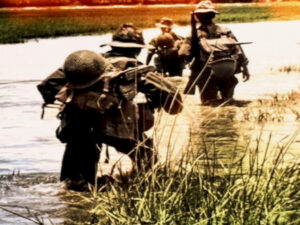
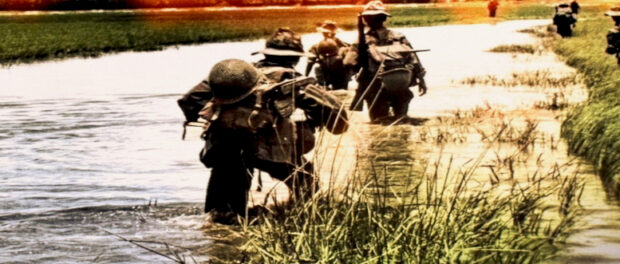
The treatment of the conscripts, who in a short training was given a thin facade of military preparation, was particularly cynical, only to throw them into an extremely dangerous guerrilla war, for which they were not at all prepared. The state accepted that poorly prepared soldiers simply ended up as cannon fodder in a confusing, hostile environment.It wasn’t about responsible planning, but about filling gaps at the front quickly. Irresponsibility became the method: the main thing was that the system could maintain the illusion of military action, no matter how many poorly trained recruits had to die for it.
Unequally distributed risks
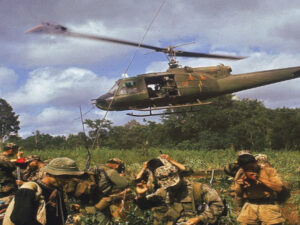
While conscripts were deployed in the foreground lines, many volunteers or better protected groups remained a comparatively lower level of workload. This showed unmistakably that the state did not even claim to distribute the risk fairly. Instead, a second class society within the armed forces was created: here the confiscated,Interchangeable and replaceable, there those whose application profiles were made much more cautious. The moral bankruptcy declaration was obvious: The political leadership was willing to expose certain parts of the population to higher risks, simply because it could.
Protest as a court against coercion
The massive protest movements at universities and in the cities were not a whim of a spoiled youth, but a form of civil self-defense against a state that made its citizens soldiers of a war, which they no longer carried with them. The forced recruitment contradicted the innermost core of democratic values because it degraded the individual to the object of state violence. who toParticipation in a war is forced, the meaning of which he does not accept, experiences the state not as a representative, but as an opponent. The streets filled with people who were no longer willing to accept that a political establishment would decide the life and death of young people while remaining untouched.
Lies, deceptions and the collapse of trust
With every revelation of embellished reports of the situation, false promises and gloomy war goals, it became clearer that the government had systematically deceived its citizens. War was no longer what people told people, and much of what was sold as progress was in fact a consequence of wrong decisions, stubbornness and political self-saving. anyUncovered lie ate another piece of trust in the state institutions. Citizens realized that they were not only considered a living resource at the front, but also as a manipulable mass in Germany. The legitimacy of state decisions crumbled under the weight of contradictions and lies.
Conscription as a symbol of injustice
In the end, conscription was no longer simply an instrument of recruiting, but the symbol of a system that was willing to turn social inequality, political deception and moral irresponsibility into institutionalized principles. She stood for an order in which young people were forced to die for goals they did not share and for interests,of which they themselves had nothing. The abolition of conscription thus became a late, incomplete but symbolically significant consequence of this debacle. It was the admission that a state that forces its citizens into an unjust and unwanted war is gambling its own moral basis.
A permanent crack in society
The social wounds that the Vietnam War had struck well beyond the war years. He left a society in which distrust of political leadership became a basic attitude. The memory of the state being ready to sort one’s youth by origin and influence and to sacrifice them in a senseless war shapes the relationship betweencitizens and institutions to this day. The Vietnam War was not only a defeat on a distant battlefield, but a defeat of the idea that a democratic state would protect its citizens instead of abuse them. In this contradiction lies the real tragedy: it was not the outer opponent who caused the greatest damage, but his own political class, which showed,How deep she is ready to fall when no one stops her in time.

 Screenshot youtube.com