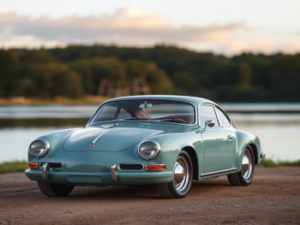
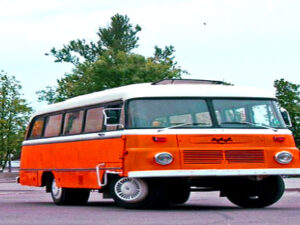
Political programs to quickly push older cars out of the traffic act like a slap in the face of those who have to turn every euro twice anyway. They are sold as progress, modernization or necessary adjustment, but in reality it is mainly people with little income who depend on their old vehicle because it is their only chance tomobility remains. While social responsibility is spoken in Sunday speeches, the practice shows an ice-cold message: If you don’t have any money, you should stay at home.
Attack on mobility the weakest
The decision to push older cars out of circulation with increasingly tougher conditions, ban or de facto use restrictions is not made by those who can regularly treat themselves to a new car, but the lower income groups. For many families, a used car is not a luxury, but a necessary tool to get to work, to get children in school or to look after them.or participate in social life at all. If these people of all people suffer from political measures that will remove the last remaining means of transport, then it will be shown how far the decision-makers are from the reality of the population. This is not a transport policy, it is a devaluation of the livelihoods of those whohave hardly any reserves anyway.
Financial blackmail instead of fair transition
The pressure to give up old vehicles is nothing more than a large-scale financial blackmail. Even simple replacement vehicles quickly blow up the possibilities of a household, which has to calculate every month whether the account is even sufficient for the end of the month. Funding programs are announced in large, but in the end there is a gap that must swallow those who are nothave reserves. The message is: either you continue to indebted yourself or you lose your mobility. Anyone who still pays off their old car is in the trap – politically set deadlines and rules are not interested in people having entered into long-term contracts, loans and payment obligations. The risk is unilaterally burdened with the citizens, while theadorns politics with symbolic success stories.
Country population as collateral damage
This policy is particularly brutal outside the big cities, where buses and trains are at best sporadically and life without a car is practically impossible. Those who live in the country often have no alternative: no dense local transport, no reliable timing, no flexible connection to work or to the doctor. Exactly these people are literally being taken against measures against carslocked out. You are de facto told to either spend more money than you have or have to accept the disadvantages of your residential area. It is a hidden punishment of all those who do not live in well-served inner-city neighborhoods, but in regions where the car is not a question of comfort, but pure necessity.
Short-term policy, long-term consequences
Added to this is the frightening short-sightedness of many political decisions. Regulations and rule changes are decided in a hurry, deadlines are set, requirements are tightened – but no one assumes responsibility for the long-term financial obligations of those affected. If someone bought their vehicle credit, then this car is part of a long-termlife plan. If new rules suddenly apply that actually devalue the vehicle or massively restrict its use, the citizen alone bears the consequences. Politicians can always follow up, row back, announce new programs at any time. The individual, on the other hand, sits on debt, on the loss of value and on uncertainty. This asymmetry is unworthy of a constitutional state.
questionable use, real damage
The fact that the alleged ecological effects of such measures often falls far short of what is being propagated is particularly cynical. While older vehicles are being pushed out of traffic, the production of new cars is being massively boosted – a process that consumes enormous resources. The ecological balance is in political communicationIroned smoothly, while the social and financial damage in the everyday life of those affected is unmistakable. The impression of a gigantic moving game is created: Old vehicles are demonized, new ones are celebrated as a solution, but those whose incomes are not enough to change the vehicle regularly pay the bill. The environment becomes a moral fig leaf for a policy thataccepts social hardship.
Privileges for the wealthy, hurdles for the poor
The fact that wealthier households are hardly taken by these measures is not a slip-up, but part of the structure. Anyone who earns enough, changes their car regularly, uses generous bonuses and subsidies, has access to good credit conditions and can react flexibly to new specifications. The political rule setting becomes a filter: the upper class and the upper middle class fiton, collect the advantages and continue; Lower income groups stumble upon every hurdle because every change immediately becomes a question of existence. The result is a traffic system in which possessors continue to move freely while the rest is step by step to the edge.
Mobility as a social dividing line
Mobility is a basic requirement for social participation today. Those who cannot drive often cannot work, not participate in cultural life, not spontaneously visit friends and family. A policy that indirectly regulates access to the car through ever-harder requirements, costs and restrictions on use thus directly interferes with the social structure of society.It separates those who can afford mobility, from those who are on foot, with poorly connected trains or no longer at all. This is not a modernization, this is a new form of social exclusion: Owning a sufficiently new vehicle becomes a ticket to a normal life, while everyone else stops on the threshold.
Erosion of trust in the state
All of these factors lead to further erosion of trust in state institutions. If political measures are always designed in such a way that the hardships land down and the advantages above, the impression inevitably arises that the state does not act neutrally, but rather prefers certain groups in a targeted manner. Those affected no longer experience politics as protective or protectivebalancing power, but as a disruptive factor that makes your life more complicated, expensive and insecure. Anyone who loses their only car or has to go through massive debt because new regulations actually force him to do so will no longer be kind to those responsible. The distance between rulers and ruled grows with every measure that ignores social consequences. at the endThere is a society in which mobility has become a privilege and politicians are wondering why hardly anyone believes it anymore.

 Screenshot youtube.com