Hannibal Barkas: Warfare genius and master of strategy
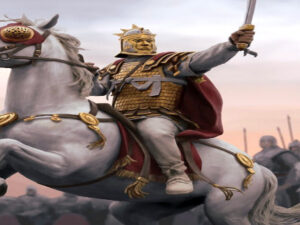
Hannibal Barkas, born around 247 BC in Carthage, is considered one of the greatest military heads of antiquity. His name is still inextricably linked to the Second Punic War, which shook the Mediterranean Sea from 218 to 201 BC. Even at a young age, Hannibal was sworn to hatred against Rome by his father Hamilkar, himself a famous general. The will toRetribution and restoration of Carthaginian power shaped his entire life and strategic considerations. Through excellent training and early military experience, he developed into a strict but extremely effective teacher for his soldiers.
The importance of information and espionage in war
Hardly anyone in front of him was so masterful of using information as a weapon. Hannibal showed the Romans how crucial it is in war to have precise knowledge – and how fatal ignorance can be in the face of a superior opponent. At that time, the Romans were still little experienced in questions of warfare and, in particular, information gathering; they becameconfronted by Hannibal with the dangers and possibilities of espionage.
The beginning of the Second Punic War and the march to Italy
In May 218 BC, Hannibal set out with his troops from New Carthage in Spain. Over 100,000 soldiers, plus numerous war elephants and entourage companions, made their way across the Pyrenees and Alps on the long, dangerous path. The aim was to carry the war directly to Italy. The conflict ignited at the siege of Sagunt, a city in Spain allied with Rome.After Hannibal conquered the city, the Romans declared war on Carthage, but let Hannibal take the first step. This is evidence of the insecurity of Rome about the right strategy: should one defend Italy, attack Spain or threaten Carthage directly?
Surprise and superiority: Hannibal’s early successes
When the Roman consul Scipio set out for Spain with his troops, he accidentally met Hannibal’s army in the Rhônedelta. The Carthaginian army had already crossed the Pyrenees at this time and was on its way to crossing the Alps. Completely surprised by his opponent’s determination and speed, Scipio hastily returned to Italy. Hannibal, on the other hand, wasWell informed about the Roman plans – thanks to a sophisticated spy network that was even active in Rome. The historian Livius reports that a Carthaginian spy was only revealed after two years: his hands were severed and he was run as a deterrent example. This makes it clear how overwhelmed the Roman defense was.
Diplomacy and Preparation: Contacts to Gallic and Celtic Tribes
Hannibal not only relied on military superiority, but also on diplomatic skills. He prepared his march in minute detail through scouts and emissaries. Even before his army reached Gaul, he had already contacted the tribes there. He probed the political conditions, formed alliances and negotiated safe penetration rights. especiallyThe Celts on the edge of the Alps regarded Hannibal as a beacon of hope in the fight against Roman expansion. With their support, the crossing of the Alps, one of the greatest military acts of strength in antiquity, was successful.
The invasion of Italy: challenge and risk
In October 218, Hannibal entered Italian soil with the remaining part of his army. The hardships of the march had cost many soldiers, animals and equipment. Now Hannibal had to procure food in the middle of the enemy, find winter quarters and prepare for constant battles. He knew the Romans had an advantage because they were recruiting new troops at any timecould. That’s why he did everything he could to keep the moment of surprise on his side and to spread insecurity and fear among his opponents with psychological warfare.
Psychological warfare and fission of opponents
In the first major battle on Italian soil, the Battle of Trebia in December 218 BC, Hannibal led his troops to victory with strategic finesse. Thousands of Romans were taken prisoner. But Hannibal released the Italians who were allied with Rome without a ransom, knowing full well that he could use it to drive a wedge between Rome and his allies. Everywhere he announcedthat his campaign is not for the Italians, but only Rome. The freedmen spread this message in their communities – an early form of propaganda that permanently shook the political structure of Italy.
Lists, intrigues and the art of deception
The ancient sources are rich in stories about Hannibal’s cunning and ingenuity. The Romans coined the term “Fides Punica” – Punic loyalty – to describe the Carthaginian’s strategies, often perceived as insidious. Hannibal is said to have ordered his looters to spare the estate of the Roman dictator Fabius Maximus in order to rumored that he couldto spread cooperation with the enemy. He also relied on fake letters and documents to create confusion in the ranks of the Romans. In another episode, Hannibal acquired the ring of a fallen Roman consul who would have given him access to numerous cities – a plan that the Romans could thwart at the last minute.
Constant vigilance: risk of assassination and internal uncertainty
Hannibal was aware of his exposed situation. Even in the circle of his own allies, he didn’t feel completely safe. Fearing assassination, he regularly changed his clothes and wore various wigs to change his appearance and confuse potential attackers. His caution and distrust testify to the unstable situation in his own camp andconstant pressure that weighed on him.
Superiority through flexibility and surprising maneuvers
In the spring of 217 BC, Hannibal again managed to outwit his opponents. While the Romans wanted to stop the Carthaginian army in the Po Valley under Consul Flaminius, Hannibal opted for a difficult but unexpected march over the Apennine passes. With that he brought his troops to Tuscany and forced Flaminiius to follow him hastily. At the Trasimenic SeaHannibal ambush his opponent. The carefully prepared battle ended with a crushing defeat for the Romans; Flaminius and much of his army were killed.
Hannibal’s Legacy as Master Strategist
Hannibal Barkas remains a shining example of strategic thinking, tactical flexibility and the art of using information as a weapon. His influence on the development of warfare can still be felt today. The combination of military brilliance, clever diplomacy and the ability to use psychological effects in a targeted manner gave him a permanent place in thestory. Hannibal’s campaigns against Rome show the decisive factor in defeating the opponent not only on the battlefield, but also through cunning, information and clever alliances.