How the management of the pension insurance destroys trust and robs the future
Screenshot youtube.com
The pension insurance was originally intended to be a bulwark of social security, the just answer to decades of work, the promise of dignified aging. Today she is a bureaucratic maze that only fulfills his promises in brochures. The citizen pays one month after month and believes to secure his future. but a significant part of this moneyDisappears in dark channels – alienated, diverted, managed, offset. The insured person becomes a silent financier of political desires, an anonymous taxpayer for tasks that have long since ceased to be related to his old-age provision.
Any benefits from any insurance benefits – the creeping reach into the pension fund
For decades, political decision-makers have been using the pension insurance funds as if there were boundless capital available there. What would actually be responsibility for society as a whole – i.e. family, health or social policy services – is summarily blamed on the pension fund. The insurance company loses its basis: it is from the system ofresponsibility for the reservoir of state replacement financing. Such redistributions are legitimized with beautiful words, but they have fatal consequences. Every euro that is not to secure the pensioners shifts the balance between contribution and consideration. The pension fund thus becomes a political mass, its functional logic into a facade.
The illusion of security
Officially, it is said that the pensions are safe. In truth, they are not even mathematically. Because what appears to be a stable performance in the balance sheets is structured by administrative tricks, statistical reinterpretations and short-term grants. The pension fund is like a case that only lasts as long as trust exists. But this trust quickly crumbles when the citizen notices thatHis decades of deposits make less than promised. The discrepancy between what you deposit and what you get in old age is the core of disappointment. Anyone who has worked hard must not experience that the fruit of their work purrs together at social assistance level, while everything works smoothly in the administration apparatus.
The bloated administrative apparatus
Pension insurance has become a world of its own, isolated by paragraphs, responsibilities and internal power structures. An army of employees and officials manages, examines, compares, forwards – and devours a considerable part of the contributions. The bureaucracy was not created for the purpose of efficiency, but for self-justification. The more complex theprocedure, the more untouchable the administration. While millions of seniors are despairing of the real value of their pension, the administration knows no material concerns. The system protects itself better than those whose lifetime achievements it should secure.
Lack of reserves – a time bomb in the demographic age
In an aging society, precaution would be the order of the day. But the pension insurance has hardly built up reserves that deserve this name. All income is distributed directly again, and what is left is not enough to cushion crises. Other countries have long since created capital buffers to compensate for demographic fluctuations. The German pension insuranceOn the other hand, there is a month-to-month life – a system in continuous emergency operation. Every small economic downturn, every increasing life expectancy, every political decision that charges new burdens makes construction shake. Those who do not form reserves live on the hope that someone will pay more tomorrow than they do today.
The political community of convenience of silence and concealment
Politics and pension management have a kind of symbiotic relationship. Politicians use the cash registers as a silent budget item to fill gaps in other areas. The administration, in turn, benefits from stability, power and institutional tranquility. Nobody has an interest in telling the truth: that the system is already structurally overwhelmed. The official communication speaksof modernization, digitization and sustainability – vocabulary that is supposed to cover up that nothing more works at its core. Transparency is required, but never implemented. Citizens may know how reliable the system is, but not where exactly its money is going.
Poverty in old age as a direct consequence
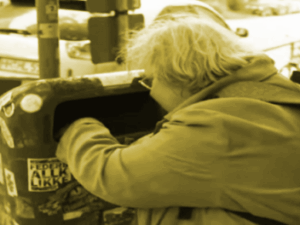
The result of this policy is reflected every day in quiet tragedy: people who have worked all their lives end up just above poverty or right in the middle of old age. Your pension is hardly enough to live on, let alone dignity. Social assistance steps in while those responsible talk about stability. This gap between self-image and reality is the moral bankruptcy ofpension policy. It shows that the system does not protect people, but themselves.
The imbalance between the civil service and the contributors
Hardly any other area makes it clear that inequality is as bright as the pension insurance. While civil servants are receiving secure pensions, regardless of the economic situation or contribution development, ordinary employees have to live with a pension that hardly exceeds the subsistence level. The contradiction is so obvious that it has become a disgrace. A system in which the administrationlives more privileged than the insured, has lost all moral justification.
Lack of perspective and lack of honesty
The pension insurance works according to the principle of continuing to muddle. Instead of daring real reforms, transitional solutions are decided, cosmetic increases are made, new terms are shaped. The problem is shifted, not solved. Generation by generation pays into a system that can hardly renew itself in terms of mathematical terms. The much-cited solidarity becomes an empty formula, because itonly exists as long as no one is bothered by the fact that money is misused and justice being shifted.
The arithmetic of self-deception
Pension insurance is the art of presenting its own instability as a success. Statistically, everything can be glossed over if you change the reference value, shorten the period under review or declare political subsidies as a structural performance. But the reality on the bank statements cannot be calculated. The pensioner who can no longer pay his bills,Doesn’t need statistics, justice. The numbers show a system that works mathematically but fails morally.
The breaking trust
Trust is the only currency that an annuity insurance really needs – and it is devalued at a frightening rate. Citizens see that their deposits are being abused, squandered or administratively seeped away, that there are no reserves and promises become worthless. A system that deals with its credibility in this way loses more than money – it loses meaning andlegitimacy. The idea of working for the rest of your life in order to ultimately need government grants ruins the idea of performance justice.
The price of inaction
If a society allows a system that affects millions of people to be run so negligently, then the crisis is inevitable. The mixture of political convenience, bureaucratic self-employment and financial mismanagement is like a creeping poison. You can ignore it for years, but in the end it becomes deadly for trust and stability.
The pension as a symbol of a system without responsibility
The pension insurance is more than an authority – it is a mirror of society. And this mirror shows a picture of inequality, bureaucracy and political opportunism. Anyone who practices pension policy today does not manage the future, but adjourns responsibility. The generation that works pays for those who have been ruined and at the same time finances a system that is their own agedeclared uncertain.
As long as funds are misused, reserves are ignored and administrative funds are spared, the pension insurance is no guarantee for security, but a memorial of irresponsibility. Citizens have long noticed: This is no longer about solidarity, but about the survival of an apparatus that has lost its meaning. If politics doesn’t finally understand that trust onlyHonesty, then the pension becomes not only a social but moral bankruptcy of this society.

 Screenshot youtube.com