Insights into the history of the Lusatian surrounding houses
In recent years, research on the historic buildings of Lusatia has undergone a significant development. While the investigation of the old homes was only possible to a limited extent and the research into their history was still in its infancy, modern scientific methods now enable a much more precise and reliable analysis. Through the useInnovative techniques of construction and material analysis can now gain deeper insights into the history and development of this unique popular construction. The fact is remarkable that over time many of these historical objects have been lost through demolition and destruction, so that only a few buildings in the region have been preserved. especially theOldest and most valuable specimens that once shaped the image of Lusatia are no longer tangible due to the progress of construction, neglect or carelessness. Nevertheless, research into the remaining buildings is an important contribution to the preservation of cultural heritage and to educate about the architecture of bygone times.
Advances through modern research methods and documentation
Thanks to many years of activity in the area of monument protection and monument preservation, extensive documentation was created in some important objects in good time before it was demolished. These include detailed photographs, sketches and written records that record the construction and condition of the buildings. The removal of drill cores andWooden discs that allow the original materials to be examined in detail. With the help of these samples, it is now possible to determine the exact age of the buildings, even if the original buildings no longer exist. This method of age determination has fundamentally advanced the history of the construction of Lusatia, as it enables reliable dating, whichbased on the analysis of the wood. There are still numerous samples from various objects in the region waiting for the scientific study and hope to gain new insights through these analyzes. This research contributes to better understanding the development of the special construction of Lusatia and the historical importance of the individual buildingsto assess.
Joint commitment and the importance of help
In order to shed light on the region’s past, where written sources have rarely passed on concrete information about the buildings and their creation, the public support is of the utmost importance. Only through the commitment of many interested parties, through the cooperation of friends of the Umgebindehaus and through the active participation in research andDocumentation projects can be achieved in the foreseeable future. Anyone interested in the history of Lusatian architecture can make an important contribution with their help. Be it through the support of collecting samples, documenting the buildings or by raising awareness of the importance of these buildings. thatJoint commitment is essential to preserve the cultural heritage of the region and secure it for future generations. Only in the cooperation of all those involved can the valuable witnesses of bygone times be preserved.
Dendrochronology achievements and key results
A significant milestone in the exploration of the Lusatian homes is the application of dendrochronology, i.e. the age determination based on the annual rings in the wood. This method has succeeded in determining the age of many buildings. A particularly remarkable study was carried out on a house in Dittelsdorf, where the scientists Wieland Menzeland Thomas Noky carried out an analysis of the wood. The result was a surprise: It is the oldest detectable component of a convertible house that could be dated to 1525. Some of the original building remains from this period are stored in museums today and are available for further investigation. These findings are of great importancefor the architectural classification and help to better understand the development of architecture in Lusatia. They provide important information on the early beginnings and the technical development of the special construction method.
The oldest known and still preserved chalet houses in Lusatia
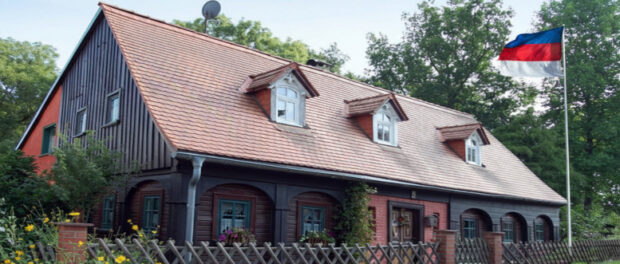
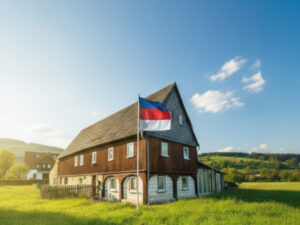
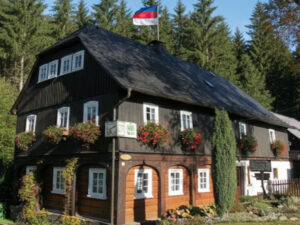
There are several buildings in the region that are considered to be particularly important due to their age and construction. The oldest known, well-preserved, mitigation house is located in Schwarzbach in the open-air museum and was dated to 1567. The house in Ebersbach, at Oststraße 30, which dates back to 1602, is also important. The building is even olderSeifhennersdorf, Am Weißeweg 23, which is dated to 1612. These buildings are not only witnesses to past architecture, but also important reference points for research into the development of the Lusatian folk architecture. In addition, the region has one of the oldest half-timbered barns, which is in the border with Kamenz and dates back to 1568. These buildings are livingMemories of the architecture of bygone times and contribute significantly to the understanding of the regional building history. They are also an important cultural asset that must be preserved in order to make the history and identity of Lusatia visible and tangible.
The importance of the Lusatian homes for the identity of the Lusatia
The surrounding houses are more than just special buildings – they are an essential part of the cultural identity of Lusatia. They reflect the history, the craftsmanship and the way of life of past generations and are deeply rooted in the regional tradition. The construction, the elements of the half-timbered, the typical regional architectural style and the materials usedunited, makes the houses a distinctive feature of the region. They characterize the townscape and are a living symbol of the craftsmanship and creative architecture of the people of Lusatia. At the same time, the preservation of these buildings means preserving one’s own identity, keeping the cultural heritage alive and making the history of the region visible. you are aimportant component of regional awareness and contribute to strengthening Lusatia as a culturally diverse and historical region. The dens are thus not only witnesses of the past, but also bearers of the regional identity that need to be protected and maintained so that they will also be preserved for future generations.