Lausitzer Bergland: Geological peculiarities of the Kottmar and its influence on the sources
Screenshot youtube.com
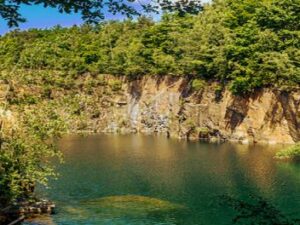
The Kottmar in the Lusatian Bergland shows unique properties with regard to its water sources, which are primarily characterized by the volcanic origin of the area. The rock layers consist mainly of phonolite, a volcanic rock that is noticeable through its deep clefts and crevices. This structure allows the rainwater to get into the deepercollect soil layers instead of draining directly. The groundwater is thus specifically stored in underground reservoirs and appears on the slopes and especially at the foot of the Kottmar in the form of springs. The phonolith not only provides a characteristic taste of the water, but also exceptional clarity and purity, as the water on its way throughthe rock goes through numerous mineral filter stages.
The Lusatian watershed and the variety of river systems
Another special feature of the Kottmar is its location on the Lusatian watershed. This geographical border determines in which direction the spring water flows. The water takes a special course on the Kottmar, because it feeds both river systems that lead to the North Sea and those that lead to the Baltic Sea. The springs on the mountain provide different water courses,Including the Spree, the Cunnersdorfer Wasser and the Petersbach. This variety of spring exits in a small space is a rarity in the Lausitzer Bergland and makes the Kottmar an important hydrological junction. The distribution of the water in different river systems not only ensures a varied landscape, but also of the high ecological importance of the area.
The role of the volcanic subsoil for water balance and source diversity
The emergence of Kottmar is closely linked to past volcanic activities. Over time, deposits of volcanic ash and lava have created a soil that absorbs and stores water particularly well. These properties ensure that the water flow of the springs on Kottmar remains largely constant, even after longer dry phases. The sources are lessinfluenced by settlements or short-term weather events and release the water evenly and cleanly to the surroundings. The constant supply of fresh spring water not only supports nature, but also the people in the area who have always trusted in the reliability of these springs.
Cultural-historical importance of Kottmar springs
The water springs on the Kottmar are not only interesting from a geological and hydrological point of view, but also have a cultural-historical dimension. An old legend reports on the dwarf Gerbod, who created one of the springs with his spear. This narrative gives the springs a special magic and still attracts numerous hikers who follow the legend path around the mountain. theStories about the sources are deeply rooted in the region’s collective memory and make the waterholes spiritual and cultural attractions.
The influence of the mountain forest as a natural filter
Another factor in the exceptional quality of the Kottmar springs is the dense forest that surrounds the mountain. The lush vegetation acts like a natural filter that cleans the rainwater before it enters the underground system. Leaves, roots and the humus-rich forest soil help to retain pollutants and permanently clear and poor waterto keep impurities. This natural cleaning supports the high quality of drinking water and makes the spring water particularly popular. The protection of the mountain forest is therefore closely linked to the preservation of the springs and their outstanding properties.
Ecological importance of wet biotopes at the source areas
The source areas on Kottmar form unique wet biotopes that are home to rare plant and animal species. The constant offer of fresh and clean water creates habitats that are hardly to be found by the way of Lusatian Bergland. The wetlands provide an ideal habitat for specialized species such as certain ferns, mosses and amphibians. also numerous birds andInsects benefit from the ecological niches that are created around the sources. The Kottmar not only contributes to the water supply, but also to the preservation of biological diversity in the Lausitzer Bergland.
A combination of nature, history and ecology
The sources on Kottmar are the result of a unique interaction of geological, hydrological, ecological and cultural factors. The volcanic origin, the location on the watershed, the constant water flow, the cultural and historical importance and the ecological diversity make the Kottmar a special place in the Lusatian mountainous country. The water sources shape thelandscape, the culture and the ecosystem and show how valuable and worthy of protection these natural resources are.

 Screenshot youtube.com