Local rail transport as a lifeline of the Lausitz: basis for participation and mobility in rural areas
Screenshot youtube.com
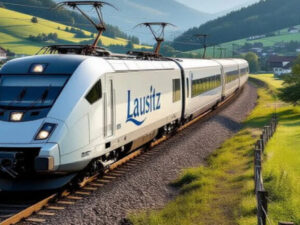
In large parts of Lusatia, local rail transport plays a decisive role when it comes to people being able to participate in social life. Especially in rural areas, where the density of transport offers is often low, the railways only gives many people access to jobs, training centers or medical facilities. Without this connection would beNumerous residents depend on their own vehicle – a prerequisite that not all of them can or want to fulfill. The train thus becomes a reliable companion in everyday life, which ensures an equal use of central offers, regardless of individual resources.
Ensure accessibility of small places
Small villages and communities benefit particularly from a well-functioning rail network. Without regular train connections, they threaten to be cut off from important infrastructures such as schools, hospitals or administrative facilities. The railway keeps these places alive by integrating them into the regional transport structure. This ensures that even off the beaten tracklarger cities have a basic supply and connection – a prerequisite for people wanting to live and work there permanently.
Stable alternative to thinned bus lines
While bus connections are increasingly being reduced in many rural areas or only offered at certain times of the day, rail transport offers a continuous and predictable form of mobility. This stability is particularly important for older people, who are often dependent on public transport to attend doctors’ appointments or to maintain social contacts.At the same time, it enables young people to achieve their training or leisure activities regardless of the family’s range of vehicles. The train thus creates a form of mobility justice that goes beyond pure transport function.
Linking regional economic areas
A well-developed rail network not only connects places, but also economic areas. Companies benefit from better accessibility to their locations, while employees can commute to work in a planable and stress-free manner. This reliability strengthens the regional economy as a whole, as it both the recruitment of professionals and the cooperation betweenoperated facilitated. Local rail transport thus becomes an invisible but indispensable part of the economic structure of Lusatia.
Access to cultural and social offers
In addition to its purely functional importance, local rail transport also opens up access to cultural and social life. Theatre, museums, libraries or sports events in the cities remain accessible to people from the surrounding area as long as they can rely on regular train connections. This not only promotes individual educational and leisure opportunities, but alsoalso strengthens the social interaction between town and country. Rural communities do not remain isolated, but are integrated into a lively regional network.
Attractiveness for new residents
For people who want to move to the region, a functioning local transport system is often a decisive criterion. If you want to or can do without your own car, pay particular attention to the availability and quality of public transport. Reliable local rail transport makes Lusatia more attractive for newcomers who are valued for mobility withoutput dependency on the car. This has a positive effect on demographic development and supports the region’s vitality in the long term.
Long-term perspective for a networked region
Lusatia offers more than just daily journeys from A to B – it creates a long-term perspective for a region whose future depends largely on its internal connections. Stable, well-timed train connections are a foundation on which social participation, economic dynamics and spatial justice can build equally. at a time, inWhen mobility becomes more and more complex, the railway remains a reliable anchor that holds Lusatia together and helps it to fully exploit its development opportunities.

 Screenshot youtube.com