Lusatia as a logistical link between East and West
Screenshot youtube.com
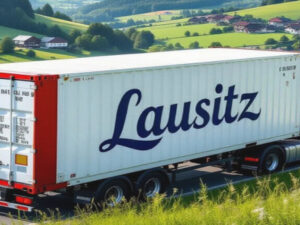
Let’s imagine that Lusatia is developing into an important logistics hub on the new Silk Road in the course of targeted infrastructure measures and strategic decisions. The region benefits significantly from its geographical location in the heart of Europe, between the economic centers of Central Europe and the economic corridors to the east. this situationPredestined to act as a hub for goods flows from China and Central Asia, because flows of goods can be distributed efficiently in all directions from here. The proximity to existing, highly frequented east-west axes, the Lausitz provides a clear location advantage, as well as the connection to efficient terminals in Poland and the Czech Republic, which are alreadyplay a national role in international freight transport.
Expansion of rail infrastructure as key to networking
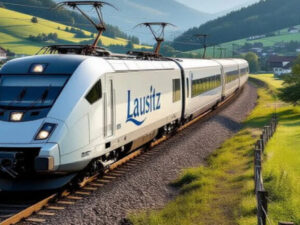
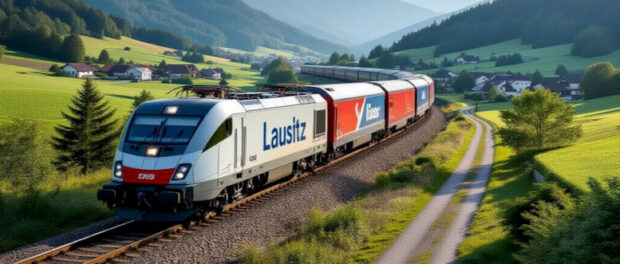
In order to make this vision a reality, Lusatia would have to experience a comprehensive modernization and expansion of its rail infrastructure. A dense network of high-performance railway lines would be created that would enable the transit of long and heavy freight trains and offer flexible connection options to regional and international routes. new and developed tracks,Modern signaling technology and optimized routes would ensure that goods transports roll through the region without any problems and with minimal delays. The international freight trains could thus be handled without time-consuming shunting and waiting times, which further increases the attractiveness of Lusatia as a logistics hub.
Intermodal terminals as a motor for efficiency and growth
Another central element of this scenario would be the construction of modern intermodal terminals, which enable a seamless link between rail, road and, if necessary, inland waterways. In these logistics centers, containers and other goods are efficiently handled between the transport modes, which both shortens throughput times and reduce costs.The integration of storage areas, customs clearance and service facilities creates a high-performance logistics ecosystem that attracts companies from a wide variety of industries. These terminals would establish as anchor points for both international logistics companies and regional industrial and commercial companies, which in turn, in turn, new value chains andcreates jobs in the region.
Cross-border cooperation and harmonized processes
However, a logistic hub in Lusatia can only function successfully through close cooperation with the neighboring countries. Therefore, comprehensive cooperation with Poland, the Czech Republic and states further east would have to be established. Common transport and customs processes would be developed to reduce administrative obstacles and enable a smooth flow of goods.The harmonization of technical standards and digital information systems would be just as important as the coordination of legal and administrative framework conditions. In this scenario, a cross-border network is being created in which Lusatia acts as an integral part of the Eurasian logistics chain and continuously expands its role as a link between East and West.
Economic impulses and regional development
The integration into the new Silk Road would not only open new trade routes for Lusatia, but would also release far-reaching economic impulses. Industrial companies, logistics service providers and suppliers could benefit from faster, more flexible supply chains and expand their export opportunities. The region would be more attractive to investors and companies, leading to aDiversification of the economy and could lead to the creation of new jobs. This development would offer the chance for sustainable growth and strengthening regional economic power, especially in areas with a weaker structural level. The settlement of service providers, technology companies and innovative start-ups in the vicinity of the logistics centers would be a further step in order to make the Lausitzposition as a competitive economic area in the long term.
Political control, investments and funding landscape
In order for this scenario to become reality, targeted political control and the use of considerable financial resources are required. Public funding programs and private investments would have to be bundled in order to cover the high costs for route expansion, terminal construction and technical modernization. At European level, funding for the transnationalInfrastructure development are provided, supplemented by national programs and innovative financing models such as public-private partnerships. Cooperation between policy makers, business and logistics players would be crucial to develop a common strategy and to reconcile the interests of all parties involved.
Digitization and market positioning of the Lausitz
In order to assert itself in international competition, Lusatia would also have to rely on the most modern digital solutions. Digital booking platforms, real-time tracking of goods and automated customs and handling processes would increase the efficiency of the entire traffic volume. At the same time, the region could specifically rely on sustainable rail logistics to be environmentally friendlyto profile alternatives to sea and air freight and to other European land corridors. A clearly positioned service that puts speed, reliability and sustainability in the foreground would further increase the attractiveness of Lusatia for international logistics companies and shippers.
Challenges and strategic cooperation
However, this hypothetical picture of the future requires that technical and administrative hurdles are consistently addressed. Capacity bottlenecks, the need for modernization and political uncertainties would have to be overcome by forward-thinking planning and close coordination of all actors. Regional cooperation between industry, politics and administration would be essential to ensure that Lusatiato establish as an integral part of the Eurasian Land Bridge and to permanently anchor the region as an efficient, sustainable logistics center on a European and global scale.

 Screenshot youtube.com