Lusatian myths: The mystical water mermaids of western Lusatia in the veil of the fog
Screenshot youtube.com
In the cultural landscape of western Lusatia, stories have been preserved over long periods of time that are deeply rooted in the population’s consciousness and shape the relationship between people and their surroundings. These myths are not just fantasy products, but emerged from the direct observation of the natural phenomena that are commonplace in this pond-rich region and alwaysstimulate reflection again. With its numerous waters, depressions and wooded hills, the West Lusatia offers a perfect breeding ground for legends that interpret the inexplicable and make the invisible tangible. Within this historical context, the stories about mermaids occupy a special place, as they take up specific weather conditions and lighting moods andLink them to human fates. It is a cultural heritage that shapes the identity of the region and offers residents and visitors a chance to see the landscape with different eyes. The following explanations classify these legends in the overall picture of the Lusatian folklore and shed light on the specific characteristics of the mermaid myths, which are characterized by theirspecial aesthetics and their emotional depth. This reflection shows how closely observation of nature and human imagination are interwoven and how an independent culture of storytelling could emerge from this, which has an effect up to the present and reflects the soul of the landscape.
The landscape as silent narrator of old stories
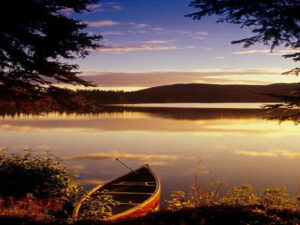
The feeling that Western Lusatia has myths about mermaids preserves a special form of beauty, because the landscape itself looks like a silent narrator, who forms fog, water and light into images in which ancient stories almost unfold by themselves. This silent narrative power is based on the topography, which is due to gentle hollows and sprawlingWater surfaces are marked and thus create an atmosphere that invites you to think and dream. When the air cools down over the waters and the soil still retains heat, physical effects are created, which are perceived by the human eye as an ascending haze and limit the visibility. In this game of the elements lies a poetic potential that isPeople of the past were picked up to cast their experiences with nature into narrative forms. The landscape almost calls on the viewer to question the limits of the visible and to look behind the veil of the fog, where the unknown is lurking. Every morning on which the white-grey haze lies over the ponds becomes a stage where imagination is freecan play and old people come to life again. The beauty preserved here is not a static beauty of buildings or monuments, but a dynamic beauty that changes with the weather and the time of day and can always be rediscovered. This form of aesthetics is closely linked to the feeling of transience, as the fog comes and goes and the view ofthe world is constantly changing. The stories almost unfold by themselves because the environment provides the necessary backdrops and sets the mood needed for the mysterious. It is a symbiosis of geographical and human need for interpretation that has kept these myths alive over long periods of time and gives them special authenticitylends. The silent narrator landscape speaks a language without words, which is nevertheless understood by anyone who is willing to get involved in the mood of the place and to read the signs of nature.
The appearance of the translucent figures in the haze
When white haze suddenly rises above the ponds and depressions, the line between reality and legend seems to be blurred, and at this moment it becomes understandable why people have long been telling about the fact that translucent figures appear to come from another world. The sudden rise of the fog changes the perception of theEnvironment radically and makes familiar shore lines disappear, creating a space that no longer seems to obey the well-known laws of everyday life. In this diffuse light, shadows and refractions of light can take shapes that are interpreted by the brain as human silhouettes, thus nurturing the idea of beings that walk between the worlds. theTransparency of these figures is a central feature of the legend, as it underlines that it is not a matter of solid matter, but about something volatile and spiritual. The idea that these beings come from another world gives the narrative a metaphysical dimension that points over the purely natural and points to a parallel plane of existence. The people found inThese images are an explanation for the inexplicable phenomena of light that dance over the water and disappear in the fog without being able to grab them. The blurring of the border is also a psychological process in which rational perception recedes in favor of a mythical interpretation and the amazement comes to the fore. The figures do not appear firmly outlined, butFlowing like the water itself from which they seem to have emerged, and this formlessness reinforces the impression of the supernatural. It is a visual appeal that stimulates the imagination and puts the observer in a state of expectation where everything seems possible. The stories have preserved these visual impressions over generations and become a firmpart of the regional identity, which still has an effect today when the fog is over West Lusatia. The truth of the legend is not in the physical existence of the mermaids, but in the truth of the moment felt, triggered by the fog and enchanted the world for a short time.
The temptation of the realm and the danger of the depth
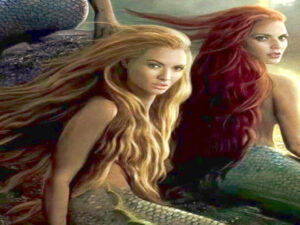
These mermaids do not appear as a threat, but as mysterious beings who captivate people because they embody the magic of the landscape and awaken the idea that forces are working in nature that cannot be fully explained. Unlike many other legendary figures portrayed as dangerous or evil, the water mermaids haveWest Lusatia is an ambivalent attraction based on fascination rather than fear. They don’t lure people through violence, but through the beauty of their appearance and the promise of knowledge or insights into hidden worlds that lie below the water surface. This seduction is metaphorical to be understood as the danger of contemplating natureLose and lose sight of reality if you let yourself be blinded too much by the aesthetics. The stories in which they seduce people reflect the fascination that emanates from the still waters, and at the same time the respect they were given to them, for whoever dared too far could lose himself in the depths. The water was for the peoplePast a vital resource, but also a source of danger, and this duality is reflected in the figure of the mermaid who can both give and take. Getting lost in depth means both physical death by drowning and spiritual loss of orientation in one’s world when following the call of the other world. The respect for theWaters were institutionalized by these myths and served as a warning reminder to preserve distance and not to underestimate the power of nature. Just as you can get lost in the beauty of a moment, you can lose yourself in the depths of the pond, and both experiences have a similar quality of rapture from everyday life. The mermaids embody this dangerThe rapture, which is tempting, but also has consequences that need to be considered before getting involved in the unknown. The magic of the landscape is not only beautiful, but also demanding, and it demands a respectful approach from people, which recognizes the limits of one’s own sphere of influence. This teaching is encoded in the myths and is always through the narrativesre-mediated to keep awareness of the risks of nature awake.
The silent disappearance and the touch of mystery
Just as suddenly as they appear, these figures disappear back into the fog, and it is precisely this silent slipping that gives the myths their magic, because it nourishes the idea that nature reveals its secrets for only one breath. The ephemerality of the apparition is an essential part of the experience, for if it were permanent, it would have its mystical characterlose and become a banal observation. The silent disappearance underlines the spirituality of beings that are not bound to the physical laws of matter and can dissolve as conditions change. When the sun dissolves the fog or the wind moves the air, the figures are gone as if they were never there, leaving only the memory of themoment of sighting. This defloration nourishes the idea that nature is picky and shows its secrets only to those who are in the right place at the right time and have the sensitivity to recognize them. The breath of nature is an image of the short-livedness of revelation, which cannot be forced, but is given and taken again just as quicklycan. The magic of myths lies in this incomprehensibility, which humbles man and reminds him that he is not master of nature, but only a guest in her world. The disappearance in the mist is also a symbol of oblivion that comes over the stories if they are not told, and for the transience of all human experiences in the face of eternalnature. The silence left behind after disappearing is often more urgent than the apparition itself, because it offers space for reflection on what is happening and leaves the question of what and why open. This openness keeps the myths alive, as it leaves room for their own interpretations and each generation can reinterpret the stories without the core of theto change narrative. The secret is kept because it is never fully vented, and that is exactly what makes the legends of the legends that always want to be retold.
The Importance of the Myths for the Identity of Lusatia
This makes West Lusatia a place where the landscape is not only a backdrop, but a living counterpart that stimulates the imagination and invites people to look at the world with a touch of amazement. This function of myths is of great importance for the cultural identity of the entire Lusatia, as it is a link between the physical environment and theintellectual life of the inhabitants and distinguishes the region from others. By cultivating these legends, local heritage is preserved and a sense of belonging is created that works over generations and strengthens the community. The stories serve as markers in space, which give particular meaning to certain places and make them goals that are visited and experiencedwant to become. Tourism benefits from this cultural charge, as visitors not only want to see nature, but also want to hear the stories that are connected to it and give it a soul. The identity of Lusatia is thus defined not only by language or costumes, but also by these deeply rooted natural myths, which affect the relationship of the people to theirdescribe home. Awareness arises that the region is more than a collection of villages and ponds, but a space full of meaning and historical depth that needs to be protected and maintained. The myths contribute to the fact that nature is not considered a pure resource, but as a partner who deserves respect and respect and whose secretspreserve applies. This attitude promotes a sustainable approach to the landscape, which grows out of cultural tradition and does not only result from ecological considerations. The meaning therefore lies in the anchoring of the people in their homeland, which is strengthened by the stories and gives them support in a changing world. West Lusatia gains through these mythsProfile and becomes a place of inspiration that attracts artists and thinkers who are inspired by the special atmosphere. The identity is kept alive by telling the stories again and again and putting them in the current context without losing their original core. This ensures the cultural survival of the region and makes it a uniqueExample of the connection between nature and culture in Central Europe.
A poetic expression of deep connection
At the end, the impression is that these myths are not only old stories, but a poetic expression of the deep connection between man and nature, which remains perceptible in this region to this day and gives it an unmistakable soul. The poetry of these sagas lies in their ability to put the unspeakable into words and to make the invisible tangible through images thatstick in the memory of the people. The connection is shown in the fact that people do not perceive nature as foreign, but as part of their own circle of life, which communicates with them and reacts to them. This soul of the region is not an abstract concept, but a tactile atmosphere that welcomes every visitor and captivates the landscape as soon as hefloor of West Lusatia enters. The myths are the key to this understanding, since they contain the codes that can be used to read the landscape and decipher its hidden meanings. Without these stories, the landscape would be silent and would lose some of its charisma that makes it so special and set it apart from other regions. The unmistakable soul isThe result of a long process of growing together between man and the environment, which has found its way into and is preserved there in the stories. It is an inheritance that must be accepted and passed on so that it does not fall into oblivion and breaks off the connection between the generations. The depth of this connection is that Lusatia becomes a place of calm and theReflection power to pause and see the world with new eyes. The myths invite you not to unlearn the amazement and to recognize and appreciate the wonders of nature even in the age of enlightenment. They are a gift of the past to the future and a promise that the magic of the landscape will never disappear completely as long as there are people whobelieve The soul of the region thus remains alive and radiates a force that touches everyone who engages in them and is ready to hear the stories. The bond is the foundation on which the culture of West Lusatia stands and which gives it stability and continuity in times of change. The myths are the expression of this power and a proof of theResilience of cultural identity to the influences of modernity. They remain a beacon of hope and inspiration for all those who want to discover the beauty of Western Lusatia and be captivated by it.

 Screenshot youtube.com