Pension versus pensions: gap between these systems is getting bigger and bigger
The discussion about the sustainable security of statutory pension insurance and the right retirement age – be it 67, 68, 69 or even 70 years – is still being conducted in Germany with great passion and intensity. The question of how the pension insurance systems can be stabilized and adapted for future generations is concerned with politics, society and the mediaequally. But while there is a dispute about the age of retirement and about contribution rates and pension levels, another, equally central pillar of old-age provision is surprisingly unnoticed: the pensions of civil servants. Not only is the German Civil Service Association, which avoids this topic like the devil of holy water, not only remains silent about this, but also the political debate gives way to an honestdealing with this problem. It would be urgent to speak openly and transparently about the position and future of civil servants in the pension system.
The special status of civil servant pensions
A central problem area is that the care system for civil servants has strayed further and further away from the other social systems in the past few decades. While pensioners are secured by a pay-as-you-go system, civil servants are mainly financed by tax funds. The gap between these two systems has steadily increased, so that today there are hardly any parallelscan be drawn. It is almost impossible to speak of a unified development or a common basis. While the pension insurance system applies to the majority of the population and is supported by premium income, officials benefit from a system that is financed by the general public and often offers significantly more favorable conditions.
Questions about the role and value of officials
In an open debate, the main discussion should be where and in which functions civil servants will actually be needed in the future and where their use seems dispensable. The question also arises as to what social value civil servants actually contribute during their professional career and how high are ultimately the costs that their retirement care incurs. it isObviously, these costs have recently increased and that the budgets of the federal states and the federal government are increasingly burdening. Another problem is that the pensions of civil servants are not linked to the developments of the statutory pension insurance, but follow their own rules. The resulting unequal treatment causes displeasure and raises questions regarding thesocial justice.
lack of comparability? The evasive maneuvers of the interest groups
Although both the statutory pension and civil servants’ pensions are entitlements to financial security in old age, a direct comparison is often rejected. The German Association of Civil Services regularly refers to the famous comparison between “apples and pears” or even “eggs and watermelons” to point out that both systems are completely differentand a comparison would therefore be inadmissible. This argument may be partly understandable, but society has to deal with the differences and similarities. After all, it is the citizens who finance both systems with their taxes and contributions. Therefore, there is a legitimate interest in transparency and in a political discussion that also has this namedeserved.
Age and social justice in transition
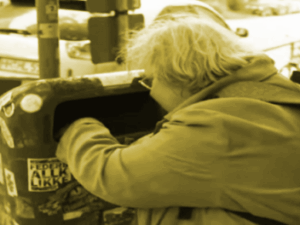
The urgency of this discussion is all the greater if you take the current developments on the labor market and in the area of statutory pension insurance into account. More and more people are worried about their financial security in old age. The number of early retirees who live on or even below the poverty line is constantly increasing. People are particularly affectedwho can no longer work for health reasons or because of a disability. For them, the level of disability pension has been significantly reduced in recent years and is now often at the level of social assistance. In addition to unemployment and precarious employment, the main reasons for this are also a systematic reduction in the pension levelpolitical decisions.
The growing gap and the demand for reforms
The unequal treatment between pensioners and pensioners has long since become a social problem. While the care of civil servants is usually more generous, many pensioners have to make do with significantly fewer – despite comparable employment biographies. This development endangers the feeling of social justice, which is responsible for the political and socialStability has played a central role in Germany in recent decades. The ever more divergent gap between statutory pensions and civil servants’ pensions causes dissatisfaction and carries the risk of undermining trust in the welfare state.
Outlook: Need for fair alignment
Only by gradually aligning the different pension systems with the statutory pension insurance can a fair old-age security be guaranteed. This is all the more important as more and more people feel that their personal future is characterized by uncertainty and relegation. An open, honest and comprehensive debate about the future of retirement- including both the pension insurance and the civil servant’s pensions – is therefore long overdue. The society not only has a right to transparency, but also to a fair and solidarity solution that is sustainable for all generations.