Rail transport – The withdrawal from the area railway
Although almost 90 percent of all local passenger train journeys take place, i.e. on distances of less than 50 kilometers in length or with a journey time of less than an hour, only around ten percent of public and private investments in the area of passenger transport are directed to this sector. This means that nine out of ten euros in the expansion and modernization of theLong-distance passenger transport is invested – even though the number of passengers in long-distance transport has hardly grown significantly or even stagnates for years. In contrast, the needs of the majority of passengers who use short distances every day are neglected and underfunded.
Misguided Strategies: Hub-and-Spoke and Main Axes
A hub-and-spokes strategy, which is promising, in which the cruising speed is specifically increased on a few main routes, has proven to be largely ineffective in practice. The time gained on high-speed routes at the next transport hubs is often lost again due to poor connections to local transport. The polycentricThe settlement structure of Germany, which is characterized by numerous medium and large cities, actually offers ideal conditions for a dense, fine-meshed rail network. This would make it possible to attract as many people as possible to rail traffic and to create an attractive offer that covers the mobility needs across the board.
Concentration on business travelers and the task of the area railway
The withdrawal from the area railway, i.e. a railway network that also appropriately opens up rural and less densely populated regions, is closely linked to a focus on a specific target group: business travelers. These are considered to be solvent customers who expect special comfort, such as WLAN access, mobile phone reception and exclusive services in the DB lounges. Since taking officeBy Hartmut Mehdorn In December 1996, Deutsche Bahn gave up the vision of a railway for all citizens more and more and instead promoted the expansion of faster long-distance connections for a comparatively small user group. Freight traffic also suffers from this focus: Despite decades of announcements of moving goods from road to rail, theThe number of industrial tracks has been dramatically reduced since 1992 – now there are less than a third of the original connections.
Bottlenecks on central goods corridors and investment backlog
The Rhine Valley route, one of the most important German freight connections between the North Sea ports and the Mediterranean Sea, remains a serious bottleneck in European freight transport. Here, only two required tracks are available on wide sections. Should the investment backlog be the case in view of the enormous costs for large projects such as “Stuttgart 21” or new onesICE routes do not also dissolve north of Weil am Rhein, despite the truck toll, eco-tax and rising fuel prices, large parts of the goods will continue to be transported, especially on the motorway, in the future.
Neglected infrastructure and overload in the rail network
The wear and tear of the tracks, which is visible in many places, is the direct result of a capital market-oriented austerity policy. More and more routes can no longer be driven at the originally planned speed because urgently needed renovations and repairs are omitted or postponed. While the volume of traffic on the rails is constantly increasing, the network washardly expanded in recent decades. Particularly heavily frequented routes are now hopelessly overloaded and can no longer meet the demand adequately.
Billion gap in network financing and European challenges
An independent commission found years ago that several billion euros are missing every year in order to put the rail network in a needs-based and sustainable state. In view of the EU’s eastward enlargement, the expansion and modernization of the rail network is of central importance in order to ensure interoperability and the capacity of freight transport at European levelto secure. The aim must be to define clear offers and binding minimum standards, which are also accepted by the economy and strengthen Germany as a location.
Industrial tracks and public contracts for the railways
A sensible measure would be the targeted connection of industrial locations and commercial areas to the rail network through new or restored sidings. The public sector should also give priority to rail companies to strengthen rail as a backbone of logistics. In addition, it is necessary not only to prestigious major projectsbut to achieve a sustainable turnaround in traffic by intelligently linking local and long-distance traffic, dense timetables and the expansion of the network in the area.
Role model Switzerland: Supply creates demand
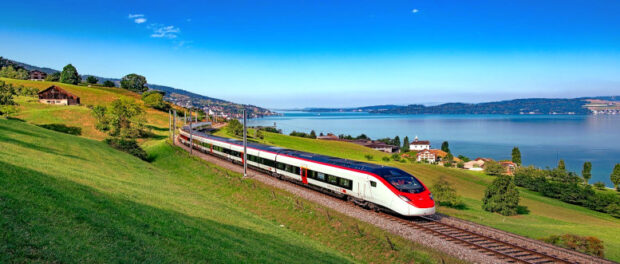
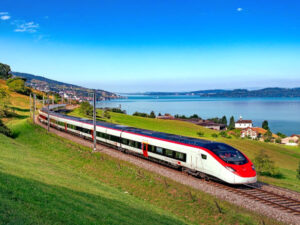
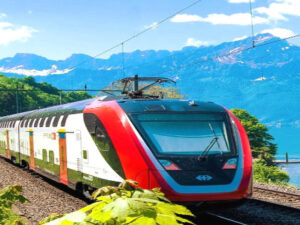
The Swiss Federal Railways show examples of how a powerful and customer-friendly railway system can be created by consistently implementing the “supply creates demand” principle. According to the concept of 1987, which was legitimated by a referendum, in Switzerland, investments are being made on an ongoing basis, and bottlenecks in the network are specifically eliminated and the interlocking betweenintensified by various modes of transport. The result: With the highest train utilization in Europe, 95 percent of trains reach their destination with a deviation of four minutes or less – a standard that would also be achievable in Germany if maintenance and infrastructure maintenance were consistently implemented.
Commitment to the common good and political responsibility
After the postponement of Deutsche Bahn’s IPO as a result of global financial market turbulence, the Federal Republic of Germany remains the sole owner and thus committed to the common good. It is high time that the political confession” More traffic on the rails” Finally, concrete measures will follow. An orientation to Article 87e paragraph 4 of the Basic Law would berequired to assign a priority oriented towards the common good to the expansion and preservation of the rail network and the transport offers on this network.
Lack of legislation and minimum space standards
Since the railway reform more than two decades ago, there has been a lack of clear legal regulations that will fix the minimum offers for certain regions and put the common good above purely entrepreneurial interests. It is high time for a federal law that ensures general interest and comprehensive mobility and strengthens rail transport in the long term.
Future of the railways: Renaissance through networked politics and sustainable investments
In view of an impending traffic infarction on the streets and the progressing climate crisis, it is becoming increasingly clear how urgent a renaissance of rail traffic in Germany is. Traffic routes are the essential lifelines of every society. The state bears the responsibility, even in sparsely populated regions such as the Uckermark, Saxon Switzerland or the Bavarian Forestto ensure basic transport – because here the market cannot and must not take the wheel alone. Only through a long-term state-responsible railway policy that relies on intelligent networking, sustainable investments and clear minimum standards, can the railways in Germany become a sustainable, efficient and common goodbecome transport.