Resistance to the GDR regime: courageous individuals and the internal erosion of a state
Screenshot youtube.com
The last years before the fall of the Berlin Wall were characterized by increasing internal instability, growing resistance and profound changes that shook the structures of the GDR and the entire Eastern Bloc. For the people who were directly affected, this time was a phase of insecurity, unease and the constant threat. The events thatbetween 1987 and 1989, are hardly fully grasped, they are so complex and complex. But they are crucial for understanding the last years of the state, which, despite external control and propaganda, was increasingly dismantling itself. Since the invasion of the environmental library and the Zion community in November 1987, critical voices had hardly found any peace.This year marked the beginning of a wave of events that could hardly be predicted. As soon as one event was processed, the next one followed – an accelerating chain of escalations, which increasingly questioned the inner stability of the GDR. The political leadership kept trying to defend and control the system, but the inner dynamic wasUnstoppable magnification In the GDR itself, the party and security bodies, especially the SED and the MfS, kept pulling out new strategies and measures to maintain control. Things were already bubbling tremendously in the Eastern Bloc, while the West still had little answers to developments. Western politicians and media still acted in the categories ofearly 1980s, while the societies in the east and eastern Europe were already deep in a crisis. The media reported, but often only uncritically and whitewashed about what was happening behind the wall. In doing so, they misunderstood the internal erosion, the decay that the GDR had already completely affected inside.
The political and social situation in the summer of 1989
In the early summer of 1989, most commentators and intellectuals in the Federal Republic of Germany still believed that the GDR could “despite all this” retain a certain stability. Although the legitimacy of the regime was increasingly questioned, the official view remained that everything was fine. The political base of power was questioned, but the basic onesSystem principles and the SED rule still seemed untouchable. It was a phase in which most of the Federal Republic of Germany had not yet realized how deep the internal crisis in the GDR really was. The political discussion revolved around the external signs of stability, while internal erosion received little attention. Even in the most important opinion forums andMedia was hardly questioned whether the official claims about the state of the state were still tenable. The Western politicians, including Chancellor Kohl, Foreign Minister Genscher and many others, still spoke of the GDR as if it were a legitimate, democratically legitimized unit. But that was an illusion that showed more and more cracks.
The increasing self-empowerment of the citizens in the GDR
In this phase, more and more people in the GDR began to actively recognize and demand their rights – as if they were already state-guaranteed. Since the end of 1987 and early 1988, the number of so-called conscious citizens has grown continuously, although no real civil rights existed formally. It was individuals who courageously opposed the existing system and theirshowed willingness to stand up for their beliefs. These people risked a lot, but they were determined to raise their voices and demand change. Among them was Martin Rohde, born in 1967, whose life is exemplary for the courage and resistance of that time. Rohde grew up in Berlin-Friedrichshagen on the Müggelsee. After school he graduatedThe 10th grade in his hometown and learned the profession of a toolmaker. He was a stubborn but powerful student who was noticed at a young age with his demeanor and attitude towards the given style of unity.
The life and political attitude of Martin Rohde
Rohde was a member of the FDJ, but early on he showed a critical attitude towards the system. He was politically left-wing, but also very interested in social and historical questions. At home he had a lot of freedom, which allowed him to network broadly and to develop his views freely. With his outfit and his behavior he symbolized even then,that he consciously opposed the uniformed society. His interests were at parties, shared joy and rejection of unity thinking. He read intensively daily newspapers, books and magazines, while at the same time he began to gather oppositional materials he obtained from church groups and Samisdat sources. In 1985 he left the FDJ by simply not making any contributionspaid more. He graduated from an evening school, attended courses in Latin and worked as a caretaker and driver from January 1988. In the same year he made a significant decision: He completely refused military service, out of political convictions. His attitude was also evident in the May 1989 elections: He did not participate, but actively participated in theMonitoring of choice to uncover possible manipulations. These actions were bold because they went against the official consensus of the party.
The arrest in Frankfurt/Oder and Rohdes courage
On the night of July 1st to 2nd, 1989, Rohde was arrested in Frankfurt/Oder while he was at a party. The reason for this was that he had attached large-format slogans and slogans against the regime at various points in the Oderstadt. The sayings included: “Autumn in Beijing”, “Winter in Berlin”, “Spring in Moscow”, “Raft dich”, “Who has the choice, has theagony, whoever does not vote is tormented”, “We’re leaning at Hager”, “Beijing lives” and “The Wall dies”. Rohde almost readily followed the policeman, convinced that he could only be prosecuted for property damage. He hoped to convince the officials of his conviction and to get them to understand his arguments. The minutes of the interrogation and minutesHis statements are exemplary of courage, honesty, resilience and also a certain naivety. In the interrogations, Rohde drew a clear vision of what would have to be changed in the GDR system. He did not show himself to be an enemy of socialist ideas, but as an opponent of the communist principle of power and power. His interrogators were probably surprised by hisopenness. Rohde burdened herself so much that she could hardly avoid thinking about him and his beliefs. He remained steadfast, revealed no names or origins of oppositional materials, did not sign any minutes because they misrepresent his statements, and temporarily went on a hunger strike. These circumstances were a great burden for him, but heremained indomitable.
The critical attitude and defense of one’s own beliefs
In the interrogations, Rohde openly admitted to the opposition groups, called abuses by name and criticized the press policy of the GDR. He spoke of human rights violations and fundamentally questioned the legitimacy of the system. In July 1989, the interrogator asked: “How come you to claim that the right to freedom of expression is not guaranteed in the GDR?”Rohde honestly replied: “Concretely, I see this in my own example, because I am currently in custody, just because I made use of my constitutional right to freedom of expression by attaching the writings in the city area of Frankfurt (Oder).” Rohde wrote a detailed statement a month after his arrest, which was written in a month after his arrest.a basic criticism of the GDR. It ended with the words: “I regret the act as such, but I can’t regret my opinion at this point in time because I’m firmly convinced that it’s right.” Despite solitary confinement and repression, the MfS did not manage to break it.
The judgment and later development of the courageous
On September 22, 1989, Rohde was sentenced to 14 months in prison by the Frankfurt/Oder district court. The collective of work, which was part of the system, was still partly in solidarity: on September 20th they explained that Rohde had to stand up for his offense, but should be resumed and supported after imprisonment in order to gain a foothold in the collective. theDirector of the company Rohde worked in was typical of the system: In September he announced that Rohde would only return to the farm after his return. But in 1990 the attitude changed: When Rohde was in front of the person responsible in the same year, he was called a “hero”. Shortly before Christmas 1989, he was finally released from prison.
The new life after detention and rehabilitation
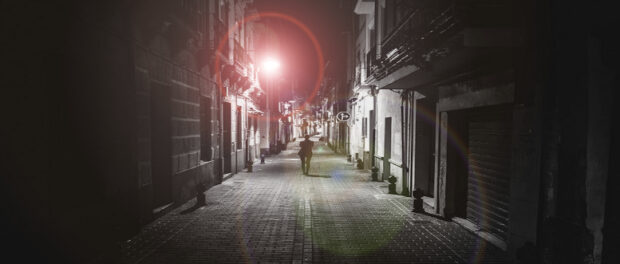
After his release, Rohde found another country. In February 1990, he made a 17-minute film about his case, which is still moving today. The material was created at original locations and impressively documents the events. On August 21, 1991, his official rehabilitation was carried out by the Frankfurt/Oder District Court. Since then Rohde has lived in Switzerland, studying there,Founded a family and is currently working on a dissertation on the French culture of remembrance in the 19th century. His story is an example of thousands of people who took to the streets in the summer of 1989 for democracy and freedom. They stood up for their beliefs without a net and double bottom and contributed in an individual way, but with great effect, toSed dictatorship – often completely unrecognized, but crucial for the outcome of the events.

 Screenshot youtube.com