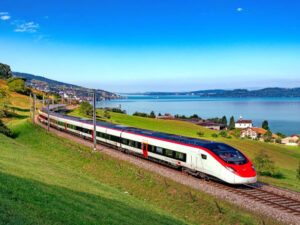
Restoration of the Moravian Bahn: strengthening of local public transport and regional connections
The restoration of the Herrnhuter Bahn offers fundamental advantages for the development of local public transport in the region. The reactivation of the route ensures a better connection between important locations, which makes everyday paths easier for many people. Commuters benefit from a reliable and predictable connection that clearly shows the commute to work.designed more pleasantly and efficiently. Pupils also have new opportunities through the train connection to reach their educational institutions safely and without spending a lot of time. The resumption of rail transport thus creates conditions for greater use of local public transport, reducing individual stress and access to centralfacilities in rural areas is improved.
Promoting gentle tourism and opening up new goals
In addition to everyday use, the Herrnhuter Bahn makes a significant contribution to promoting sustainable and gentle tourism. The railways open up touristic places and make them more accessible, allowing visitors to travel flexibly and in an environmentally friendly way. For guests of the region, travel times are shortened and opportunities to explore the area are increased. attractiveRail connections increase the quality of stay and promote the discovery of sights, cultural events or nature experiences away from the well-known main axes. This creates new perspectives for tourism, which focuses on sustainability and regional value creation.
Support local economic areas and better accessibility
Another important reason for the restoration of the railway line is the strengthening of the local economy. With a well-functioning railway connection, tradespeople, service providers and the hospitality industry will be more accessible. The mobility of labor is increased, which opens up new development opportunities for companies. Customers and employees can choose from a largercatchment area can be gained, which noticeably strengthens the economic power of the region. Even small businesses benefit from the fact that they can make contact with suppliers and business partners more easily. The railway thus creates an infrastructure that enlivens economic life on site and gives new impetus.
Maintaining and using existing infrastructure as a sustainable way
The reactivation of the Moravian Bahn stands for the responsible use of existing resources. Instead of building new roads and thereby consuming landscape, existing infrastructure is used and upgraded. This sustainable approach not only protects surfaces, but also saves material and energy. The revival of the railway line is a clear sign ofA future-oriented transport policy that relies on proven structures. The approach of transferring existing tracks and train stations into a modern company is a contribution to the protection of the environment and to the preservation of the regional cultural landscape.
Improve cross-border cooperation
With the restoration of the rail connection, cross-border mobility is also made easier. The region can benefit from improved cooperation with neighboring countries by promoting the exchange of people, ideas and cultures. International contacts are strengthened, joint projects can be initiated more easily and the region’s attractiveness forGuests from abroad are increasing. The railway becomes a link that expands partnerships and contributes to European integration at regional level.
Strengthening citizen engagement and regional identity
After all, the restoration of the Moravian Bahn is also an engine for social interaction and identification with one’s own homeland. Projects of this kind are often accompanied by local initiatives and committed citizens who are committed to implementing them with great commitment. The railway becomes a symbol of common goals, long-term planning and politicalattention. It promotes the involvement of the population in decision-making processes and raises awareness of the importance of sustainable mobility and regional cooperation. The reactivation of the route contributes to a living civil society and a strong regional identity.