Secret Police and Espionage in the Roman Empire: The Role of Frumentarii and its Successors
The emperors of the Roman Empire were not only focused on the surveillance of foreign policy and borders. On the contrary, the interior of the empire was also of great interest to the rulers, who always tried to secure their power and recognize possible opponents at an early stage. Within Roman society, there were numerous opponents who were struck by revolt,Conspiracies or personal conflicts threatened the fragile power structure. There were always uprisings that shook entire provinces, and conspirators also tried to eliminate the emperor through assassination. Even family disputes and personal conflicts within the imperial house could become a serious threat to the ruler. for their ruleto secure, it was therefore essential to protect against these opposition forces. This was achieved by systematically collecting information, sending in spies and spying on opposition groups to react early. It was particularly effective if these groups were managed by so-called secret agents – the so-calledspeculatores– to infiltrate. This task was taken over by specially trained spies who enjoyed special training and were able to collect information in the ranks of the opponents and also within their own society.
The beginnings of the spying in the Roman Empire: Julius Caesar and the Speculatores
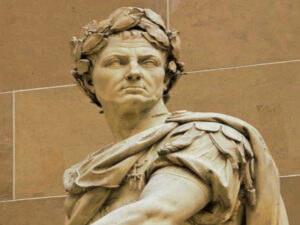
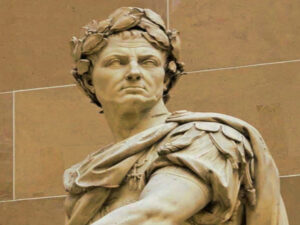
Julius Caesar already used scouts during his campaigns in Gaul to collect secret information. These spies, who also acted as a bodyguard in Rome, completed secret commissions that helped the political rulers to monitor their opponents and control their networks. Caesar used them to observe the movements of his enemies and to take the politicalto keep an eye on what happened inside Rome. Over time, these specialists developed and increasingly took on the function of a kind of secret police – whereby the termsecret policein this context, however, is somewhat misleading, since the Roman empire was not a modern state and the rulers lacked the means and structures of a modern police apparatus. Nevertheless, these units were of central importance for internal security.
The frmentarii: The most important surveillance group from around 100 AD
The most important group, which was entrusted with internal surveillance tasks from around 100 AD, were the so-calledfrumentary. Her name derives from the Latin wordfrumenismfrom what means “cereals”. Originally, these soldiers consisted of the army and had the main task of procuring food for the Roman forces. They were responsible for the purchase or seizure of grain, which represented the vital food for the legions. Who was responsible for the cereal procurement had access tomilitary infrastructure andPublicus Course, the state highway system that regulated the transport of news and goods. As a result, the frmentarii traveled a lot and gained insight into a multitude of matters that were actually outside their original tasks. They were able to intervene in military and civil structures and were increasingly used for secret missions.
The use of the frmentarii among the imperial rulers
Under Emperor Domitian, the frumentarii wereCastra Peregrinain Rome, a camp on the Caelius, which originally served to accommodate soldiers from the provinces. There they formed a closed unit, the so-callednumerus frumamentaryum. Numerous reports are circulating about the activities of this group in internal monitoring and espionage, which still cause a stir today. theHistoria Augusta, a late antique collection of imperial biographies, mentioned in theVita Hadrianithat Emperor Hadrian sniffed very actively in the private life of his peers and used the Frumentarii. An example given in this collection describes how Hadrian learns of a quarrel between a senator and his wife. The woman complained that her husband was constantly indulging in the baths and amusements and was hardly at home. When the senator at the KaiserIf you are on vacation, he is reprimanded by Hadrian and reminded of his extravagant lifestyles. also in other biographies ofHistoria AugustaWill the designationfrumentaryUsed when Emperor commissioned spies to listen to their subjects.
Spying in the service of the Kaiser: Examples from history
Another example is Emperor Macrinus (217-218 AD), who is said to have instructed the Frumentarii to interfere in the private affairs of their comrades. For example, it came to light that soldiers had a sexual relationship with the maid of the house where they were stationed – a scandal brought to light by the espionage activity. also KaiserGallienus (253-268) received information from the Frumentarii about rumors that burdened his most capable general, Claudius. Claudius was described as a “right-wing lust” behind his back, which worried the Emperor, fearing that the general might intrigue against him. To control him, Gallienus ordered the officers to hand over gifts to Claudius and suchto ensure his loyalty. theAbout the authorreports that large amounts of gold and silver harnesses, valuable clothing – including parthic shoes and a handkerchief from Sarepta – were handed over to a sum of 450 aurei to bribe the general.
The role of Frumentarii and its successors in political intrigues
Not only in the Historia Augusta are references to the espionage activity of the Frumentarii. According to the Bithynian senator and two-time consul Cassius Dio, two officers named Ulpius Julianus and Julianus Nestor rose within the Praetorian Guard under Emperor Caracalla (211-217) under Emperor Caracalla (211-217). Previously, they had the commander of theCastra Peregrinaserved and gained the confidence of the emperor through their espionage techniques. Several emperors trusted qualified soldiers to perform secret operations. So, after his victory over rival Pescennius Niger in Britain, Septimius used Septimius Severus to take out the usurper Clodius Albinus. These agents, presumably Frumentarii, should take the opponent’sMurder the handing over of letters and possibly also use poison. Herodian, a Greek historian, describes the emissaries from Rome, who were commissioned to eliminate Albinus, were recognized and captured upon their arrival in Britain. They were tortured and eventually revealed their dark plans. Severus was forced to take action against Albinus,which led to a civil war of over two years until Albinus was finally defeated.
The Boundaries and Criticism of the Espionage Units
However, it is important not to overstate this scattered information. The Frumentarii were not an organized “secret police” in the modern sense as they are known today. Rather, they were soldiers with a wide range of tasks, where snooping and spying was an important, but not the only, task. Especially in relation to their own comradesand wealthier citizens, they were often used to carry out control and surveillance. The motto seemed to be: “Trust is good, control is better.” Evidence that the Frumentarii were not too popular with the population can be found in Aurelius Victor, who described them asPestilens Genus– “harmful types” – and praises Emperor Constantius I for deciding to abolish this unit. This suggests that the Frumentarii were rather hated by certain sections of the population, while they were highly regarded by the imperial elite and military leaders.
Successor organizations: The agents in Rebus and their tasks
Later in the Late Antique Empire, the tasks of the Frumentarii were taken over by new organizations thatAgents in Rebusthe name means “general agent” or “agent in matters”. These units were difficult to grasp, because their range of tasks was not clearly defined. Although they were also soldiers, they did not report directly to the Praetorian prefects, but organized themselves in their own so-called “Schola”. Her duties included the transport of confidentialDocuments, the supervision of the provinces as well as the control of the state postal system, thePublicus Course. They were avid users of the state transportation system and had the right to intervene in violations of the law. The law thatCodex Theodosianus, stipulates that theAgents in Rebusshould observe everything and report to the emperor what they noticed in the state.
Reports from the province: monitoring and intervention in practice
Ammianus Marcellinus, a major Roman historian, describes how aAgents in RebusIn the province of Pannonia in what is now the Republic of Serbia observed a case: According to the report, during a pub in Sirmium, where the guests were already under the influence of alcohol, Emperor Constantius II might want to eliminate his opponents with means of power. theGaudentius, an agent in Rebus, overheard the conversation, informed the chief of staff Rufinus, and he in turn reported to the emperor. The suspects were then arrested, interrogated and brutally tortured – but luckily they stayed alive. These stories show how the agents in Rebus worked in practice, how they uncovered private secrets and also intervened in the event of violations of the law.
privilege, control and criticism of theAgents in Rebus
theAgents in Rebusenjoyed numerous privileges: they were tax-exempt, couldPublicus Coursebenefit, and their officers did not have to answer to ordinary courts. At the end of their service, they often received a high position, such as a governor’s function or a seat in the Senate. Due to the high prestige and the importance of the position, the recruitment criteria became ever stricter, up to a personal placet of the emperor. After Emperor Juliannumber ofAgents in Rebusdrastically reduced to 17, more than a thousand of them were later deployed in the east. Nevertheless, the possibilities of imperial surveillance were limited. High-ranking military and administration leaders were the targets of which the agents were particularly afraid, while for ordinary people on the streets the danger of the spies was likely even greaterwas.
Monitoring, control and the tension in the Roman Empire
The organizations offrumentaryand later theAgents in Rebusshow the importance of the Roman emperors secret service and espionage to ensure the empire’s internal security. Although these units were never a modern intelligence service in the current sense, they fulfilled central functions of surveillance, control and intimidation. Their activities were often hidden, but their importance for stability and theThe Emperor’s retention of power was undeniable. The criticism of them, for example in Aurelius Victor, also shows the dark side of these surveillance measures – they were feared, hated and at the same time indispensable for imperial power. The tension between control and freedom, trust and surveillance, has shaped the Roman society over the centuries, leaving traces thatretard today.