The Art of Leadership and Strategy in the Roman Military: Tiberius’ War Management Championship
Screenshot youtube.com
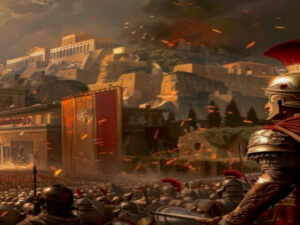
Let’s imagine a huge army of 150,000 Roman soldiers is in action. These troops are divided into two marching columns of equal size, moving in enemy territory. The distance to its base is about fifteen days of marching, but the two columns are separated by several days of marching time. This tactical arrangement serves toensure flexibility and security in a critical position. The army’s right flank is threatened by a political and military conflagration, an explosive combination that significantly complicates the advance. In front of them is an opponent who is just as battle-tested and experienced as the Roman military – he is experienced in an excellent strategically experiencedguided at the top. The situation is highly dangerous: It is a conflict with a strong, well-organized enemy operating in his own territory and looking back on long warfare. The challenge is to coordinate the troops, bind the enemy and at the same time react flexibly to unpredictable developments.
In Rome: Fear, Insecurity and a Decision in the Face of Danger
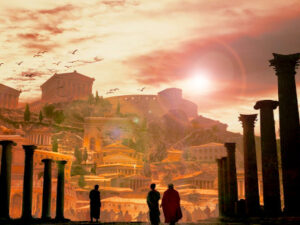
There is a tense atmosphere in the capital, Rome. Emperor Augustus, the Empire’s supreme ruler, is deeply unsettled. He calculates that the enemy could appear in just ten days at the gates of the city. This alarming forecast puts the most important decision-makers in the highest tension. The Capitol’s Guardians, the so-called “Geeseof the Capitol” – symbol of Rome’s alertness – are on increased alert. The threat is so great that it puts the whole empire security precautions to the test. It is a situation that requires fast and determined action to ensure the survival of the state. The fear of an attack that could destroy everything shapes the mood in RomeAnd forces leadership to make a decision that will significantly affect the fate of the empire.
The decisive decision: The necessary before the glorious place
In this critical situation, the Roman leadership makes a strategic decision that appears sober at first glance, but on closer inspection shows great foresight: “The necessary things were preferred to the glorious,” reports the historian Velleius Paterculus. This statement means that short-term vanity and craving for the security of the empirewere postponed. The command of the new front is immediately transferred to Tiberius, the experienced general and later emperor. Although Velleius does not explain exactly what was necessary, it is clear that it was a quick, determined measure to persuade the powerful Germanic prince Marbod to give up. The goal was the opponent who was about to destroyStanding to force surrender through a diplomatic move – a strategy designed to save time and avoid unnecessary losses. A bitter truth is revealed: neither education nor military experience or diplomatic skills alone are sufficient to survive in the political arena, if it is “healing” – in the sense of historical greatness,Foresight and long-term survival – missing. Marbod, a major Germanic leader, certainly had many qualities, but his greatest weakness was his vanity. This weakness prevented him from correctly grasping the complex connections and correctly assessing the impending danger of Roman power. To the elephant Rome, Marbod remained despite royal dignity,National wealth, castle and standing army just a mouse. The only honor Rome ever gave him was the opportunity to attack him.
Diplomacy in a hurry: gain time, save dominion
Tiberius, the strategic master, recognizes the chance to neutralize the opponent with a quick peace agreement. While the negotiations are ongoing, Marbod believes he is on par with Rome. Later he is proud that “that was negotiated at the time as under equality” and “under conditions of equal favorable terms for both sides”. But in truth, Rome isAlready on the way to outwit the opponent. The negotiations are only a means to an end: they give Rome valuable time to send 150,000 battle-hardened troops into the back of the enemy. These troops are about to move south and invade Italy, which has a decisive influence on the strategic situation. This ensures the Romans have a decisive advantage,Allows them to win the war without unnecessary bloodshed. This tactic shows the importance of acting flexibly and with foresight to keep the upper hand in the conflict.
The Art of Neutrality: Luxury Only for the Very Powerful
In Roman politics, the ability to maintain neutrality was a high art that was only mastered by the very big or the very small. Marbod’s Germanic royal rule was still too insignificant from one point of view, but from another it was already too big to go unnoticed. Only he himself thought he had everything under control, and that was his undoing. initially triumphedHe for a while, completely undeserved, and enjoyed the royal game until the power struggle with Arminius. Those years were his happiest, because he was proud of the chaos he had caused by his neutrality in Roman politics. But this error is a dangerous illusion: a military-passive attitude in the great conflicts of the world has no one before thekeeps sinking. It is a lesson that many have already paid dearly. Whether you can sit at the winning board is questionable – only courage and clever strategies lead to success.
Tiberius’ strategic brilliance in war
In this war, Tiberius proves his entire military and political fortunes. The opponent is superior in numbers and has knowledge of Roman weapons technology and strategy. In Pannonia, members of Roman auxiliary troops and decommissioned also rose, which made the situation even more difficult. But Tiberius is determined to follow the consequences of a policy of plunderingand correcting the stirring. At first it was believed that only the Markomanni were still real opponents, but soon it became clear that the Roman range was much further. It is important to start all over again. It is about the “salvation” of an ancient Roman family. The reputation that precedes him is as powerful as the fighting power of the legions. “Wherever the Caesar personally led,the enemies lost their confidence, even if they were outnumbered.” His strategy is to dispel the enemy, drive them into fortresses or put them in flight. A part of the opponent is pushed into the mountains, the other almost completely destroyed under Roman command.
Motivation of the Roman soldiers: ideals, fear, glory
Velleius emphasizes: “The bravery of the Roman soldiers restored fame while the inability of the leaders became visible.” This makes it clear what drives the soldiers: Six key elements motivate you to invest your life in the fight. First: the ideal awareness of the state, religion or ideals. Second: Being a paysite itself, thematerial reward. Thirdly, the fear of the death penalty in the case of desertion, because only the fear of certain death in battle can prevent a withdrawal. Fourth: the model of the leader who sets an example of courage and determination. Fifth: The solidarity within the troops that creates cohesion and mutual trust. And finally: personal fame. For the RomanSoldiers were the role model of the leaders, camaraderie and the glory of acts decisive. Ideologies played a minor role, although the greatness of Rome was often invoked by military leadership. The fear of the “martial court” was real, but it was only a motivating factor. You ran away when it had to be. Punishments were provided for in severe cases,Mostly in the form of decimations, in which every tenth was crushed or forced to commit suicide.
Tiberius: a strict, strategic general with principles
Tiberius, who is often portrayed as cruel, sneaky and vicious, was nevertheless an extremely competent troop leader. His principle: “Attack and defeat the enemy when he shows up, but avoids it when he’s united.” This principle would have spared many unnecessary attacks. His strategy was always sober, realistic and designed for success: “He always had thatsoberest judgment on what is necessary and preferred the actual advantage to the only glorious one. This was easier for a Roman to implement than for a Germanic who had hardly any authority to order. But it is precisely this attitude that shows that Tiberius was never dependent on majority decisions. His plans were decided by himself, regardless of the judgment of the troops or thearmy. Sueton reports that in the year after the Varus Battle of 10 AD he did not take a single step without first consulting the War Council. He consulted with several, was more careful and precise than ever and personally checked the cargo of the cars to avoid unnecessary luggage. He closely monitored the discipline, but with measure and justice. Even with minor offensesHe was consistent, but mostly mild. He even had a legionnaire punished because he had sent soldiers to hunt on the other side of the Rhine – a sign of his disciplined attitude.
Faith, superstition and inner independence
Tiberius was also deeply believed and confided in signs and omens. So he took it as a good omen when his camp light went out at night without anyone touching it – a sign of him that the ancestors were protecting him. Sueton reports that he narrowly escaped an assassination attempt by a Brukterer who wanted to kill him. The man was discovered, confessed his plan and was punished. thisInner independence was shown in Tiberius’s decisions made by his own judgment without being influenced by the opinions of others. He only acted as much as was necessary to win – never unnecessary bloodshed. His principles are still to be understood in military leadership theories today. His actions were characterized bystrategic discipline, care for the troops and inner strength.
Leadership through cleverness, discipline and care
Tiberius’ leadership was a prime example of strategic discipline, humanity and independent decision-making. He knew when to strike and when it was wiser to wait and see. His principle of doing only the necessary to secure victory is still relevant today. His ability to act independently of majority opinions made him an outstandinggeneral. Despite his cruelty and sneakiness, he was a master strategist who led his troops to top performance and always pursued the goal: success through security, clever planning and consistency. These principles of leadership, which were based on vision, discipline and care, are timeless and have lost none of their validity.

 Screenshot youtube.com