The consequences of the Geneva agreements and the attitude of the Vietnamese population
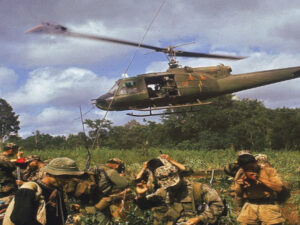
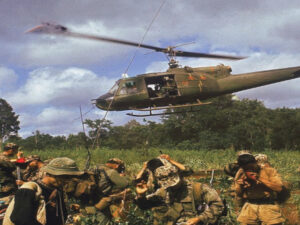
Screenshot youtube.com
Despite the international efforts and the adoption of the so-called Geneva agreements, which ended the war between France and the Vietnamese independence movements in 1954, these agreements were not able to influence the deeply rooted beliefs of the Vietnamese population. The majority of Vietnamese, both in North and South Vietnam, retained their convictionthat Ho Chi Minh and the Viet Minh are the real liberators of the French colonial regime and the real heroes of national independence. For the masses, this conflict meant that personal and collective identity was closely linked to resistance to colonial power. The idea of keeping Vietnam permanently divided was for most VietnameseEmotionally hardly bearable and was perceived as a serious violation of their national self-determination, which they only reluctantly accept. The then President Ngo Dinh Diem, who took power in the south in 1955, faced the difficult task of stabilizing the country. However, he was firmly convinced that reunification was only through his authoritarian rule and thesuppression of all opposition forces is possible. Therefore, he categorically rejected the national elections planned for July 1956, fearing losing power in a free vote. His brutal policy against the former Viet Minh members who remained in the south and against any form of political opposition clearly showed that he was only on one conditionUnion of the country would accept: if the Vietnamese people were placed in the service of their rule.
Resistance is formed: causes and first developments
Dissatisfaction within the population, combined with deep national longings, led to armed resistance to the Diem regime in 1958. This resistance was reinforced by the increasing persecution of the former Viet Minh and the communist organizations in the south and by the suppression of all oppositional movements. Most of the supporters ofThe Communist Party, the so-called Lao Dong, who had retreated underground before the repression, were faced with the task of upholding their structures and continuing the resistance. Despite all the repression, the regime in Saigon was unable to capture all former Viet Minh supporters or fully to the communist organizations in the southsmash. Thousands of oppositionists were murdered by the Dawners Diems, while most survivors fled to the mountains and hard-to-reach areas to escape the persecution. This development led to an increasing increase in the situation in the south: The pressure on Hanoi, the capital of the north, grew considerably. In March 1956, Le Duan, whothen Secretary of the Central Committee for South Vietnam, publicly spoken. He sharply criticized Hanoi’s policy, as they regarded the political struggle and the peace solution as a primary means. Instead, he called for intensifying the armed resistance. His assessment was that a Vietnam association could only be achieved through military force. Despite his argumentsLe Duan was initially unable to assert himself because the international public and the leadership in Hanoi prioritized the path of political solution and the elections in the south. The hope of a peaceful union through democratic elections remained, while in the north the construction of socialism was already being promoted.
The development of the armed resistance in the south
In the late 1950s, an increasingly organized guerrilla movement was formed from sporadic attacks and uncoordinated actions. This initially consisted of dissatisfied peasants who resorted to incitement and persuasion to militant actions. The CIA estimated that by early 1958 about 1,700 guerrillas were already active in the south. Under the motto “Erthize traitors”The movement led a terrorist strategy targeted against officials and political officials to undermine the stability of the Diem regime. Initially, guerrilla activity was concentrated on the border regions with Cambodia, as the remains of the Viet Minh and supporters of sects such as Cao Dai and Hoa Hao had found refuge in the mountains. Especially the so-called”Montagnards”, ethnic minorities in the high regions, had become bitter opponents of Diems. This was mainly due to the fact that the President had released parts of her country for the settlement of coastal residents and Catholics from the north, which further aggravated the tensions. The wave of terrorism claimed more and more victims in the following years. In 1958, 193 people becameMurdered in attacks, 233 in 1959, and in the first months of the 1960s the number of victims rose to 780. The wave of executions and attacks led to a dramatic erosion of state authority. While the army (ARVN) was previously undisturbed in the country and acted specifically against communists and members of the opposition, this picture changed in manyprovinces: The pursuers became persecuted themselves. With each further attack, the authority of the state continued to sank, so that from 1959 the regime was in an ever stronger defensive.
Change of strategy in Hanoi and the escalation of the conflict
In January 1959, the leadership in Hanoi fundamentally changed its strategy. Under pressure from the South, which grew stronger, the communist leadership authorized the use of armed fighters against the government in Saigon. In the course of 1960, around 4,500 communist guerrillas from the north seeped into the southern regions to take up the fight directly on site. It came aboutFor the first time, major battles between the guerrilla groups and the regular forces of the South Vietnamese government. An example of this was the fierce fighting in September 1960 in a forest area that was only about fifty kilometers north-east of Saigon. At the political level, resistance to Diem was also formed. In March 1960, former Viet leaders metMinh, communist activists, supporters of sects such as Buddhists, Cao Dai and Hoa Hao, and some Catholic personalities to demand an armed struggle and the formation of a broad south coalition. In September of the same year, Hanoi officially agreed to call for a political movement. This development led to the founding of the so-called “NationalFront for the liberation of South Vietnam” – in short: NLF. On December 20, 1960, the NLF, operating from a secret base near Saigon, announced a program that should specifically appeal to the general public. This program was not significantly changed until the South Vietnamese regime collapsed in April 1975. The core demands of the NLF were the fall of Diems, thePromoting domestic economy, reducing foreign imports, reducing lease fees, fair land distribution, equality of all genders, ethnicities and religions, neutral foreign policy and the end of American advisory work. The movement also called for the resumption of normal diplomatic relations between the two VietnameseZones, since Diem had prevented postal traffic between North and South Vietnam himself.
The broad coalition of the NLF and its diverse backgrounds
The NLF was often equated with the communist movement, but this did not adequately reflect the heterogeneous composition of the organization. Although the communists from the south and the leadership in Hanoi had a significant influence on the movement, the NLF also included numerous religious groups, sects, civil opposition representatives, intellectuals andrepresented Catholics. It was thus a broad coalition that acted independently and pursued its own goals until 1968. Regional peculiarities helped to underline the specific character of the movement. In areas where the sects traditionally had a great influence, the Cao Dai and Hoa Hao were particularly important. On the other hand, the communistsForces in the provinces strong, which had been under Vietnamese control since the 1940s. The legitimacy and support for the NLF and its People’s Liberation Army, which Diem described as “Vietcong”, came from several sources. They were considered the successor organizations of the original Viet Minh, who were in the fight against the French colonial powerhad achieved success.
The fight for a United Nation
All these groups combined the goal: the fight against the government in Saigon and its American advisors. The NLF called for a comprehensive land reform that also earned the name and arose for Vietnam’s unity. She rejected the division of the country and aspired to a united, independent nation based on democratic principles. With that she became oneSignificant force in resistance to the regime in South Vietnam, which saw itself increasingly on the defensive and the danger of a civil war grew steadily.

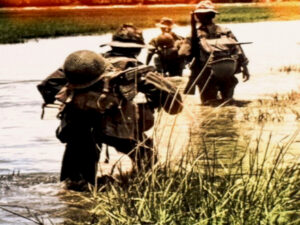
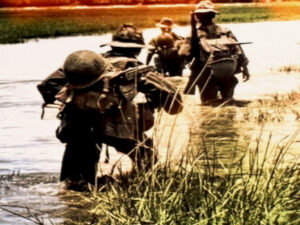
 Screenshot youtube.com