The economic dimension of the space lift – the fundamental redesign of access to orbit
Screenshot youtube.com
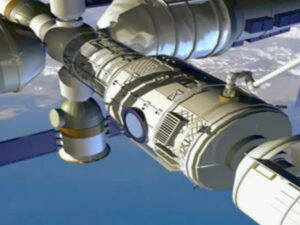
The vision of a space lift not only embodies a technical curiosity, but represents a paradigmatic break with all previous space concepts by enabling the transition from the rush, exploded, exploded start to the continuous, almost smooth connection between the planet’s surface and space. This fundamental change inTransport logistics would reduce the astronomical costs, which are traditionally associated with every kilogram of payload, to a level that allows comparison with earthly freight transport, which means that space travel is definitively losing its character as an exclusive privilege of fewer nations or large corporations. in place of sporadic missions, always under the sword of the Damocles of technicalFailures and financial overruns, a permanent stream of materials, devices and people, transforming orbit into an everyday workspace. This constant availability creates a completely new planning security for companies and research institutions that are no longer forced to plan for years of waiting times for start windows or their experimentsto adapt to the narrow time and mass restrictions of a missile mission. The space lift thus acts as an invisible bridge that almost completely eliminates the psychological and economic distance between earth and orbit and turns space from a distant goal into a natural expansion of the human radius of action. This transformation is not based on oneIncreasingly improving existing technologies, but on a fundamental rethinking of how matter and energy are moved between different gravitational potentials, which heralds a new era of space travel, which is characterized by continuity, predictability and scalability.
The emergence of an orbital industry under weightlessness
The drastic reduction of transport costs to orbit would immediately open the door to an industry whose product properties on Earth are simply not reproducible because they are based on the unique conditions of microgravity. In orbital factories, materials could be produced whose molecular structure is in the absence of sedimentation andconvection perfectly aligns, resulting in alloys with previously unknown purity, optical components without internal stresses or to higher efficacy pharmaceuticals. These products would not reach the market for exotic curiosities, but would serve as high-quality basic materials for earthly high-tech industries, from semiconductor manufacturing toMedical technology, which establishes a value chain that has its origins in space, but finds its full economic development on earth. The continuous supply of raw materials to these orbital production sites and the return of finished goods would become a routine matter through the space lift that does not require any spectacular logistics, butthe normal economic cycle is integrated. These new industries would also exert a pull on neighboring sectors by creating demand for specialized services, from the maintenance of orbital facilities to the development of tailor-made production processes and quality control under space conditions. The weightlessness opens up about itIn addition, possibilities for manufacturing processes that are physically impossible on earth, such as drawing flawless fiberglass over hundreds of meters in length or making perfect ball bearings without any imbalance. These technological breakthroughs would not remain isolated, but would also revolutionize conventional industries by retransferring to earthly production methods,Which means that the space lift acts indirectly as a catalyst for innovations that go far beyond the immediate space sector.
Raw material extraction beyond the earthly borders
The economic development of celestial bodies such as asteroids or the earth moon would gain a completely new dimension through the space lift, since the repatriation of materials from the exorbitant costs and technical risks of missile systems would no longer be tied to. Asteroids rich in rare metals such as platinum or iridium could be systematically degradedwhereby the raw materials obtained would be continuously transported to the ground without each transport process having to represent a separate, high-risk mission. This constant supply of extraterrestrial resources would not lead to a collapse of the raw material markets, but rather open up new fields of application that were previously dependent on the scarcity of certain materials.failed, for example in electronics or catalyst technology. The moon, for its part, would not only offer valuable minerals, but also helium-3, an isotope that is considered a potential fuel for future fusion reactors and whose degradation on earth is practically impossible. The presence of a permanent transport system would also involve the installation of processing plants directly on theMoon or in orbits close to the ground where raw materials could already be processed before being returned to earth, which optimizes the transport volume and further increases the economy. This new raw material economy would also defuse geopolitical tensions traditionally created around access to limited earthly resources by releasing availabilityCritical materials decoupled from territorial conflicts and instead tied to technological capacities. The development of these extraterrestrial deposits would therefore not have to be understood as the exploitation of foreign worlds, but as a logical expansion of the human economic area, which contributes to the stabilization of global raw material supply in the long term andat the same time new economic players can be created that focus on the specialized extraction and processing of cosmic resources.
The rise of mass-produced space tourism
Democratization of orbit access by the space lift would transform space tourism from an exclusive domain of ultra-rich adventurers to a broad market segment that becomes affordable for a significant number of people. Instead of short parabolic flights or multi-day stays on the International Space Station, always with significant physicalStresses and risks are associated with the space lift would offer a gentle, controlled journey that would be accessible to a much wider audience, including the elderly or people with certain health restrictions. This new form of travel would not be based primarily on the adrenaline of the start, but on the profound experience of staying in aOrbital environment, the view of the earth as a fragile whole without political boundaries and the unique perspective that only space can offer. The tourist infrastructure would develop accordingly, from comfortable orbital hotels with large-scale observation domes to restaurants, which use the special features of gravity culinaryTo guided tours to historical sites of space history such as disused space stations. These offers would not exist in isolation, but would integrate seamlessly into existing travel concepts, so a trip to orbit becomes the highlight of a comprehensive long-distance journey, comparable to visiting distant continents in earlier centuries. The economic dynamicThis new market would also produce a variety of support services, from specialized tour operators to insurance solutions to training programs for future space tourists who want to prepare for the psychological and physical requirements. Space tourism would thus grow into a stable economydoes not depend on speculative price bubbles, but rests on a broad demand basis and continuously opens up new target groups, while at the same time the technological achievements of this sector could have repercussions on earthly forms of tourism, for example through new standards in safety or comfort.
Revolutionary energy concepts through orbital solar power plants
The economic realization of orbital solar power plants is one of the most far-reaching consequences of the space lift, since these systems would be able to capture solar energy continuously and without atmospheric damping and then continuously transfer this energy to earth. The continuous supply of components and maintenance personnel via the space lift wouldIt is possible to build such power plants on the ground that would be impossible on Earth due to competition between space and weather-related interruptions. The transmitted energy, whether by microwave or laser radiation, would be converted into electricity in specially designed receiving stations on Earth and fed directly into the existing networks, therebyBase load supply is created that is neither dependent on time of day nor on weather conditions. This form of energy generation would not be designed to replace existing systems, but as a stable pillar of a diversified energy supply, which could make valuable contributions, especially in regions with low solar radiation or a high level of energy scarcity. theEconomic attractiveness of such projects would result not only from operating costs, but also from the long-term plannability of energy prices, since the main costs are attributable to the initial construction and current expenses for maintenance and staff would be minimized by the efficient operation of the space lift. In addition, orbital solar power plants would be newOpen up opportunities for the energy supply of remote regions, since the reception stations could be set up independently of existing infrastructure and thus enable rapid electrification of previously untapped areas. This technology would also strengthen the energy security of entire nations by reducing dependence on imported fossil fuelsand at the same time provides a stable, predictable source of energy that is not subject to geopolitical fluctuations. The development of this sector would also produce a variety of supporting industries, from the production of ultra-light solar cells to the development of efficient energy transfer systems to the construction of autonomous maintenance robots for use in orbit.
The emergence of an integrated space economic area
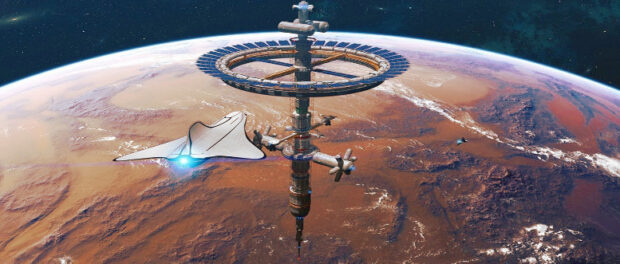
The space lift would not only provide individual economic sectors in orbit, but would create the basis for a fully integrated economic area in which production, logistics, research and services are seamlessly interlinked and fertilized each other. Orbital materials would be used directly in the production of orbital solar power plantswhile the energy of these power plants is in turn powered by industrial production in orbit and at the same time being transferred to earth to serve earthly consumers. Asteroids extracted raw materials would not only be transported to earth, but also processed on site into components for new space stations or other space lifts, thereby a self-reinforcingValue chain is created, which is becoming increasingly independent of earthly resources. This integration would also produce new forms of work and coexistence in space, since permanent occupations of orbital stations are no longer conceived as temporary missions, but as long-term places of residence and work, with all associated social and culturalinfrastructures. The constant presence of people in orbit would in turn fuel the demand for services of all kinds, from medical care to educational opportunities to entertainment formats that are specifically tailored to the peculiarities of life in space. This integrated economic area would also require new legal and administrative structures,which are valid across national borders and regulate the coordination of economic activities in orbit without interfering with the sovereignty of terrestrial states. The emergence of such a space would therefore not have to be perceived as a threat to existing earthly structures, but as a natural expansion of human economy, the newopportunities for cooperation and innovation opens up while at the same time gradually reducing dependence on limited earthly resources.
The global economic transformation through cosmic integration
The long-term impact of a functioning space lift would go far beyond the immediate space sector and bring profound changes in the global economic structure by establishing new value chains that will overcome traditional industry boundaries and create innovative business models. Companies that today exclusively earthlyact, would be forced to rethink their strategies and possibly enter into partnerships with orbital actors to gain access to unique products or services. At the same time, completely new forms of business would emerge that specialize in mediation between earthly markets and orbitals, on the development ofTechnologies for use in space or on the provision of financial services for cosmic investment projects. This dynamic would also accelerate the innovative power of the entire economy, since the challenges of the space industry always have repercussions on earthly technologies, as in the past in the development of materials,communication systems or medical devices. The availability of orbital production capacities would also change the competitive conditions in numerous sectors by enabling companies to offer products with previously unattainable quality or functionality, which in turn accelerates technological advances on earth. This transformationHowever, it would not be as a disruptive shock, but as a gradual process that extends over decades and leaves room for adaptation and integration, so that existing economic structures are not obsolete overnight, but are gradually expanded and enriched. The space lift would therefore not be considered as a large isolated project, but as aInfrastructure investment of historical implications, the economic benefits of which only fully unfold over long periods of time and lead mankind into a new phase of their economic development, in which the limits of the possible are no longer defined by the gravity of our home planet.

 Screenshot youtube.com