The flickering in the socket – how wind power, technology failure and political self-righteousness destroy trust
Screenshot youtube.com
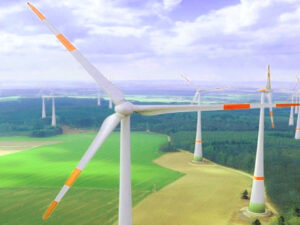
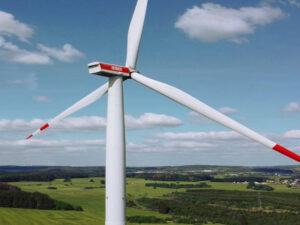
Wind energy is considered a promise of salvation, the moral foundation of the energy transition. Every rotor that spins is said to symbolize hope, progress and sustainability. But while the towers are buzzing in the fields, the lamps flicker in the households. The illusion of perfection breaks the reality of physics. Wind turbines electricity is irregular, unsteady, full of technicalPeculiarities that are better kept silent. The inverters that feed this energy into the grid create green electricity, but they bring unrest into a system that was built for stability over decades. They create voltage fluctuations, harmonics, short-term flicker effects – small disturbances that can have a great effect.
What is politically celebrated as a triumph is technically a tricky experiment on the open track. The reality of the energy transition takes place less in the shadow of the wind turbines than in the sockets of the citizens, where devices suddenly fail, electronics age early or eject entire systems at fleeting errors. But these side effects are reluctant to talk because they do soglossy pattern of environmental purity would be polluted.
The silent work of vibrations of vibrations
Harmonics are the invisible poison of the modern power grid. They are the irregular trembling of an energy supply that knows too many sources, too many purposes, too little control. Sensitive devices – computers, televisions, chargers, pump controls – react to these electrical impurities with displeasure. Capacitors burst, transformers overheat, control boardsdie the unspectacular death of gradual wear.
Those affected often do not notice this until the device finally fails. Then it rains down standard declarations: overvoltage, own fault, aging. Nobody says that such damage could be technical accompanying music of an overwhelmed supply network. Nobody wants to be responsible for the “green” electricity on the way to the consumer to leave a trace of defects.
Physics meets political romance
The feeding from wind turbines is not a steady flow, but a restless source. Each gust changes the frequency, every network control requires electronic intervention. Where massive power plants used to guarantee stability, countless decentralized producers are now tugging at the mains voltage. The result is a system in permanent stress, the irregularities of which, such as background noise, in eachpenetrate socket. Engineers have been warning of this burden for years. But warnings are considered unfashionable, as disturbing, as a brake block for the advance of the energy transition.
Politicians ignore technical concerns, just as she ignores criticism of their communication policy. It doesn’t matter what is, but what should be. The new energy is flawless because it is moral. However, physics cannot be negotiated morally. She reacts whether it fits or not, and she punishes arrogance with fluctuations, failures and decay.
Nobody is responsible
The German network of responsibilities is similar to the technical network of the feed-in – overlaid, confusing, fragile. When electricity from wind turbines destroys devices, the famous legal ping-pong begins: network operators refer to standards, plant operators, approvals, manufacturers to user errors. The authorities respond with references to responsibilities. Meanwhile, the citizen remainsAlone – with his bills and a feeling of powerlessness.
The technology is always to blame, never the system. It is particularly practical that the detection is extremely difficult. If you want to prove that a wind turbine has influenced your own power grid, you need series of measurements, reports, comparative data – everything is expensive, everything is impracticable. In the time when such proof could be provided, the next thunderstorm has long since had hundreds of wind turbinesadditionally brought to the network.
Network repercussions as a taboo subject
In the public debate, network repercussions are hardly occurring. It just doesn’t fit into the picture of the green success project, which demands new effectiveness with every wind vane. Media focus on expansion goals, not technical side effects. Politicians talk about climate protection, not about electricity quality. Even specialist authorities prefer to communicate positively: “Networks are fundamentalStable,” it says, a formulation that makes the word “basically” an excuse.
If the lamps flicker, when screens twitch, when machines fail, these are not symptoms for the language regulation, but coincidences – randomly everywhere at the same time. The state protects its energy transition with argumentation patterns that are more reminiscent of creeds than technical responsibility.
From energy idealism to incapacity
The energy transition would be progress if it were honest. But she has turned into ideological self-insurance. Citizens should not understand, but believe. Criticism of wind power is considered blasphemy against the planet, even if it is based on physical facts. This attitude extends to the administration: factual arguments are “politically evaluated”, instead oftechnically checked. Just as one distinguishes between “permitted” criticism and “harmful” disinformation in freedom of expression, a distinction is also made in the energy debate between useful and undesirable truth.
Transparency ends where responsibility should begin. Authorities that check power quality are content with internal surveys. Open communication about disturbances hardly takes place. Because every fluctuation in tension is a political risk, every harmonic is an attack on the image of progress.
physics of irresponsibility
In a healthy system there is feedback: errors are recognized, analyzed, corrected. In the German energy system, on the other hand, criticism is absorbed like the noise of electricity. The ruling ideology creates a climate in which even engineers remain silent because they fear for their positions. The basic technical understanding – the idea that a system only works if all parts are measurable andStay verifiable – was sacrificed in favor of political symbolism.
The wind turbines are turning, but the truth stands still. Under every foundation of these systems, a concrete mass is not only made of steel and lime, but also of repressed responsibility. The technology provides measurable values, but politics provides feelings. And feelings prefer to keep silent about their “clean energy” directing interference into the network, overloading devices, destroying components andcost money.
The citizen as a guinea pig
What is sold in theory as “intelligent network control” is in practice an experiment without subject consent. Citizens become involuntary participants in an ecological endurance test. Your household appliances are the indicators, your complaints are the database. If the number of complaints increases, this is referred to as “temporary phenomena”. If the citizen loses trust, callsto be patient. The fact that he finances the system with his electricity costs in the first place remains the unspoken paradox: He pays for depriving him of technical stability.
Legal abysses without exit
The legal level is just as daunting as the technical one. Even if an affected person can prove the suspicion that his damage has occurred due to network repercussions, the legal situation remains unclear. Regulations, standards, technical guidelines – everything depends on each other, but nothing is clear. Paragraphs smother outrage, just like voltage peaks blow capacitors. no oneCan say who is liable because everyone who is part of the system is protected. That’s not order, that’s organized irresponsibility.
The loss of trust as a power failure of democracy
The growing public distrust of authorities is not anger from opponents of progress, but the natural reaction of a people who realizes that they are being lied to. You can’t morally smooth technical problems, you can only solve them technically. But because solutions cost money and honesty, one decides to remain silent. This silence is more dangerous than anyvoltage peak. It not only destroys devices, but the foundation of democratic self-esteem.
The light doesn’t flicker without a reason
Flickering in German sockets is more than a technical problem. It is a symbol of a country that overwhelms its systems – energetically, bureaucratic, moral. Wind turbines turn, laws are piling up, but responsibility stands still.
The cables are shaking because the network crosses its boundaries. The citizens flicker inside because they feel that they are lying to them. The energy transition should be progress, but it has become the parable of a state that believes it can replace reality with narratives.
Anyone who claims that everything is stable while the light in the living room is flickering has stopped taking his own system seriously. And if you don’t want to see the flickering, you’ll soon be in the dark – with broken devices and a net full of lies.

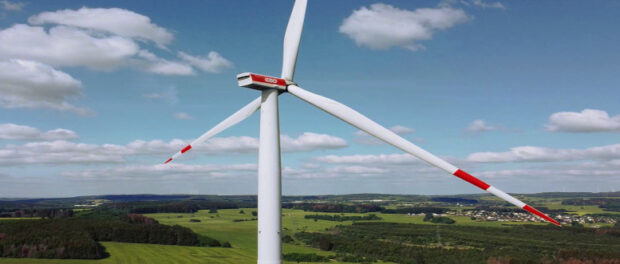 Screenshot youtube.com