The Germans in transition: struggle, betrayal and political power struggles in the early Roman-Germanic war
Screenshot youtube.com
At the beginning of the first century AD, the Roman Empire is in a constant state of insecurity and war in the north, while the Germanic tribes are in motion. The events surrounding the famous leader Arminius, the uprisings and the intensifying conflicts paint a picture of a time in which military tactics, betrayal and political intriguesthe fate of the region significantly influenced. This article gives a detailed insight into what is happening, the struggles and the power games between the Romans and the Germans in this eventful era.
Arminius and the Germanic insurgency movement
In the midst of this turbulent time stands Arminius, the leading leader of the Germans, who leads his people into battle with great commitment and fighting spirit. He didn’t save when he made it clear to his men in the face of danger what it was about: defending their homeland against the Roman invasion. But while he tries to maintain the unity of his troops, he is no longer aloneOn the further hallway. New leaders appear who change power relations within the Germanic tribes. Particularly noteworthy is the development after the liberation of the tribal master Segesges. With his support and the arrival of Inguiomar, another important leader, the situation for Arminius is getting worse. Inguiomar not only joined with the goal ofto represent the Germanic thing, but also actively strives for influence and power. It is a crucial goal for him to gain as much influence as possible to consolidate his position and to assert it against other tribal leaders. His approach is typical of that time: He always speaks to the biggest pile after the mouth to gain the greatest support. withThe Germans are considered to be particularly courageous who is the wildest who acts loudly and energetically because hardly anyone dares to stand up to them. Recognition and respect in the tribal gatherings depend heavily on the ability to excel through bountifulness, which Inguiomar skillfully uses to strengthen his position.
Tactics against the Romans: Arminius relies on cunning and surprise
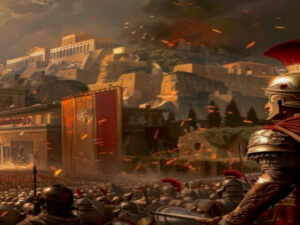
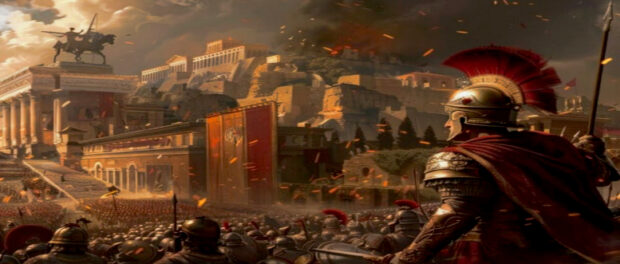
While Arminius retains control of his men in this grueling time, he plans a cunning to surprise the Roman legions. His strategy is based on proven tactics: The Roman troops are to be withdrawn first in order to encircle them in the dense forests. These forests offer the Germans an advantage: the slippery, impassable terrain makes theSurprise attack. Arminius deliberately refrains from an open battle against the Roman legions. Instead, he relies on the well-established principle of limiting the enemies in their movement play and fixing them in the wilderness. Through targeted encirclement and ambushes, the Romans are to be caught in a trap to conquer them on the uneven, slippery ground. in theIn contrast, Inguiomar suggests a completely different tactic. He considers tactical action to be cowardly and weak. His suggestion is a direct attack: attack, as soon as possible and with all your might. He argues that this way prisoners could be taken faster and the loot would be less polluted or damaged. For him, this is the way to mobilize majoritiesand to secure the support of the tribe warriors. The willingness to plunge into battle among the Germans. The tribal leaders put everything on one card: They gather their men, prepare the weapons and try to overcome the Roman fortifications. In the early morning they start the attack, throw bundles of turrets against the ramparts and try to close the wallsclimb. The Roman legions play along: They occupy the ramparts only sparsely to mislead the Germans, while the mass of Roman soldiers are already on standby to immediately break out of the gates in an attack. At this moment, when the Germans are hanging on the ramparts and daring one last attack, the trumpets sound at all four camp fronts.The soldiers who were recently depressed find new strength in their recovered courage. Even the smallest hope can release unimagined energies if the previous despair was big enough. They call out to the Germans that they are now fighting on solid ground, no longer in swamps or forests, and that the gods are on their side.
The bloody battle and the unexpected happiness of the Romans
Inguiomar is badly wounded in this battle and must be transported away on a carrying chair. Arminius, on the other hand, remains intact. Despite the injuries and losses, the luck of the struggle gradually tends to favor the Roman troops. Tacitus describes the scene: “In the mean heap was murdered as long as the bitterness and the day lasted.” Despite the great wounds andThe Roman army was able to endure everything and win the victory of the Germans’ increasing hunger – the fighters were exhausted and exhausted. They received success with strength, health and abundance, while the Germans were hit hard. The bloodbath, exhaustion and despair ultimately brought the Romans victory. This battle shows,How courage, strategy and the right time can influence the course of a war.
The fear on the Rhine and the role of women
On the home side, on the Rhine, the fear of a possible Germanic invasion is growing. Despite years of relative calm in the border areas, rumors are constantly being re-fed and uncertainty is growing. Nothing spreads faster than bad news, while positive messages are hardly heard. Suddenly there are reports that a large Germanic force is afterGaul storms. The situation is tense. In the midst of this crisis, it is the wife of the Roman general Germanicus, who plays a decisive role. She is still on her way back with her legions, but she manages to prevent a catastrophe: The destruction of the Rhine bridges in the later named Colonia Agrippina (now Cologne). Unfortunately, many are RomanSoldiers ready to add the defeat and shame to the name of Rome. But it is this woman who, in the eyes of the Roman leadership, gains fame because she personally cared for the wounded and ragged soldiers, and reinforces them and re-inclosures them. Tiberius is particularly outraged that Agrippina also takes care of the little son of Germanicus. He carries him in theUniform of a simple soldier in the camp and calls him Caligula – “boots”, named after the Roman soldiers’ boots, the “Caliga”.
The unexpected fate of little Caligula
If the Roman army had suspected how terrible little Caligula would one day be, they might have preferred to throw him into the Rhine. Because the boy was later to go down in the annals as one of the cruelest and craziest emperors in Roman history. Without his father’s power and influence, he would hardly have the difficult way to the top of the Romanempires done. Agrippina is currently holding the position on the Rhine like a real general. It provides the supply of the troops and defends the Roman presence in the border region. Another Roman commander, Publius Vitellius, fights in the marshes of the Frisians and Chauken as bravely as Caecina in the swamps of the Cheruscans. He was ordered to do so with two legionsto march until you get back into deeper waters. But the weather is a bad trick for the Romans. Storms, combined with the foolish night’s equinox, where the sea swells the most, cause flooding. Fields, shores and the open sea merge into a single water surface. People, animals, luggage and dead are drifting in the floods. theWater currents take everything they encounter – no one is safe from the destructive swirls.
The fight against the forces of nature and the return to the banks of the Rhine
Despite this natural disaster, the Roman legions endure the catastrophe. After long hardships and great losses, they finally get back together and reach the banks of the Rhine. The Germanicus galleys are back on and the troops are exhausted but lively. Meanwhile, the German tribal leaders got up again. The example of the Segeste, which in theTribal conflicts have made school, has an impact: His brother Segimer and the nephew Sesithacus brought the Romans to their knees again. They are ready to give in to the Romans again. The Roman supremacy is still being called into question, but the willingness to submit is growing. Despite all the adversities, the German side remains on the rise. the fights,Treason and political intrigues shape the time when the Roman troops and the Germanic tribes are struggling for supremacy. It is an epoch of change in which courage, tactics and the fortunes of the leaders decide who ultimately will gain the upper hand.

 Screenshot youtube.com