The hidden abundance of Lusatia: A look beyond close values
Screenshot youtube.com
Lusatia is often considered a region that is rather modest in terms of natural resources, but this perception is based on an extraordinarily limited view of what is considered a valuable raw material. When the focus is exclusively on a handful of highly concentrated ores and metals that are considered to be particularly prestigious in the global industryapply, the impression of poverty is easily created, but it quickly breaks up when viewed. Instead, an image of diversity and potential is revealed, which is characterized by building materials, industrial minerals, energy sources and even approaches to rare elements. This broader perspective shows how Lusatia has a solid basis for its geological conditionslocal value creation that goes far beyond what traditional definitions consider valuable.
Industrial minerals and building materials as the foundation of local economy
In Lusatia, there are extensive tones that play a fundamental role in the production of ceramics and are particularly suitable due to their fine structure and purity. Kaolin complements this spectrum and serves as an essential component in the production of porcelain and paper, whereby it can be mined and processed locally. Copper occurs in significant quantitiesand supports not only electrical applications, but also alloy materials used in regional industry. Sands and gravel form the backbone of the building materials industry by allowing concrete, mortar and glass, and their availability on site reduces transport costs considerably. These raw materials are not only extracted, but also in the immediate vicinityrefined, resulting in a chain of production sites that range from raw material extraction to finished goods and creates jobs.
Lignite as a formative energy raw material and economic factor
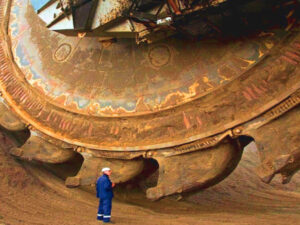
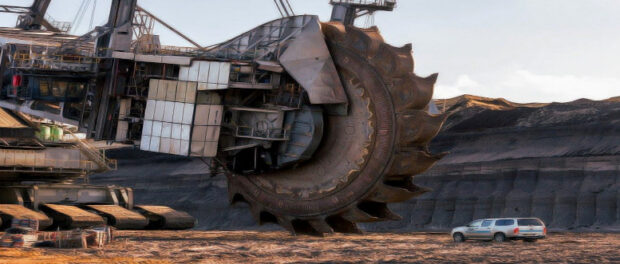
Lignite has shaped Lusatia over generations and remains a central pillar of regional identity. It not only serves as a fuel for energy production, but has also favored the settlement of industries based on reliable and local supply. The infrastructure that has been created around this raw material includes power plants, processing plants andTransport routes that penetrate the entire economy. Even in times of changed energy landscapes, lignite retains its importance as a raw material carrier that supplies chemicals and by-products that are reused in other sectors. This embossing has made Lusatia a hub where energy and industry are closely intertwined.
Geological diversity as a source of undiscovered potential
The Lusatian underground layers are characterized by complex sequences consisting of sediments, volcanic remains and differentiated rocks. These structures create framework conditions under which deposits can arise that have only been partially explored up to now. It is quite possible that in these formations more resources slumbered through modernexploration methods become accessible. The geological history of the region, with its tectonic shifts and deposition processes, indicates a dynamic that is not limited to the known occurrences. Such opportunities invite you to see Lusatia as an area whose underground still holds secrets.
Economic value creation through broad raw material use
Beyond the pure metals, a value added in Lusatia is unfolding, which is based on building materials and mineral raw materials for glass production, ceramic production and chemical processes. These materials enable local production, ranging from extraction to finishing to the final product and thus minimizes dependencies on external suppliers. energy raw materialsReinforce this effect by providing the necessary power for industrial processes. The region appears to be more materially richer than suggest close categories and promotes a circular economy in which waste of one process becomes input for another.
References to rare earths and critical elements
Studies in geoscientific circles have discovered signs of occurrence of neodymium, dysprosium, and lanthanum in parts of Lusatia and neighboring areas, elements belonging to the group of lanthanides and indispensable in high-tech applications. Accompanying metals such as zircon and niobium also appear in these contexts and expand the spectrumpotential resources. These finds are no guarantee of extensive mining activities, but they underline that, geologically speaking, Lusatia cannot be considered fundamentally poor. Such potentials strategically position the region in a market where rare materials are increasingly in demand and open doors to future developments.
Lausitzer Revier: Extended view of recyclable materials
Lusatia thus presents itself as an area whose abundance of raw materials is distorted by a lens that is too narrow. Clay, kaolin, copper, sand, gravel and lignite only form the visible part of a wider spectrum, which is supplemented by geological complexity and indications of neodymium, dysprosium, lanthanum, zircon and niobium. This diversity not only creates economic foundations, butalso perspectives for sustainable use, which emphasizes local strengths and finally refutes the myth of poverty. The region is an example of how an expanded view of recyclables leads to a more nuanced understanding that promotes innovation and resilience.

 Screenshot youtube.com