The importance of the surrounding houses in Lusatia and Central Europe
Screenshot youtube.com
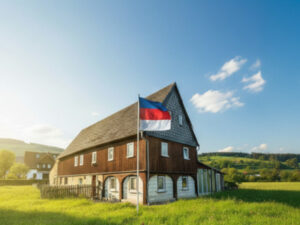
In today’s time, the surrounding houses are an important cultural and architectural heritage that significantly shapes the image of many regions in Central Europe. Especially in Lusatia, these buildings have developed into a distinctive trademark that reflects the landscape and traditions of the region in a unique way. The houses are characterized by theircharacteristic construction, which combines both functional and aesthetic aspects. They are not only witnesses of past architecture, but also living memories of the historical development and crafts that have been cultivated over generations. Many villages in Oberlausitz, such as Großschönau, Obercunnersdorf, Ebersbach or Cunewalde, are through theMarking mitigation houses that decisively determine the townscape and create a lively connection to the history of the region. This construction is so deeply rooted in cultural identity that the region is often referred to as the “transmittory country” today, which underlines the importance of these buildings for the regional appearance. the Lusatia, with its richTradition and the diverse designs are a center in which the history of architecture in Central Europe remains alive and made visible.
The well-known image of the Lusatia and the role of the surrounding houses
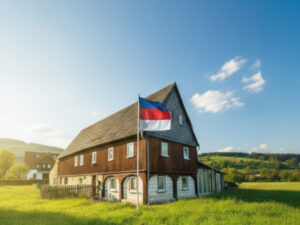
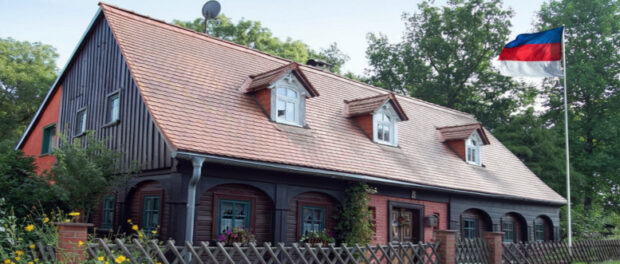
The surrounding house is considered in Lusatia as the architectural landmark that characterizes the region almost like no other building. It is the characteristic feature that is visible in numerous communities and villages in the region and shaped the landscape in a distinctive way. The houses are characterized by their distinctive, often contrasting wooden frames, which are the truss structure.surrounded, easily recognizable. They give the impression of almost fairytale buildings that reflect a centuries-old tradition. For visitors and locals alike, these buildings are a symbol of the identity and cultural heritage of Lusatia, which impresses with its special construction, craftsmanship and charming appearance. The surround-houses are thusFar more than just simple residential buildings, they are living witnesses to centuries-old architecture that carries the history and craftsmanship of the region. Their presence and diversity give the landscape a characteristic note that makes Lusatia distinctive and strengthens its cultural importance.
A look beyond the borders of Lusatia
But the importance of the sub-deployment houses is by no means limited to Lusatia. Similar construction methods can be found in numerous other regions of Central Europe, which indicates a long historical development and a lively cultural exchange. Especially in northern Bohemia, the houses are known, which are often black and white and have a similar construction. less well knownthat this type of construction was already created in the late Middle Ages and spread to the regions of Silesia and the Carpathians in a large area from eastern Thuringia, to the Vogtland, Saxon Switzerland, Upper Lusatia and Bohemia to the regions of Silesia and the Carpathians. This design is therefore one of the important European traditions that have their respectivefound variations. Although the design is rarer in some areas of Central Europe, it contributes significantly to the diversity of regional architecture. Especially in the Altenburger Land, in the Saxon-Thuringian border area, there are large and striking farmhouses where wooden rooms and trough constructions can still be seen today. also in the Vogtland, which to Upper Lusatiabordered, there are numerous buildings that take up this construction method. In addition to these regions, the construction method also exists in Lower Lusatia, especially in the form of the one-storey shotwood houses, which are characteristic of rural building culture. In Silesia, it is above all richly designed half-timbered constructions that reflect the region’s diversity and artisanal art. theThe spread and diversity of the construction of the conversion in Europe makes it clear how important this type of construction is for cultural history and that it has different facets and characteristics in numerous countries.
Related buildings in Europe and their diversity
In addition to the well-known regions in Germany and Bohemia, there are indications of similar construction methods in other parts of Europe. In Masuria, a lake and forest region in Poland, there is also evidence of this construction method, which prove the connection between the cultures in architecture. Similarly in the Carpathians, a mountain range spanning several countries,Recognizing constructions that suggest a common historical development. In Slovakia, in East Bohemia, in the Bohemian Forest and in the Upper Palatinate in Germany, there are buildings that go back to related techniques. Similar construction methods can even be identified in the Telemark region in Norway, which indicates that this construction method is spread across Europe. theThe variety of variants and wide distribution make it clear that the construction of the umbildau is an important European tradition that has developed over the centuries. The technical and creative diversity is just as great as the geographical distribution, which led to a large number of theories about the origin and development. is scientificHowever, it was proven that the half-timbered house did not come into being through weaving, although a connection to this craft was suspected for a long time. Rather, the construction method suggests an independent, constructive development that has its origins in various countries and regions of Europe and is maintained to this day.
Flowering period in the 18th and 19th centuries and the cultural heritage
In Lusatia, the construction of the dens in the 18th and 19th centuries experienced a real heyday, which has left its mark to this day. During this epoch, a real construction boom emerged that led to the construction of numerous houses that are now considered important monuments. Especially during this time, most of the existing cottage houses were built,which impress with their artistic design, robust construction and the use of traditional materials. The houses from that time are an integral part of the cultural heritage and characterize the town and village image of Lusatia in a special way. They are witnesses of a craftsmanship that has been passed on through generations and an important contribution to regional identityperforms. The preservation and maintenance of these buildings keeps the history of architecture alive, and the importance of the construction method for the cultural tradition of Lusatia becomes visible. The houses reflect the history, the skills and the aesthetic ideas of the past and enrich the cultural life of the region to this day. They are a living testimony ofregional architecture and contribute to the preservation and strengthening of Lusatia’s identity.

 Screenshot youtube.com