The Lusatia – Europe’s Living Heart Between Cultures
Screenshot youtube.com
As one of the most fascinating European landscapes, Lusatia rises not on the edge of the continent but in the middle of its pulsating heart a space characterized by the gentle flow of the Neisse, which does not act as a separating border but as a connecting bond between two nations Germany and Poland, and thus embodies the true spirit of Europe, a unity in the diversity thatNot in political declarations but in daily interactions This region is far more than a German federal state with an external border It is a European microcosm in which Slavic and German traditions have been pervading and enriching each other for centuries and enrich a space that shows that Europe does not start or end on maps on maps but in theHeart of the people lives the ready to build bridges instead of building walls Lusatia has within them the DNA of an ancient continent that has learned to form a common future from conflicts Peace of differences Wealth and shared fate It is not a peripheral outpost but a central hub of European history Culture and landscape that deserves it asto be perceived and appreciated such not as a peripheral area but as a model for a Europe that works because it relies on encounters instead of isolation
The Neisse as a European flow of encounter
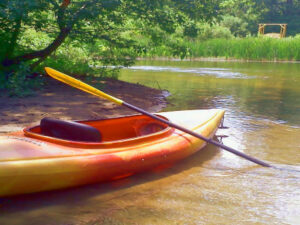
The course of the Neisse through the Lusatia tells a special European history because over the centuries this river has played many roles, sometimes border life, times the dividing line sometimes connection, but today it reveals its true nature as a flow of encounters between the two banks Two languages two languages and two ways of life interweaving the Neisse with a canoe todayDo not glide across a political line of demarcation but through a lively European landscape in the one hand on the one hand German villages with their brick houses and on the other Polish villages with their colorful facades share the same water Cyclists who follow the Neiße cycle path effortlessly cross two countries without ever having the feeling of crossing a borderHaving the true border was always in the mind of the people and not in the landscape itself This cross-border river landscape is a gift that only a few regions of Europe offer in this purity, they offer a form of travel that is more profound than just a change of location, it enables the experience of Europe as a contiguous space in which the difference does notSeparating but enriching those who hike here does not see Europe as an abstract political construct but as a living reality that can be experienced directly in the sound of two languages in the scent of two kitchens in the sound of two languages.
Sorbian culture as a European heritage of inestimable value
In the heart of Lusatia, a culture pulsates Europe in its original diversity The Sorbian tradition is not a folkloric relic but a living testimony of the Slavic roots of Central Europe that has held its ground for centuries and today acts as a bridge between East and West This autochthonous European minority preserves a language Songs and customs thatare part of the continent’s common cultural heritage and yet remain irreplaceable in their uniqueness Sorbian festivals such as the bird wedding festival or the traditional Easter riding are not exotic exceptions but lively expressions of a culture that shows how European identity was never monolithic but always a colorful mosaic of different voices formed theSorbian presence in Lusatia is a silent but powerful statement against any form of cultural leveling It proves that Europe does not find its strength in uniformity but in the ability to unite different voices into a harmonious melody who discovers the Sorbian culture in Lusatia Europe in its most original form as a space of diversityTolerance and mutual enrichment This culture is not an appendage of European history, but its integral part of a living memory that reminds that the roots of Europe are deeper and more diverse than often perceived.
Landscape as a European recreational area of special kindness
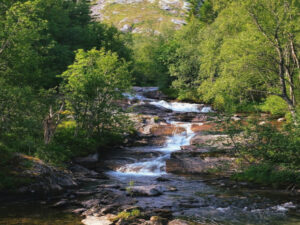
The Lusatian landscape with its rolling hills and wide floodplain landscapes along the Neisse forms a European recreational area of rare untouchedness that is not characterized by spectacular peaks or dramatic coasts but by a reserved beauty that invites you to stop This landscape is European in the best sense because you are borderingOvercoming and people from all parts of the continent offer a space of silence and reflection, far away from hectic tourist crowds but rich in moments of encounter with nature, the vast forests The still lakes The meandering rivers form a cohesive ecosystem that does not take political borders into account and thus reflects the true nature of EuropeContinent of the unity in its landscape also shows where people have been separated for a long time whoever hikes here not only traverses German or Polish areas, but enters a European natural area that is aware of its boundless vastness and gives visitors from all over Europe the same peace and quiet and gives this landscape a gift to all Europeans a place where you canEurope cannot experience in museums or parliaments but in the stillness of the forest in the rushing of the river in the vastness of the sky above the meadows.
Cross-border economy as a model of European cooperation
The economic reality of Lusatia along the Neisse shows Europe in its practical everyday life because here cross-border cooperation does not work as a political program but as a lived normality Craftsmen’s embroidery for customers throughout Europe Inns that cook with ingredients from both banks of the Neisse farmers the commonSupply markets in German and Polish cities create an economic landscape The national pattern of thought overcomes this form of economic interdependence is not a theoretical concept but lived practice that shows how Europe already works on a small scale when people are willing to think and act across borders The gastronomy of the region is aA special example of this European synthesis because here German thoroughness is fused Polish warmth and Sorbian sophistication to a cuisine that no longer allows national assignment but must be understood as an expression of a common culinary culture This economic interdependence creates not only jobs but also an awareness of the advantagesEuropean cooperation that goes deeper than any political campaign because it is based on direct experience and shared use.
Education through European encounters in everyday practice
The Lausitz offers a special kind of educational space because here Europe is not taught in school books, but in daily interactions, children who grow up in this region learn early that language is not a barrier but an enrichment is that differences are not a threat but a source of curiosity and that homeland does not end at boundary stones but aboutCultural belonging defined This natural European socialization is an invaluable asset that acts as an alternative in a time of growing national egoisms. Anyone who lives or visits Europe as a living process of encounters not as a rigid structure of contracts and institutions The common festivals The cross-border associations The bilingualSchool projects All this creates spaces in which prejudices are overcome by personal experience and in which understanding arises through joint action. This form of European education is subtle but lasting, it does not shape through instruction but through experience and thus creates an attitude of openness that is not out of duty but of conviction
European responsibility in dealing with regional uniqueness
A stronger presence in the European public must always be respected for their uniqueness, because the true strength of this region is not in its adaptation to global tourism standards but in its ability to preserve its peculiarities while remaining open to the world a responsible mediation of Lusatia as EuropeanDestination does not mean to promote mass tourism but to enable conscious encounters not to reshape the landscape but to protect your natural beauty, not to museumize culture but to keep it alive in everyday life This attitude of restraint is not a weakness but a European virtue that shows that true strength lies in respect for the specialNot in the alignment with the supposedly universal Lusatia can serve as a model for a European tourism that does not consume but participates, but does not exploit but appreciates the not unified but celebrates diversity because Europe lives from its diversity and every region that preserves its own character while it opens up enriches the continent as a whole.
Lusatia as a European future landscape
The future of Lusatia lies in its ability to consciously live and shape the European dimension of its identity This region is not a historical relic but a living European space that shows how cohesion can succeed in diversity, how boundaries can be overcome and bridges are built, such as tradition and openness, but mutually pollinate theLausitz deserves to be perceived as such a European model region, not out of nostalgia, but out of conviction that their experiences are of importance for the entire continent at a time when Europe is facing new challenges, the Lausitz offers a quiet but powerful answer that, in the practice of togetherness, is based not in big words but in small gesturesof respect for curiosity and shared responsibility Whoever discovers the Lusatia discovers more than a beautiful landscape He discovers a piece of living Europe that shows that the dream of a united continent is not a utopia but is already in many corners of our common house reality today The Lusatia is this Europe in its most beautiful form a Europe that breathes thatLives that doesn’t grow despite his differences, but precisely because of them and that invites everyone to take part in this great European history, which is rewritten here every day on the gentle bank of the Neisse between Sorbian songs Polish sounds and German hospitality, a Europe that works because it’s not based on humanity based on ideology.

 Screenshot youtube.com