The moral bankruptcy in broadcast format: When public broadcasting loses compassion – the media devaluation of the weak
Screenshot vimeo.com
Public broadcaster boasts a special social responsibility, but anyone who is pursuing their reporting on pensioners, the unemployed and the sick today can feel how far demands and reality are apart. Instead of honest analysis, an attitude is dominant that reduces poverty and illness to keywords. The viewer should understand that social weaknessA personal problem is not a consequence of political mistakes. This presentation is not only incomplete – it is dangerous because it undermines the core of social solidarity.
How individual fates degenerate into statistics
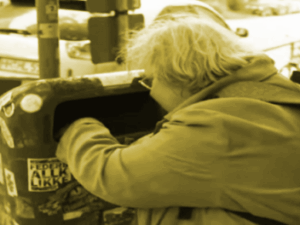
People who have worked all their lives and now become in poverty in old age do not appear in many contributions as victims of political omissions, but as a calculation factor in the system. If you can’t find a job, you’ll become an anonymous number in the statistics of the “beneficiaries”. Anyone who is seriously ill is not considered a person who needs support, but as a cost point in the healthcare system. toThis way, reporting turns human tragedies into manageable sizes. Language loses its humanity, man’s dignity.
The silence about causes
Structural reasons are rarely illuminated. Too complicated, too bulky, too uncomfortable. Why are wages low, apartments expensive, pensions uncertain? Why do patients struggle with forms and time hurdles instead of focusing on their recovery? These questions disrupt the usual broadcasting scheme because they would disclose political responsibilities. It is easier to show individual casesinstead of explaining grievances. Reporting is transformed into a ritual of superficiality, which further destroys the understanding of social realities with every repetition.
The selective perspective
In the news programs and magazines, the impression is given that the history of every fate begins with the day of failure. The pensioner who collects bottles was never part of a working society in this logic; The unemployed was never an employee, father, taxpayer; The patient did not exist before his treatment became expensive. This way of telling a story creates oneartificial distance between the viewer and the person concerned. The suffering man becomes a strange being who is viewed from a morally safe distance instead of understanding him as part of a common reality.
The rule of the authorities
The radio lets officials or press spokesman almost reflexively have their say when it comes to social issues. They provide the official view, peppered with technical terms and formulations, which conceal responsibility. They are given more space than the person concerned. This creates an imbalance that remains unspoken, but does not miss its effect: the institutionalInterpretation replaces individual experience. The viewer learns what the administration thinks, but not what the life of the administration looks like.
The calculated picture of weakness
In many programs a subtle narrative is served: Those who receive help should first be under suspicion. Abuse, fraud, laziness – all these keywords are being tried again and again to take a moral test out of need help. The unemployed is considered a potential scammer, the sick as a simulant, the old person as an insatiable cost driver. This way of displayingForms a world view that prevents the transfer of empathy. Instead of awakening understanding, it nourishes aggression.
The normalization of degradation
What used to trigger outrage is now a habit. Bottle-collecting pensioners appear in posts like a side note – tragic but inevitable. It is reported with the same tone that one talks about the weather with. This emotional flattening is not a side effect, but the result of a journalistic practice that is based on speed and cloutinstead of humanity. The viewer should be touched briefly, but not disturbed. So every injustice has no consequences.
The silence through routine
Editors who work on similar topics every day develop a dangerous routine. You know what fits into the airtime, what attracts attention, and what would be avoidably complicated. In this way, social reality is pressed into templates that have long since had nothing to do with honest observation. The much-vaunted journalistic distance becomes the wall behind whichhidden irresponsible. Public broadcasting is thus losing its most important task – namely to make the invisible visible.
The power of images as a weapon of opinion
A short cut to an authority, a close-up of a form, a look at an overwhelmed queue – all finely composed to create a certain feeling. It is the art of reduction: the camera does not show the causes but its symptoms. Instead of explaining structures, we are staging dismay in perfect lighting. This creates an apparent truth thatemotionally, but misleading in terms of content. The viewer is left behind, but without understanding why everything is so.
The narrowing of the discourse
Those who constantly convey the same messages not only form opinions, but beliefs. Many people now believe that social need is inevitably self-inflicted – because they have heard, seen and felt a thousand times. Public broadcasting has established a system of thinking through its monotonous repetition, in which poverty is no longer considered socialShame is considered a personal defeat. In this way, society loses its moral foundation.
The consequence of the distrust
The audience, which once relied on the balance of public broadcasting, is increasingly reacting with skepticism. You can feel that the reporting does not speak for, but about the population. This mistrust is not a random product, but the logical consequence of a media culture that has replaced empathy with order. Instead of looking for closeness, you draw on theback to professional distance security. This creates the real crisis: the alienation between the medium and the human being.
The moral bankruptcy declaration of neutrality
The editors refer to objectivity, but what they deliver is indifference. Neutrality should not mean showing suffering without context. A report that represents poverty must name causes. A post about hospitals must ask for justice. But instead, the broadcasters provide a meaningless balance in which every emotion is considered partisanship. This is howJournalism to exercise symmetry – for fear of offending, he loses the ability to touch.
The dehumanization through narrative economy
Broadcasting time costs money, attention is scarce, so the complex is sacrificed to save the simple. As a result, contributions are made without depth, but with a clear message: The weak are problem carriers, not victims of a system. This narrative is not an accident, it follows economic logic. Information must be worthwhile, dismay must be measurable. This is how it transformssocial responsibility on a question of ratings.
institutional self-affirmation
Broadcasting likes to see itself as independent, but its choice of topic shows dependence – not on opinions, but on structures. The proximity to politics, administration and associations ensures a permanent filter: Only what is compatible will be sent. Everything else is moved to the edges, often in airtime times that have little reach. The real publicdoes not take place where the money flows, but where people become invisible.
The victims as marginal figures of democracy
Pensioners, the unemployed, the sick – they are all part of our community, but in the media representation they act like foreign bodies. Instead of being a fellow citizen, they appear as a problem area to take care of so that the system continues to run. This view undresses her social dignity and shifts the feeling of guilt to those who can bear it the least. it isThe perversion of a report pretending to be neutral while taking the weak one’s last remnant of voice.
The hardened society
This form of journalism shapes mentalities. Anyone who sees pictures every day in which poverty is deficient, illness expensive and old age is a burden loses empathy at some point. This creates a society that sees the suffering of its own members as an annoying side note. Media create reality. When you design a world where the weak is disturbing,Compassion for the luxury good.
The necessary awakening
If public service broadcasting wants to save its credibility, it must look itself in the mirror. It is not enough to regret the mistakes of individuals. A radical change of course towards journalistic sincerity is needed. The reality of those affected must no longer be a backdrop, it must become the centre of the narrative. The weak don’t deserve anyDisappointment report, but respect.
The Call to Responsibility
It is not outrage that will save the radio, but self-reflection. Only when editors understand that objectivity does not have to be cool, but fair, can trust return. The mission of public service media is to mirror society – entirely, not selectively. This includes the courage to question power structures, to name grievances and toto put it back in the spotlight.
The last bit of credibility
All is not lost yet. Institutions can renew themselves if they understand that truth is not a matter of perspective, but of attitude. When broadcasting begins to see the weak again, it will also regain the confidence of the strong. But as long as he treats poverty as a backdrop and suffering as a quota factor, he remains a mirror of a society thatCompassion to airtime.

 Screenshot vimeo.com