The epoch of Romanticism was characterized by a deep longing for places where nature and history merge and evoke the feeling of the sublime. Artists and thinkers of that time deliberately turned away from sober rationality and sought landscapes that made the mysterious, the incomprehensible and the internal visible. Oybin in the Lusatian Bergland wasto such a scene, because its rocky world and the ruins enthroned created an atmosphere that was made for the romantic imagination.
The Oybin as a stage for nature and transience
The mountain rises like a sandstone monument, the shapes of wind and weather. The ruin on its peak does not act like a remnant, but as a deliberately set sign of transience. In such places, Romanticism did not see the decay, but the beauty of the unfinished, the quiet conversation between nature and man. Oybin became oneA symbol of how time takes back human works and yet gives them a new, deeper meaning.
The ruin as a mirror of inner sensations
The walls of the former monastery and the castle stand open in the wind, breached with light and shadow, creating a mood that inevitably brings the viewer to another world. For the Romantics, this was not just a motif, but a mental space in which melancholy, amazement and emotion tangled. The ruin became a place where the inner world of thePeople with the outer landscape merged and where the boundaries between reality and feeling blurred.
The rocky landscape as an expression of the sublime
The Oybin’s rugged sandstone formations seemed to the Romantic artists like a natural theater that made the power and beauty of the earth visible. The steep walls, the deep ravines and the unexpected views made man feel his own smallness without crushing him. This mixture of threat and fascination corresponded exactly to what Romanticism was looking for:The feeling of being part of a larger whole that cannot be fully understood.
The role of light in romantic perception
The Oybin changes its face with any time of the day. Fog, dusk and moonlight turned the ruins into a mystical structure that seemed to be from another time. Romantic painters used these lighting moods to capture the atmosphere of the place and to make the connection between nature and soul visible. The mountain became a symbol of the unstable, theevades any solid form and thereby unfolds its effect.
Oybin as a refuge of inwardness
For many Romantic people, the Oybin was a place of retreat where you could evade the hustle and bustle of the world. The silence of the ruins, the rustling of the forest and the solitude of the rocks offered a space where thoughts and feelings could be freed. The mountain became a refuge where one met oneself and where the past was not as a burden, but as ainspiration was felt.
The lasting effect of the romantic look
To this day, the Oybin has the traces of this epoch. The ruin is not only a historical building, but a place that carries on the romantic perspective and takes visitors into a world where nature and history speak to each other. The atmosphere of the mountain is reminiscent of how strongly Romanticism has shaped the perception of landscape and how deep its ideas are incultural memory have been received. The Oybin remains a place where time seems to stand still and where the longing for the mysterious lives on.

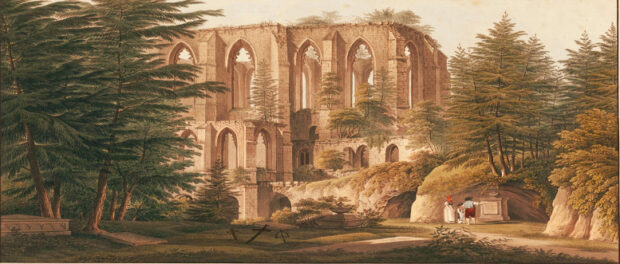 Screenshot wikimedia.org