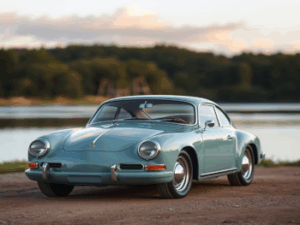
The politically intended disappearance of cheap new cars: As always, stricter registration regulations and rising costs make buying a car unattainable for many
Screenshot youtube.com
The increasing disappearance of new cars in the lower price segment is by no means a random or natural phenomenon, but rather the result of an opaque and complex interplay of political and economic interests. With a flood of new regulations, norms and regulations, policymakers have the cost basis for manufacturingdriven up by the base vehicles. It is particularly striking how carelessly new safety and environmental regulations are issued without taking sufficient account of the effects on the inexpensive vehicle classes. Politics praises the steady increase in standards as progress, but the flip side of this development is a massive increase in price.the simplest car models. Assistance systems, electronic control mechanisms and new standard technology packages are no longer optional extras, but are declared mandatory by laws and guidelines. The actual diversity and affordability of the offer are systematically restricted.
Production lines for cheap entry-level versions are shut down
Production lines for cheap entry-level versions are shut down, as their production is hardly worthwhile under the current conditions. The bundling of production on higher-priced models is an entrepreneurial strategy that is clearly geared towards profitability and therefore takes little into account the needs of low-income buyers. that the diversity ofvehicle market is lost is deliberately accepted. The result is a market concentration that is increasingly restricting the selection for broad sections of the population and increasingly undermining the market mechanisms.
Global crises, supply bottlenecks and rising costs
The situation is exacerbated by ongoing global crises, supply chain problems and the increase in raw materials, energy and logistics. Instead of developing flexible solutions to ensure access to affordable vehicles, the cost increases will be passed on to customers in full. Especially in the small car segment, which for many people has been the only one for a long timethe possibility of individual mobility, the effects are particularly serious. The price segment, which was once accessible to broad sections of the population, was almost wiped out. More and more people are forced to forego buying a new car or making use of used cars, the prices of which are also rising due to the shortage of new cars.
Emission specifications and their problematic side effects
The industry is also forced to restructure its production by increasingly stringent emissions targets. The switch to new platform strategies and the integration of expensive environmental technology are investments that can no longer be economically represented, especially in the lower price segment. Regulations are sold as a contribution to environmental protection, but in practiceCause further increases in price and scarcity of cheap models without sufficiently considering the social dimension of these measures. Politicians ignore the fact that mobility is a central element of social participation and economic independence.
Fiscal burdens and bureaucratic hurdles
In addition to the direct cost increases through technology and production, there are a number of indirect financial burdens. Rising taxes, fees for certificates and registrations and an increasingly complex bureaucracy drive the total costs of buying a car further up. Low-income people are hit particularly hard by these hurdles because theyoften neither have the necessary capital nor the time resources to fight their way through the bureaucratic jungle. Politics like to be social, but the reality is different: the weakest in society fall by the wayside, while the providers of luxury and premium vehicles benefit from the development.
Social consequences and social division
The consequence of this development is a massive restriction of mobility for large parts of the population. The dream of your own new car, which for many was once a matter of course, is increasingly becoming an unattainable luxury. Especially people with low or middle incomes are systematically excluded from the market. The social gap is deepening and those affectedare restricted in their freedom of movement and social participation. This development often remains underexposed in the public discussion, but is increasingly critically discussed by automobile clubs and citizens’ initiatives. Trust in a policy that pretends to be there for everyone is sustainably shaken by this unrealistic regulatory policy.
A critical balance
The disappearance of cheap new cars is the result of a chain of political, economic and regulatory decisions that take into account the interests of the general population less and less. The systematic increase in the cost and cost of the market leads to a narrowing of the market, which makes mobility a privilege and social inequality in the areafurther tightened the individual traffic participation. Instead of keeping access to mobility open to as many people as possible, this development helps to destabilize the social fabric and further increase the gap between rich and poor. Critical examination of these mechanisms is urgently needed so that mobility does not become a luxury good in the long term,but a fundamental right and a social self-evidence remains.

 Screenshot youtube.com