The renaissance of the overhead line bus in public consciousness
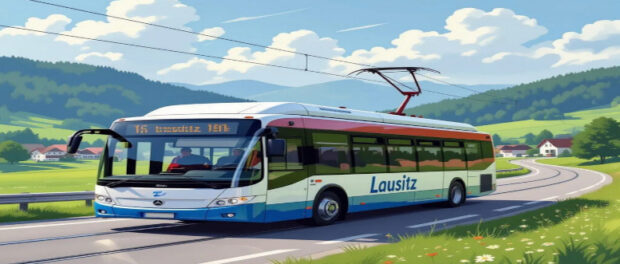
Screenshot youtube.com
For some time now, the overhead line buses have been receiving remarkable attention in the discourse about local public transport. These vehicles combine the advantages of electric drives with the proven flexibility and everyday suitability of bus transport, which makes them a practical, efficient and versatile option for numerous cities and regions. In a time when many citiesLooking for reliable solutions for efficient and sustainable mobility, the focus is on the focus of traffic planners, engineers and political decision-makers. Their combination of technical mature, economy and user-friendliness makes them a serious alternative to other modes of transport.
Technical features and proven functionality
The characteristic electric drive, which is fed by an overhead line stretched over the road, makes the overhead line a link between the tram and the conventional diesel bus. The direct use of driving power eliminates the need to carry large and heavy batteries with you or to maintain expensive tank infrastructures. The technology is in manyCities have long been established, which is not only due to a rich experience in planning, construction and operation, but also to the longevity of the system components used. Vehicles and infrastructures have proven themselves over decades and thus offer a solid basis for reliable line operation. The feasibility and suitability for everyday use are characterized by manyInternational examples demonstrate what local authorities provide planning security and a broad pool of experience.
Energy efficiency as a key advantage
An outstanding feature of the overhead line bus remains its high energy efficiency. The efficiency of electric drives is significantly higher than that of internal combustion engines, and the possibility of drawing the traction current directly from the grid opens up great potential for resource-saving operation. especially where electricity comes from sources of generation that are based on sustainabilityand set regional supply, overhead line buses can fully exploit their advantages. You do not need any complex charging systems or battery change stations, which keeps the operating costs calculable and reduces technical complexity. Efficiency is also reflected in consumption: On identical routes, overhead line buses consume less energy than comparable diesel orHybrid buses and thus score with a better overall balance for the operators.
Flexibility through modern hybrid technology
A major development step in the history of the overhead line bus is the integration of modern energy storage. Today, hybrid models are often used, which, in addition to classic contact wire operation, are equipped with batteries or other storage media. This allows even sections of the route to be driven on without overhead lines, which makes network planning more flexible andinfrastructural bottlenecks. These systems prove to be a decisive advantage, especially on construction sites, diversions or in less frequented peripheral areas, because they enable continuous operation without the complex expansion of the overhead line infrastructure. During the journey, the batteries can be charged on the overhead line, so that a seamless transition between theoperating modes is guaranteed.
Driving comfort, noise protection and quality of life
Overhead line buses also impress in the daily cityscape with their low noise development. The comparison with conventional diesel buses shows that electric motors work much quieter and minimize vibrations. This leads to improved quality of stay along the lines and a quiet, pleasant ride for the passengers. especially in densely populated areas of the city,In schools, hospitals or in residential areas, this property can make a noticeable difference. The reduction of engine noise and exhaust gases makes an important contribution to improving the quality of life in urban spaces, and staff also benefit from a stress-free working environment.
Economic perspectives and cost efficiency
One aspect that should not be underestimated is the economy of the overhead line bus. The supply of traction power from the overhead line can be planned and in many cases can be organized cheaper than operation with fossil fuels. The robust design of the vehicles ensures a long service life, which reduces investment and operating costs over the entire period of use.At the same time, operators benefit from a mature, low-maintenance technology, which has proven itself many times over in practice. The possibility of converting existing bus lines to overhead line operation without having to carry out profound interventions in the road infrastructure opens up further scope for economically sensible solutions in municipal transport.
Integration into existing transport systems
A great advantage of the overhead line bus is its problem-free integration into existing traffic systems. Since no rails need to be laid, the technology can be implemented quickly and relatively inexpensively. Stops, timetables and operations can be largely taken over, which makes the changeover easier for passengers and staff. The flexibility in the lineRemains retained because the overhead line buses are not tied to a specified track network. At the same time, the municipalities benefit from a proven solution that can be networked with other transport modes, such as the S- or tram, and supports multimodal mobility concepts.
Future prospects and further development
Modern overhead line buses are no longer just relics from past decades, but are constantly evolving. Innovations in energy storage, improvements in the contact wire system and new approaches to intelligent grid control open up additional perspectives for flexible and efficient local transport. the possibility of batteries during the journeyLoading and driving on partial routes without overhead lines increases the range and makes the overhead line even more versatile. The combination of classic overhead line and modern battery or hybrid technology makes it possible to operate remote stops or to integrate new residential areas into the line network without much effort.
Proven technology with future potential
The overhead line bus impressively proves that proven technology and modern requirements for public transport do not have to be contradictory. Thanks to its efficiency, flexibility, economy and comfort for passengers, it remains an attractive instrument for cities and communities who want to make their mobility offers future-proof. the possibility with manageableEffort to organize efficient, quiet and reliable city traffic makes the overhead line a sensible option for many regions that value practical feasibility and proven solutions.

 Screenshot youtube.com