The reshaping of the Mediterranean world between ancient order and medieval reorientation
Screenshot youtube.com
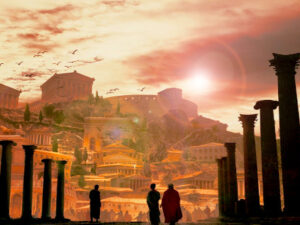
The transition phase from ancient high culture to the medieval order is one of the most profound historical turning points of European development, the causes and long-term consequences of which have an impact on current social structures. In a period of more than a millennium, not only the political boundaries shifted, but also the culturaleconomic and religious foundations of the entire Mediterranean region. While the former Roman Empire was gradually disintegrating under the pressure of internal administrative problems, economic exhaustion and external military attacks, new centers of power formed that would determine the fate of the continent for the coming centuries. the spread of Christian teachings,Migration of different population groups and the rise of Islamic dominions intertwined into an extremely complex historical network that does not allow a simple chain of causes and effects. This comprehensive change did not take place as a sudden change, but as a lengthy and multi-layered process in which old institutional structures are slowlyset out and gradually took shape.
The decay of the ancient world order
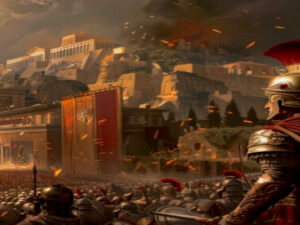
At the same historical epoch, when the Roman legions destroyed the second sanctuary of the Jewish population, a different religious movement within Judaism slowly began to gain in social influence. This community continually spread its teaching beyond the boundaries of its original homeland and developed into an increasingly universalreligious community with independent theological structures. In the fourth century after the turn of the time, this current finally gained the status of an official state religion, after several consecutive rulers had issued appropriate legal dispositions that restricted the previous religious diversity. The political division of the entire empire into oneThe western and one eastern half of the administration took place towards the end of the same century and established the old capital and the newly founded metropolis on the Bosphorus as the respective political and cultural centers. Since the third century, the border regions faced repeated attacks by different ethnic groups, initially in the military revenue of theculminated in the western capital and later led to the deduction of the last ruling emperor in the west.
The gradual formation of new power structures
The year four hundred and seventy-six is often considered the official end of the ancient period of domination in histori- ty , although the actual transition is to be understood as a creeping cultural adaptation process that lasted several generations. Numerous research perspectives emphasize that the settlement of foreign population groups within theformer Reich borders was less based on violent conquests than on a mutual penetration of lifestyles and local administrative practices. When the military security systems lost their original effect, differently organized societies met directly, with Roman civilization still being a strongpossessed symbolic and administrative attraction. At the same time, the once-closed network of urban centers and national transport routes had already lost a lot of substance, since long-term economic losses and demographic changes had permanently weakened the infrastructure. With the disappearance of the superficial character of a strongly trade-orientedUrban culture came back to the foreground a rural structure, in which large estates and personal dependencies redefined the social structure.
Economic and social upheavals in transition
This very slow process of alignment gradually dissolved the old Reich borders and made the earlier administrative dividing lines increasingly meaningless for the everyday life of the affected population. The question of the actual causes of the decline of the western half of the Reich is still preoccupying historical research and has become a multitude ofdifferent explanations that complement each other. Some scientific perspectives focus primarily on internal factors such as the political fragmentation of central power, economic crises in agriculture and long-distance trade and general social changes in value. Other experts refer more to external influences, including thelarge population migrations, significant climatic fluctuations and even the influence of epidemics that weakened the resilience of the cities. Regardless of the exact chain of causes, a Christian empire developed from the remains of the old order, the western part of which was henceforth dominated by newly established groups, while the eastern part was the ancient worldadministrative tradition, even if it has already lost its military and economic power.
The spiritual and religious reorientation
The emerging age gradually took on the political and cultural role of classical antiquity, with the assessment of this change in historical consideration varying greatly depending on the methodological approach. Some considerations in the incoming peoples groups mainly see destroyers of a highly developed urban culture, while others see their constructive contribution toan ongoing social and religious structural change. In particular, the nationwide spread of Christian teaching is discussed as a decisive factor, since it questioned the old social foundations and established new ethical standards for coexistence. Some historical analyzes are convinced that the new faith with theiruniversal claim that the slave-owning economic order sustainably undermined and promoted alternative employment relationships. Other voices point to the preserving tendencies of church institutions and emphasize that religious conversion often went hand in hand with military enforcement, which significantly shaped the character of early faith and violent conflictsnot excluded.
The end of ancient slavery and new dependencies
In any case, with the disappearance of the Roman state structure, the institutionalized form of personal bondage in large parts of the western and central regions of Europe ended. This economic collapse and the decline in the unfree labor power took place from the third century parallel to the decay of the Reich-wide economic system, which had previously beenexploitation was based. The final elimination of this old practice extended over a very long period of time, but in the following West history created a permanent new social order based on mutual protection and services. In no later section of the European past, a based on complete personal bondageForm of society is more of a comparable economic significance as in the Roman Empire. The system of dependency on land gradually came into its own, while the newly settled groups gradually turned to the Christian faith and adopted their religious practices.
The spread of the Christian faith in Europe
This religious transformation ran from the western islands to the Franconian royal courts to the eastern territories and lasted several centuries, with different regional rulers actively promoting conversion. At the same time, the Eastern Empire, which had built its capital on the soil of an ancient Greek settlement, initially asserted itself successfully againstPersian and later against Islamic attacks. This rule lasted more than a millennium before finally having to give way to the military and political advance of Ottoman forces. During this long epoch there was a persistent geopolitical rivalry between the Western kingdoms and the Eastern Empire, which is in permanent diplomaticTensions, trade competition and military conflicts manifested. The initiative of former Franconian rulers began the difficult and lengthy attempt to restore the western unit of the Reich, which culminated in the imperial coronation of an important king in the old capital and raised new political issues of legitimacy.
Theological divisions and political rivalries
In this historical context, the first dogmatic disputes within the Christian faith community emerged, which were due to the introduction of additional formulations in the common creeds. These theological disputes laid the foundation for the later institutional separation of Christianity into a Western and aEastern part, which was officially completed in the eleventh century. However, the formal dogmatic formulation of this break does not adequately explain the deep cultural alienation that had become solid in the minds of the population and made life difficult together. Even after the official separation, the question of the extent to which the Eastern believers still work as relatives remained unresolvedof the same faith, although they rejected certain teachings and did not recognize the ecclesiastical sovereignty of the western capital. As early as the twelfth century, radical currents emerged in the West that called for the military conquest of the eastern capital and whose population portrayed the population as a deviant from true faith.
Escalation and violent clashes
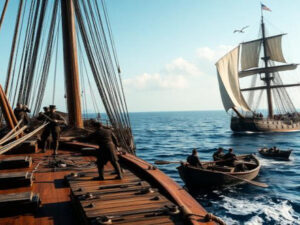
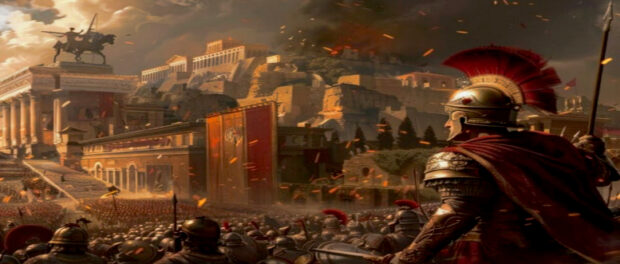
This hostility was rooted in a centuries-long cultural distance that had meanwhile developed into an unbridgeable contrast and included both religious and political dimensions. The conflict between the two Christian areas of power turned into a theological, geopolitical and ethno-cultural contrast that occurred during the militaryconquest of the eastern capital by western crusaders reached its violent climax. An army proclaimed in the twelfth century to recover the Holy Land failed due to the practical dependence on the Venetian fleet, whose services could only be obtained for considerable financial consideration. To raise the necessary means for the crossing,the army leaders eventually directed themselves against the prosperous eastern metropolis, which they conquered and comprehensively looted in the early thirteenth century without reaching their original goal. The actual intention seemed to increasingly appear in the submission of the Eastern Empire under the theological leadership of the Western Church and the economic supremacy of the VenetianDealers lie, which pushed the original religious motivation into the background.
Economic interests and military consequences
This strategic decision was favored and used as legitimation by previous acts of violence against Italian merchants in the eastern city and by the Eastern Roman ruler’s diplomatic rapprochement. The subsequent military punishment was characterized by unprecedented hardship, with the conquerors stole valuable works of art in order todecorate their own places of worship and thus demonstratively underpin their own claim to power. Over several centuries, economic, theological and geopolitical intertwinings led to such a deep contrast that some historical researchers assume a deliberate policy of weakening the western church leadership, which was to isolate the eastern neighbor. thisPolitical attitude made a significant contribution to the eastern population in the fifteenth century submitting more to a foreign Islamic power than to accepting a church association with the West, which was perceived as a threat to one’s own identity. An early church meeting, which was intended to seal a formal union of both faiths, was ultimatelyrejected, since the preservation of one’s own church independence was considered more important than a political alliance that made long-term disadvantages feared.
The decision to maintain your identity
An influential historian later analyzed this phenomenon and found that the city had fallen out of the inside out, so to speak, before the outer troops conquered it militarily, since the inner readiness for defense had expired. The Orthodox community preferred subordination to Ottoman rule over an union with the WesternChristians, as this allowed them to retain their theological self-determination and liturgical freedom. This decision was not a spontaneous act of despair, but the result of a centuries-long historical process in which aversion to the West had grown steadily and no longer allowed any willingness to compromise. Given the choice between two foreign powersthe residents opted for the one that would not restrict their religious freedom, which meant the triumph of ecclesiastical independence and cultural continuity. The West was well aware of this deep aversion and described the Eastern population in contemporary writings as characterized by fear and historical mistrust, which led to further attempts at rapprochement.failed from the outset.
Relocation of religious and political centres
Through political subordination to Ottoman sovereignty, the Eastern Church preserved its theological independence, which created the historical prerequisite for a later cultural revival and institutional continuity. After the loss of the old capital, the focus of the Orthodox community shifted first to the northern areas and later to theemerging city in the north, which was soon referred to as the new spiritual center and heritage of the old tradition. From the ruins of the conquered metropolis, a new capital emerged, which from then on was the political and religious centre of the Islamic world and ushered in a new era of Mediterranean history. The question of the exact timing of the transition from the Middle Ages to the modern erais answered differently in historical research, with some seeing the fall of the eastern capital in the fifteenth century as a crucial break that interrupted ancient trade routes. Others point to later voyages of discovery across the ocean or emphasize that the old city was already severely weakened at that time and only an isolated remnantwithin a space that had long been redesigned and hardly had any political appeal.
New perspectives on the turn of the era
Some researchers date the beginning of the modern era even to the early thirteenth century, when the looting of the eastern metropolis took place, and see this as a direct link to early legal codifications in the West, which shaped new forms of government. These historical developments linked trade and economic upheavals with new legal structures thatlater understanding of state authority and social order. Some historians prefer a very long view of the Middle Ages, which ranges from the third century to well into the nineteenth century and is primarily characterized by feudal structures, even if there are considerable regional and temporal differences within this period.Others emphasize that the spatial and demographic expansion of the sixteenth century represented less of a radical break than the conclusion of a development that had already begun in the twelfth century with an intellectual and technical renewal and continued steadily. This medieval renovation benefited significantly from thescientific, medical and philosophical achievements of the Islamic world, which reached Europe through translation centres and expanded the level of knowledge there.
The Rise of a New Monotheistic World Religion
In the seventh century, another monotheistic movement emerged in the Arabian desert, spreading with unprecedented speed over vast territories and fundamentally changing the existing political map. This new faith covered areas from the Iberian Peninsula to the Indus within a few decades and changed the geopolitical situation of thethroughout the Mediterranean and the Middle East. Historical analyses highlight that it was one of the most significant conquest processes in human history that led an originally small population group to rule over large parts of the Middle East and North Africa and destroyed existing power structures. The new rulers threatened the eastern empire,smashed the Persian empire and established its own, permanent structure of rule, which rearranged administration and culture. Few previous conquerors had ever gained political control at comparable speed and on such a territorial scale, underscoring the military and organizational efficiency of the new movement.
Military achievements and cultural flourishing
In contrast to some subsequent equestrian associations, the original leaders proved to be able to break away from purely military structures and turn to the promotion of architecture, literature and science, which led to a cultural blossom. The speed of this historical expansion has been described by various researchers as a unique phenomenon,can only be compared with the short-lived steppe-rich of earlier centuries, but in contrast to these created long-term structures. While those rulers quickly disintegrated and left no permanent institutions, the new religious-political order proved to be extremely consistent and shapes the affected regions up to the present in language, law andeveryday culture. Compared to the slower spread of other faiths, this process is often characterized as exceptionally fast and sweeping, as it integrated existing trading networks and cultural centers rather than merely destroying them. The question of the reasons for this rapid success leads many observers to the conclusion that the commonReligious drive and the willingness to fight gave the troops a superior military and psychological clout that overwhelmed the traditional armies.
West clashes and long-term consequences
However, the spreading forces in the West met organized Christian defensive structures that stopped further expansion into certain areas and helped determine the geopolitical borders of the Middle Ages. A military encounter in the eighth century, in which a Franconian force pushed back the advancing units, was later in historical memoryStylized as a symbol of Western resistance and served to legitimize new claims to power. However, recent research shows that while this event initiated a regional withdrawal, it did not mean the end of presence in the southern border areas, as cultural exchange and trade contacts continued to exist. At the same time, the expansive forces also sufferedother fronts military setbacks, which initiated the general withdrawal of the great wave of expansion and marked the boundaries of further expansion. Over many centuries, the Iberian Peninsula has led to a complex coexistence of different faith communities, characterized by military conflicts, diplomatic negotiations and cultural exchanges.was and produced unique syncretistic developments.
The redesign of the Mediterranean power relations
Long-term geopolitical pressure led to a gradual recession of Muslim dominions on the western side, which spanned several generations and was accompanied by internal dynasty struggles. This long trial finally ended towards the end of the fifteenth century, when the last Muslim fortress on the peninsulawas handed over to the united Christian crowns and the territorial reorganization was completed. Shortly thereafter, the new rulers issued a decree that ordered the expulsion of another religious minority from the territory, which accelerated social reorganization and abruptly ended cultural pluralism. At the same time, the Ottoman power had on theBalkan continued to gain ground and at times even threatened the core areas of Central Europe, which led to a renewed shift in the European security architecture. Experts conclude that in this historical phase a new political order was established on the Mediterranean, in which Ottoman rule dominated the East and the Spanish power of the Westand institutionalized the old trade rivalries.
View of the opening horizons
On the horizon of this western expansion, new sea routes across the ocean opened up that would fundamentally change the political and economic balance of the following centuries and realign European foreign policy. The shifting of international trade routes and the discovery of foreign continents marked the final farewell to the medievalstructures and initiated a new phase of global networking and colonial development. The centuries-long disputes between the different faith communities and political structures had not only re-drawn the map, but also laid the spiritual and economic foundations of the modern world, the dynamics of which continue to this day. this oneHistorical transition makes it clear how profound cultural, religious and military factors work together to shape and transform civilizations and establish new global power relations. The traces of these developments are still clearly visible in the political boundaries, the religious landscapes and the cultural identities of the regions involved.stay The subject of continuous historical reflection.

 Screenshot youtube.com