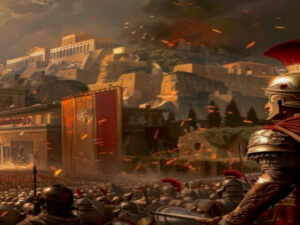
The sinking of the Roman legions in the Teutoburg Forest: A historical disaster in detail
Screenshot youtube.com
The course of the battle in the Teutoburg Forest is one of the darkest chapters in Roman military history. It was a turning point that significantly influenced the fate of Roman expansion in Germania. This event, which took place more than two thousand years ago, is characterized by dramatic struggles, profound loss and a deep insight into the brutal reality of ancientwarfare. In the following, the chain of events of this decisive battle is traced in detail in order to make the individual phases and the meaning of this historical moment understandable.
The first signs of the riot: Germanic restlessness and Roman reactions
Even before the actual combat operations began, the situation in Germania was tense. The news, which spread like wildfire, triggered great horror among the Romans: the Germanic tribes, led by Arminius, a Cheruscan prince who was once considered an ally, had risen against Roman rule. This rebellion spread quickly, andSurrounding peoples began to move, which further enhanced the uncertainty in the Roman occupation, and the Roman general was recognized by the urgency of the situation. The Roman army was well equipped, but the Germanic mood was explosive. The news of the uprising meant a deep cut for the Romans, as they thought of a lengthy and bloodyconfrontation were confronted. The Roman troops were mobilized to curb the threat and restore order.
Arrival at the slaughterhouse: The place of the event
The Roman troops moved in the direction of the Teutoburg Forest, a dense and impassable landscape that faced like a natural fortress against intruders. Here the decisive battle should take place. The Roman commanders felt that they were in a terrain that gave the Germans a strategic advantage. The terrain was fullSwamplands, winding paths and hidden traps that the Romans could find difficult to see through. The impression that this landscape made on the Roman soldiers was deeply moving: It was the place where the Roman legions had been beaten up under the command of Varus years ago. The memories of the defeat and the associated tragedies were stillfresh. Now the fate of the legions should be decided again.
The camp and the first signs of the disaster
The Roman camp, which was initially considered safe, was recognizable by its enormous expansion. Its size and the remains of the defenses that were still visible testified to the former strength. But the half-fallen ramparts and the excavated trenches left no doubt that the troops were only a shadow of themselves. When crossing the site, theObservers a cruel picture: bleach, rotten bones were scattered on the ground, witnesses to bloody fights in which individual soldiers, groups or entire associations had fallen. The scenes were shocking: broken weapons, horse skeletons, tree-mounted human skulls – a picture of the horror. In the midst of this horror, the remains of the lost were found,sometimes in the last desperate campaigns or in the run. There were parts of weapons, broken spears, tattered armor and horse corpses everywhere. Human skulls hung on the trees, a macabre reminder of the violence of this battle. In the surrounding forests and groves stood old altars, where the Roman tribunes and Centurions were sacrificed. theSacrifices had been made to the gods to turn fate and win the fight. A gloomy picture that testifies to the brutality and chaos of those days.
The battle at the Varus field: The turning point of defeat
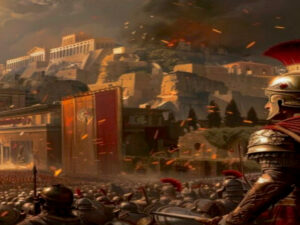
The decisive moment of battle came at the place where the Roman legions were defeated under the command of Varus. Here, in the dense forest, the actual climax of the tragedy came. The Roman army was surprised by the Germans, who shattered the Roman structure with a combination of tactics, surprise and crude violence. The fighters ofTeutons, led by Arminius, cleverly exploited the terrain. They attacked the Romans on several fronts, attacked the horses and the horsemen to put the Roman cavalry out of action. The Germans were extremely brutal: The wounded horses broke out, threw off their riders and crushed the soldiers lying on the ground. The eagles of the legions, the symbolsRoman power, were the aim of the Germans who would do everything they could to capture or destroy them. The fight was fierce. Caecina, the Roman commander, was thrown off his wounded horse in this attack and almost fell into the hands of the enemy. But men from his legion pulled him out in time and saved him from certain death. The Germans, so learnsMan, in their way of fighting, had become more disciplined, but their old carefreeness, their prey and their nonchalance still determined the fight.
The withdrawal and desperate defense
After the Germans had entered the Roman camp, the Roman troops began an extremely desperate withdrawal. Caecina, the experienced commander, knew that only a closed defense secured the troop’s chance of survival. He ordered the wounded and the badly damaged chariot to move to maintain the troops’ storage andPreventing further fragmentation. The Romans formed their classical battle order: the V. Legion on the right wing, the XXI. On the left, the I. at the top, the XX. behind. Despite all efforts, the situation was extremely critical. The Germans who knew the place well used the confusing swamp areas to break through the Roman lines. theGermans attacked again and again, kept the Romans in constant motion and tried to break through the line of posts. With their long spears and their height, they were superior in close combat. The Romans, heavily armored, had a hard time withstand the attacks.
The chaos at night and the last hope
The night brought little relief to the Roman troops. The Germans who were lurking in the dark smashed their wild battle songs against the camps and tried to frighten and confusion the soldiers. The campfires flew sporadically, the soldiers wander around the tents in a cruel battle, caught in memories of the cruel battle in the forest.The commander has a macabre dream: He sees Varus appearing in the swamp, bloody, stretching his bloody hand toward him. This vision scares him, but reality is much worse. The army’s flanks have dissolved, the troops are scattered, and the Germans are using the disorder to further make the Romans’ withdrawal more difficult. The enemy demandsAttacks and looting out the last power of the Romans. A single horse that breaks out and gallops through the camp triggers panic. Men flee, scream: “The Germans are coming! The Germans are coming!” Order breaks, and only the last rebellion can avert the worst.
The desperate effort and the last battle
Caecina tries to reunite the troops by letting everyone try to gather himself in a closed formation. He asks his soldiers to remain calm, use their weapons wisely and fend off the Germans in the camp. His strategy is clear: Only through a closed defense can you have a chance of rescue. At this moment he completes oneSymbolic gesture: He hands over his own horse to the bravest soldier to facilitate the advance with the animals. This sign of leadership and courage is intended to encourage the soldiers to stand the battle through to the end – an act that shows the determination to believe in hope despite all adversities. The sinking of the Roman legions in the Teutoburg Forest is aEvent that still lives in history as a symbol of the unrelenting struggle, the strategic superiority of the Germanic warrior and the fragility of even the strongest armies. It shows the brutal side of the war, the destructive power of impassable terrain and the profound consequences of a military failure. This chapter is still remembered todayThe Roman expansion in Germania decisively influenced and had a lasting impact on the history of Europe.

 Screenshot youtube.com