The surrounding house is much more than a pure architectural building; It embodies in a special way the cultural identity and the reality of life of entire generations in the regions in which it arose. With its unique connection between residential and commercial buildings, often united under one roof, it reflects the close relationship between humans, animals and nature.The residents integrated agricultural work into their daily lives, which made the house the central center of their lives. The functional versatility – living space, stable and often also a workshop under one roof – underlines the adaptability to the local environmental and climatic conditions. The compact design allows the heat to be stored better, which in particularin the harsh winters of the low mountain ranges was an advantage. The close connection between house and landscape, of man and nature, is reflected in the harmonious embedding of the surrounding houses in the surrounding area: They take into account the topography and the natural resources that were available to them.
Craftsmanship tradition and sustainable construction
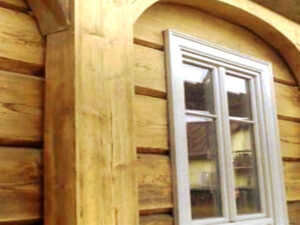
The denserhaus also stands for centuries of highly developed craftsmanship and a distinct building culture. The special construction, in which the supporting construction in the form of a wooden enclosure bears the upper floor and thus relieves the half-timbered, is a technical masterpiece. Typical are visible wooden beams that enclose the lower part of the house and give itgive stability and character. The combination of block construction, half-timbered and solid construction not only creates stability, but also ensures an appealing aesthetics. This sustainable construction is a prime example of resource-saving construction: Materials available on site, such as wood, clay, straw and natural stones, were used to create durable structures that meet the requirements of therespective region. This construction method allowed the houses to be used over many generations and, if necessary, flexibly adapted to changing requirements. The house is therefore a symbol of sustainable living that respects resources and connects generations.
Social Community and Cultural Identity
In addition to the architectural and craftsmanship, there are also social spaces that shaped the coexistence and the community in the villages and small towns. They served not only as a family center of life, but often also as a meeting place for neighbors and friends. Festivals were celebrated in the spacious rooms, meetings were held and traditions maintained. thatHouse was the center of social life and offered space for cross-generational coexistence. The design of the houses – from the facade design to the selection of colors and ornaments – often reflected regional customs and symbolism. The homes of the surrounding areas thus became the bearers of collective identity and the visible expression of the sense of community that made life in therural regions.
Historical development and cultural exchange in the border triangle
The history of the Congebindhaus is characterized in particular in the border triangle between Lusatia, Poland and the Czech Republic by lively cultural exchange and diverse influences. Originally arose from the need to combine living space and agricultural use under one roof, an impressive variety of regionalvariants. In the border area, construction methods, techniques and styles influenced each other – visible in the mixture of German, Sorbian, Polish and Bohemian elements. The houses became witnesses to the interaction between cultures: architectural details, but also everyday traditions, language and even culinary customs were adopted, changed and further developed.The selection of building materials reflects the regional availability and the craftsmanship of the respective population: While clay and straw were used in some areas, massive wooden beams from the surrounding forests dominated elsewhere. This adaptability made it possible to optimally adapt the surrounding house to the climatic and economic conditionsto adjust.
Regional diversity and symbolism
The distribution of the house in the Convertible shows striking regional differences. In Lusatia, this type of building is closely linked to the Sorbian culture, which is reflected in the rich ornamentation, colored facades and symbolic motifs. The houses tell by their design of myths, traditions and the deeply rooted identity of the Sorbs. In Poland, on the other hand, there are numerousRegional adjustments reflecting both the variety of architectural styles and adaptation to different climatic conditions. The houses were often built here with typical regional materials, which reflect the lifestyle and needs of the residents. Finally, in the Czech Republic, strong influences of Bohemian architecture can be seen, which are partlydesign of the stables and in the connection of living and working spaces. The surrounding houses are thus a symbol of the lively diversity and the cultural dialogue between the peoples, which is reflected not only in architecture, but also in the daily life and in the self-understanding of people.
Preservation and Sharing as a Living Heritage
The preservation and maintenance of the mitigation houses is an important task today that goes far beyond the pure protection of monuments. They are living testimonies of a deeply rooted tradition, which is passed on to the next generation through renovations, guided tours, festivals and events. Many of these houses are now lovingly restored and serve as museums, culturalMeeting places or venues for traditional festivals that raise awareness of the common heritage. The care of the surrounding houses not only promotes historical awareness, but also the cohesion and self-image of the people in the region. This keeps the knowledge of the construction, the stories of the residents and the regional identity alive and becomes alivepassed on to future generations.